
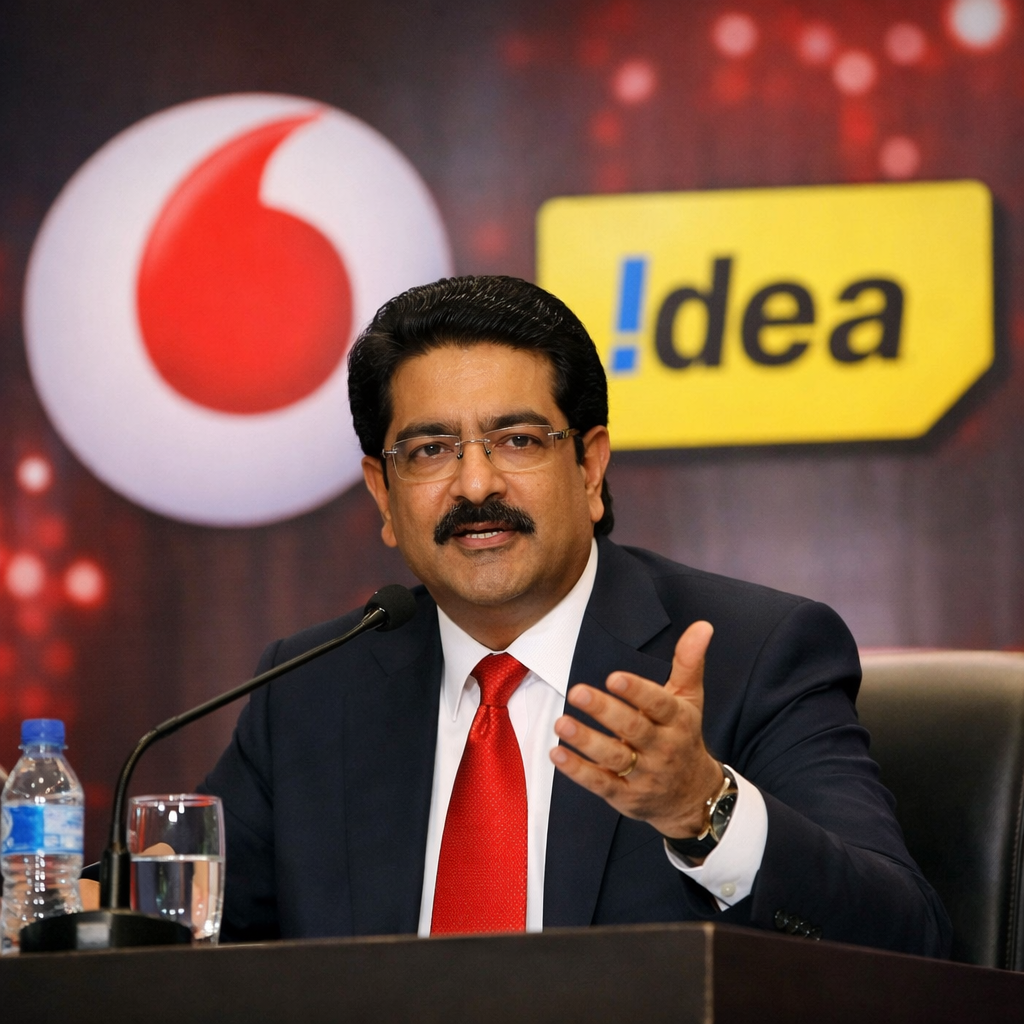

Indian industrialist and billionaire Kumar Mangalam Birla has executed a significant augmentation of his equity position in telecom operator Vodafone Idea, marking a notable redeployment of personal and family capital in one of India’s most contested telecom markets. Birla purchased 4.09 crore (40.9 million) shares via open-market transactionsbetween January 30 and February 1, 2026, increasing his promoter group stake in Vodafone Idea at a time when the company is navigating industry consolidation and competitive pressure.
The acquisition underscores Birla’s commitment to the company—a joint venture initially formed between his Aditya Birla Group and UK-based Vodafone Group—and reflects a strategic bet on India’s long-term mobile data growth and the stabilization of telecom pricing. Vodafone Idea has faced persistent profitability challenges and spectrum payment obligations, yet Birla’s fresh capital deployment signals confidence in a recovery trajectory backed by industry reforms and demand expansion.
In transaction terms, the open-market buys represent a concentrated push by a billionaire owner to solidify control and ward off potential dilution from competitors. While specific valuation metrics from these trades are not disclosed in public filings, the optics mirror other recent promoter-led investments in stressed or transitional assets—where long-term returns, not short-term valuations, increasingly drive UHNWI decisions.
Why It Matters:
Birla’s move matters on multiple fronts. First, it provides a vote of confidence in India’s telecom sector, which has been under strain from pricing wars and legacy debt. Second, it reallocates private billionaire capital into an operating company with significant national strategic importance, rather than a pure financial instrument—indicating a blend of economic and local influence considerations in Birla’s wealth strategy. Finally, this stake increase could influence investor sentiment broadly, potentially stabilizing Vodafone Idea’s share price and discouraging opportunistic short positions or activist pressures.
What It Signals:
For capital markets observers, Birla’s action signals that legacy owner-promoters are still willing to double down on core holdings when they foresee structural value, even amid industry stress. This mirrors a global billionaire-led trend where patient capital is being redeployed into operating franchises with long duration cash flows and industry consolidation potential. Birla’s transaction thus offers a tangible example of how dynastic capital prioritizes control and strategic positioning, rather than short-term exit liquidity.


