
As 2026 opens, Nicky Oppenheimer—the scion of the dynasty that once commanded the world’s diamond trade—occupies a unique position in the global billionaire landscape. While his peers often chase the high-octane volatility of Silicon Valley, Oppenheimer is doubling down on a philosophy he calls “Engaged Capital.” This approach, which prioritizes long-term, patient investment over quarterly dividends, has seen his net worth stabilize at approximately $10.4 billion (R185 billion) as of early January 2026.
With the 2012 sale of the family’s 40% stake in De Beers for $5.1 billion now firmly in the rearview mirror, Oppenheimer’s 2026 trajectory is defined by a pivot away from extractive industry toward a sophisticated blend of private equity, aviation, and large-scale environmental stewardship.
Oppenheimer Generations: The Family Office as a Global Hub
The vehicle for this transformation is Oppenheimer Generations, the family office and investment entity managed alongside his son, Jonathan. In 2026, the firm has moved beyond its South African roots to become a global player in “meaningful capital.”
A key highlight of the family’s 2026 portfolio is Oppenheimer Partners, an investment group that shuns the traditional “exit-focused” private equity model. Instead, it deploys permanent capital into businesses across Africa and Europe, focusing on sectors like consumer goods, logistics, and manufacturing. This strategy is built on the belief that African growth can only be sustained by investors who are willing to weather economic cycles rather than flee at the first sign of currency volatility.
The “Conservation Economy” at Tswalu
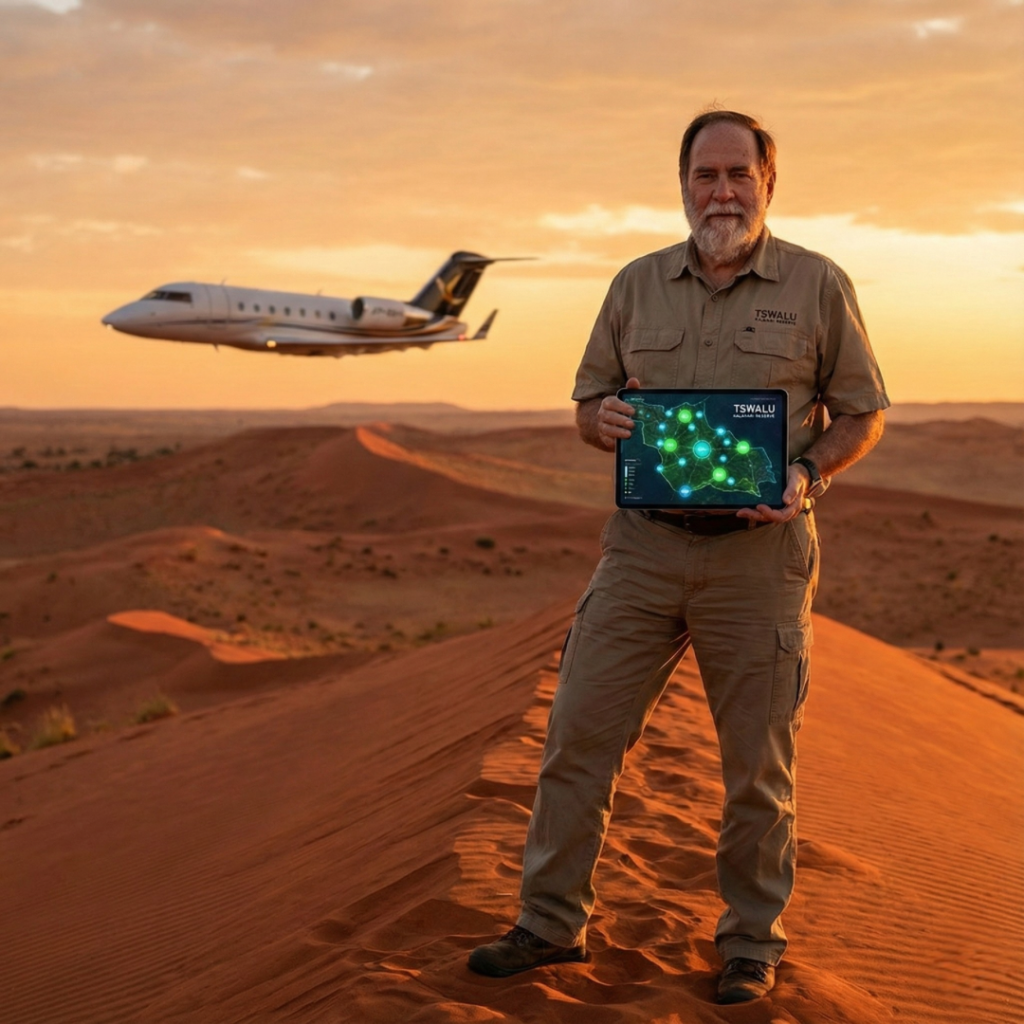
Nicky Oppenheimer’s most personal 2026 project continues to be the preservation of the Southern Kalahari. As the owner of at least 720 square miles (186,000 hectares) of conservation land across South Africa, Botswana, and Zimbabwe, he has turned the Tswalu Kalahari Reserve into a global case study for the “Conservation Economy.”
In late 2025 and into 2026, Oppenheimer has integrated cutting-edge technology into his conservation efforts. Through Oppenheimer Generations Research and Conservation (OGRC), the family is funding over 80 active scientific projects. These range from using AI-powered footprint identification to monitor endangered mammals to utilizing drone-mapped climate data to protect the Cape Midlands’ wetlands. For Oppenheimer, these lands are not just “private playgrounds” but vital carbon sinks and biodiversity reserves that he views as “custodial assets” for the continent.
Aviation and Strategic Mobility
Within the commercial sphere, Fireblade Aviation remains a cornerstone of the family’s high-end service portfolio. Based at O.R. Tambo International Airport, Fireblade has entered 2026 as a premier travel partner for global business leaders and eco-tourists. The facility recently achieved a significant milestone, becoming the first aviation company to receive “Travel Partner” status from The Long Run, a global sustainability organization. This reflects Oppenheimer’s broader 2026 mandate: ensuring that even the most “industrial” parts of his empire—like luxury aviation—adhere to rigorous environmental metrics.
The Voice of “Engaged Capital”
Perhaps the most impactful role Nicky Oppenheimer plays in 2026 is that of a strategic advisor to the South African state and the broader continent through the Brenthurst Foundation. Alongside Jonathan, he has been a vocal proponent for “getting out of the way” of entrepreneurs.
His 2026 message to the G20 and the South African Government of National Unity (GNU) is clear: private investment is the only sustainable recovery tool. Through the South African Future Trust, the family continues to use the funds recovered from pandemic-era loans to provide training and scaling capital for SMEs, viewing small business resilience as the ultimate hedge against national economic instability.
While the “diamond era” may be over for the Oppenheimers, Nicky’s 2026 playbook shows that his influence has only deepened. By treating wealth as a tool for long-term ecological and economic “custodianship,” he is defining a new standard for the global billionaire—one where profit and planet are managed as a single, inseparable portfolio.