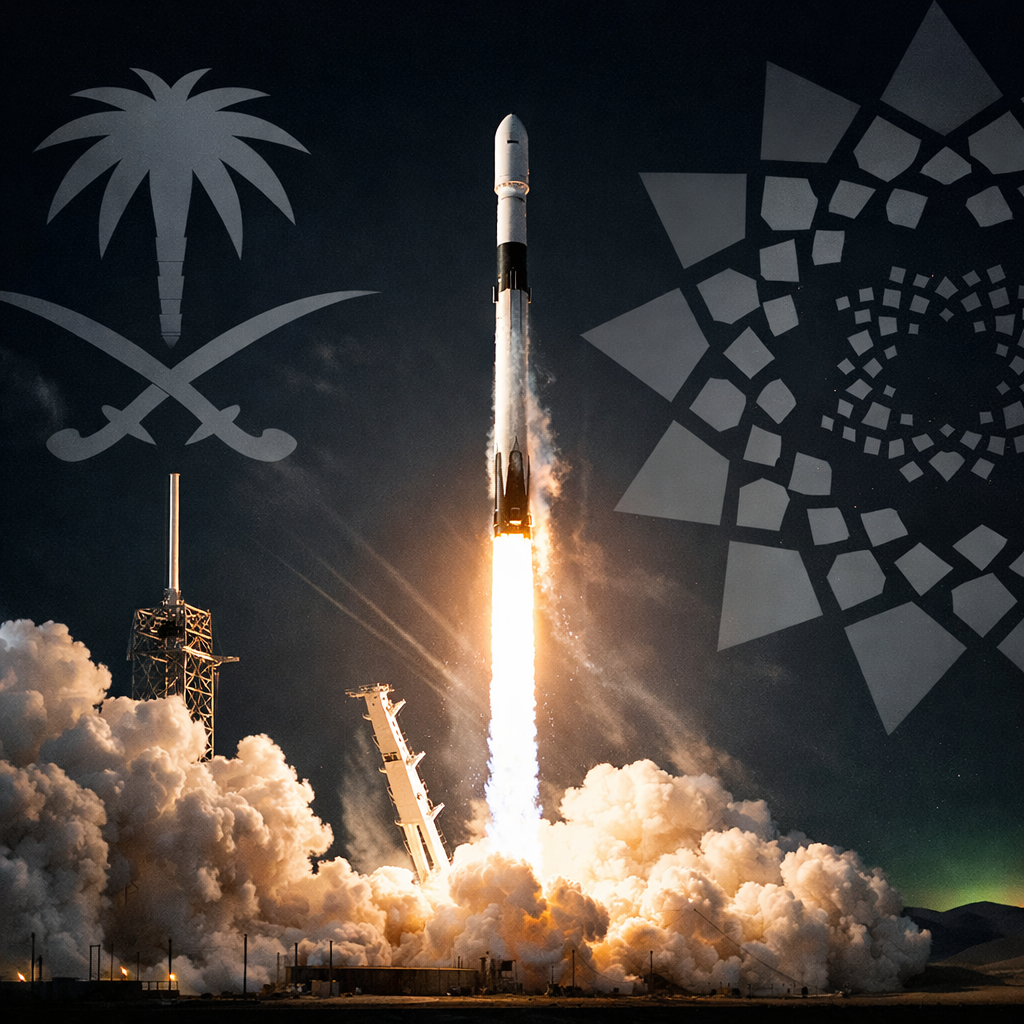

Saudi Arabia’s Public Investment Fund is in advanced discussions to take an anchor stake of approximately $5 billion in SpaceX’s forthcoming initial public offering, according to two sources cited by Reuters on April 2. The potential commitment would make PIF one of the most consequential cornerstone investors in what is shaping up to be the largest IPO in stock market history.
SpaceX is targeting a raise of $75 billion, a figure that would surpass the previous record set by Saudi Aramco’s 2019 listing and Alibaba’s 2014 New York debut. Analysts project a post-IPO valuation exceeding $1.75 trillion for the combined entity, according to Bloomberg intelligence.
Protecting Position Ahead of the Float
PIF currently holds a stake of just under 1% in SpaceX. The proposed $5 billion anchor investment would partly prevent dilution of that position as new shares enter the market through the public offering. For a sovereign wealth fund managing a portfolio of this scale, preserving proportional exposure ahead of a listing of this magnitude is not a passive defensive move, it is a deliberate signal of conviction in the long-term trajectory of the asset.
Anchor investors are institutional buyers who typically commit to a fixed stake ahead of an IPO roadshow, signaling confidence and helping underpin demand for the offering. At the $5 billion level, PIF’s participation would carry significant gravitational pull, influencing how institutional allocators globally price risk and assign appetite to the deal.
A Relationship Built Across the Musk Empire
The SpaceX discussions are not PIF’s first engagement with Elon Musk’s constellation of companies. In November 2025, PIF’s AI firm HUMAIN and xAI announced a collaboration to deploy 500 megawatts of data center capacity in Saudi Arabia. PIF then committed $3 billion via HUMAIN ahead of xAI’s merger with the social media platform X. That investment converted into SpaceX equity through the subsequent transaction, giving the fund layered exposure across space, AI, and digital infrastructure under a single corporate structure.
In February 2026, SpaceX finalised a stock merger with Musk’s artificial intelligence business xAI, valuing SpaceX at $1 trillion and xAI at $250 billion, producing a combined entity worth $1.25 trillion. The jump to a $1.75 trillion IPO valuation reflects investor expectations around the combined company’s positioning across launch systems, satellite connectivity via Starlink, and AI infrastructure.
The Architecture of the Offering
SpaceX has moved methodically to structure the IPO at institutional scale. Bank of America, Citigroup, Goldman Sachs, JPMorgan Chase, and Morgan Stanley have been selected as senior underwriters. A June 2026 market launch is being targeted, according to Bloomberg. In a notable departure from standard Wall Street practice, SpaceX is considering allocating up to 30% of shares to retail investors, approximately $22.5 billion worth, roughly three times the typical allocation norm.
Vision 2030 Capital at Work
For PIF, an anchor position in SpaceX is consistent with a broader strategic posture that has seen the fund place high-conviction bets in sectors it expects to define the next several decades of the global economy. From an early stake in Uber to cornerstone investment in Lucid Motors and a growing presence across AI ventures, PIF has built a track record of entering major sectors before mainstream capital flows follow. SpaceX, operating at the intersection of launch infrastructure, global broadband, and artificial intelligence, fits that framework precisely.
The proposed transaction has not been finalised. Both SpaceX and PIF declined to comment officially, and sources familiar with the discussions cautioned that terms remain subject to change. What is not in question is the signal being sent: dynastic sovereign capital is positioning itself at the centre of the most consequential public market event of the decade.