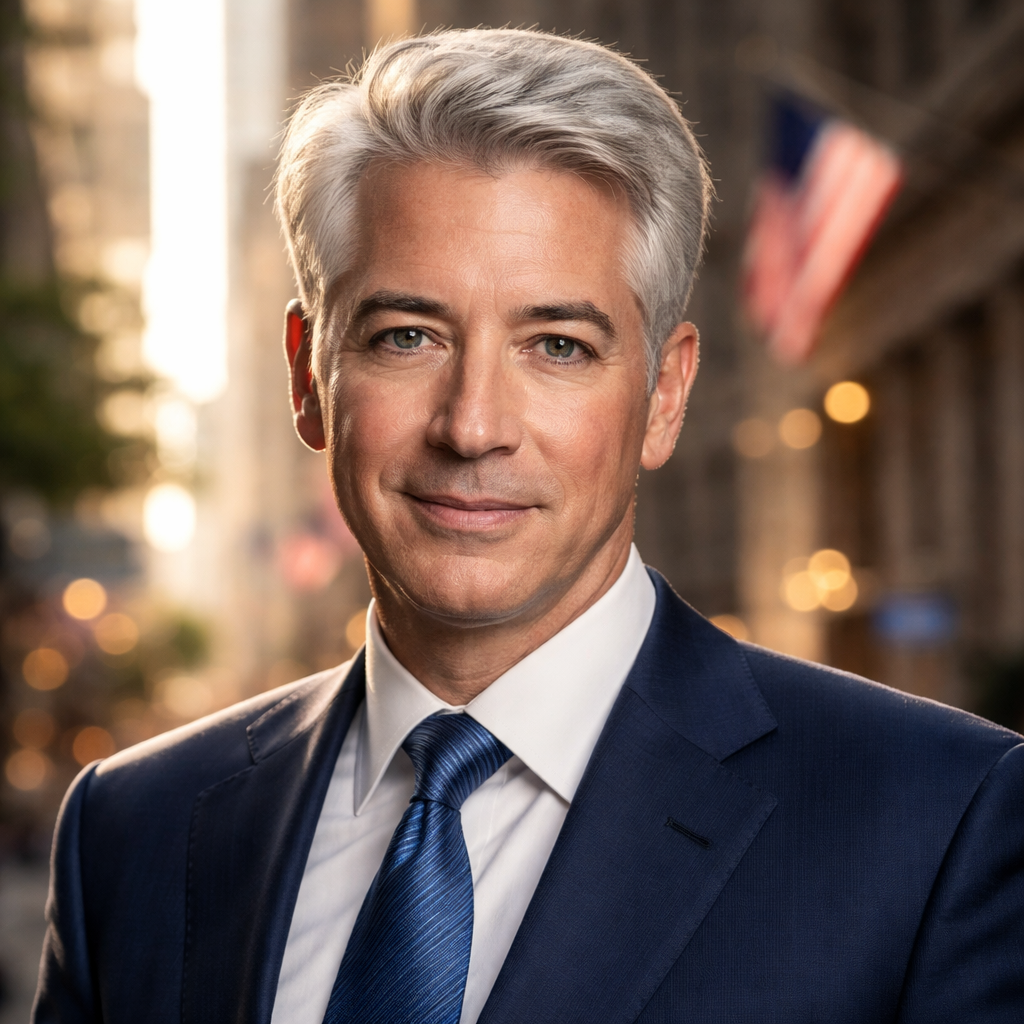

Bill Ackman has constructed one of the most ambitious media deals in recent memory. His Pershing Square Capital Management has proposed a $64 billion takeover of Universal Music Group, the world’s largest music company, structured as a merger that would shift UMG’s listing from Amsterdam to the New York Stock Exchange. But as of this week, the deal’s fate rests almost entirely on a single decision by a 74-year-old French billionaire who has not yet said a word publicly.
Vincent Bolloré, the reclusive patriarch of one of Europe’s most powerful dynastic fortunes, controls just under 32% of UMG through a cascading web of holding structures, including direct stakes, family-controlled entities, and his significant position in Vivendi. That combination grants him effective veto power over any transaction requiring a two-thirds shareholder majority. Without Bolloré’s support, no deal is mathematically possible.
The Architecture of Control
Ackman’s first call, made before the public launch of his bid, was to the Bolloré Group. He spoke with Cyrille Bolloré, the founder’s 40-year-old son and current chairman, offering a high-level summary of the proposed transaction. The response, as Ackman later relayed to investors, was that the proposal sounded like “music to his ears.” Encouraging, but carefully non-committal.
The Bolloré family’s control runs through a cascade of holding companies. At the top is Compagnie de l’Odet, where the family holds 93% of shares. Compagnie de l’Odet, in turn, owns 71.6% of Bolloré SE, which holds stakes in Vivendi, Canal+, Havas, and UMG directly. This structure is not accidental, it is the product of decades of deliberate capital engineering by a man analysts describe as one of Europe’s most disciplined long-term value extractors.
Forbes estimates that the wealth of the Bolloré family has risen from $5.2 billion in 2017 to $9.8 billion in 2026, a trajectory driven significantly by his UMG exposure, which he acquired through Vivendi’s 2021 spin-off.
What Ackman Is Offering
The deal, structured as a SPARC merger, gives UMG shareholders the option to receive either cash or equity in the newly created U.S.-listed entity. The transaction is designed to generate approximately €2.7 billion in incremental cash for the Bolloré Group, while allowing the family to retain its UMG stake, a construct Ackman has framed as directly addressing market anxiety about whether the Bolloré family intended to eventually exit the position.
Negotiations may also centre on a specific all-cash route designed with Bolloré in mind, offering up to €7.5 billion at €22 per UMG share, a discounted rate that provides liquidity in exchange for a lower headline valuation. Whether the Bolloré camp accepts that trade-off, or demands a higher price, is the central open question.
Pershing Square projects that UMG can deliver earnings-per-share growth of 15% to 19% annually under the new plan, driven by high-single-digit revenue growth, margin expansion, and the cancellation of 17% of its shares outstanding. Ackman has drawn repeated comparisons to Hilton Worldwide, a company Pershing held for seven years, during which it expanded from 18 times earnings to 33 times.
The Risk of an Unpredictable Counterpart
Analysts remain divided. One observer with direct knowledge of Bolloré’s dealmaking style noted that the French billionaire is unlikely to accept an offer without extracting additional concessions from Ackman personally.
JPMorgan analysts are among those unconvinced, arguing that Universal’s board will struggle to recommend a proposal that materially undervalues the group. They further note that the complexity of the Bolloré Group’s ownership structure makes a straightforward acceptance unlikely, and expect the family to reject the Pershing bid in its current form.
What is clear is that Bolloré is not a passive actor. His record of “creeping control”, deployed across Havas, Vivendi, and Lagardere, reflects a consistent playbook: identify undervalued assets, acquire influence quietly, and extract strategic value over time. UMG has been the notable exception, where CEO Lucian Grainge has operated with substantial autonomy. Whether that dynamic shifts under a New York-listed structure is a question Bolloré will weigh carefully.
Capital Signal
The stakes extend well beyond the music industry. Ackman has been explicit that his ambition is to transform Pershing Square into a diversified holding company modelled on Berkshire Hathaway. A successful UMG acquisition at this scale would represent the most consequential single move in that direction. For Bolloré, the calculus is different, this is a liquidity event that must be weighed against decades of capital compounding inside a structure he controls entirely.
Two billionaires. Two very different definitions of value. One deal. The next move belongs to Paris.