
South Africa has secured a $1 billion investment pledge from global agricultural company UPL for the construction of a large-scale bioethanol production facility, with the deal announced at the 2026 South African Investment Conference in Sandton on 1 April. The commitment, equivalent to approximately R17 billion, represents one of the most significant agri-energy investment mandates disclosed at the conference and positions the country as a prospective leader in the African biofuels sector.
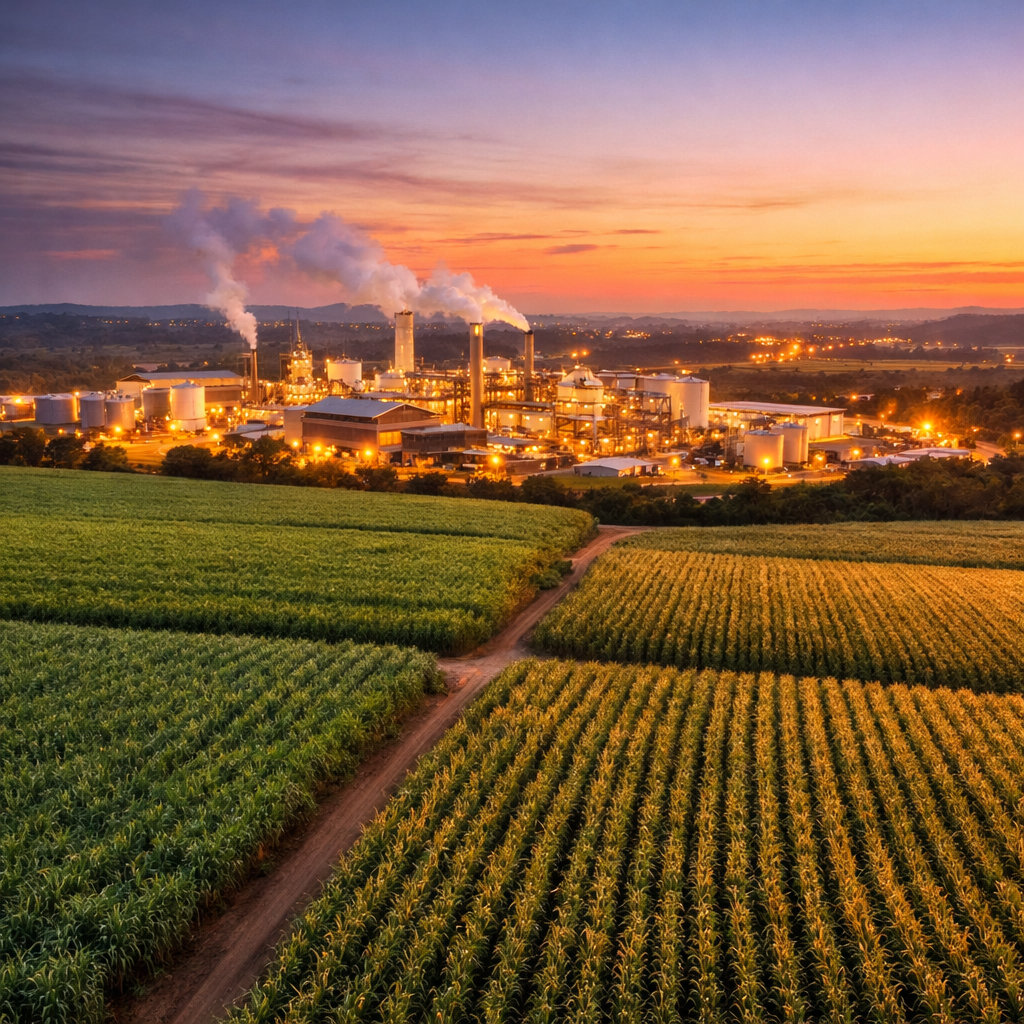
The investment was led by UPL Chairman and Group CEO Jai Shroff, and is linked to a large-scale bioethanol production facility that will use sugarcane and maize as feedstocks, supporting the development of an integrated agricultural and energy value chain.
What Infrastructure South Africa Did
Infrastructure South Africa, an entity of the Department of Public Works & Infrastructure, played a key facilitative role in advancing the project by bringing together stakeholders across the agricultural, energy, and financial sectors. This included supporting engagements between UPL and a major development finance institution to explore project preparation and financing opportunities, as well as broader collaboration to move the project towards implementation.
Public Works and Infrastructure Minister Dean Macpherson confirmed the government’s position on the deal, stating that the investment was clear evidence of the progress the department’s delivery push was making.
Scale and Production Capacity
The project has significant potential, including the cultivation of approximately 400,000 hectares of sweet sorghum and the production of up to 1.3 billion litres of bioethanol annually. At that output scale, the facility would rank among the largest bioethanol operations on the African continent.
The agricultural supply chain embedded in the project is equally significant. The model is designed to channel capital directly to both small-scale and large-scale farmers through feedstock procurement, creating a revenue stream that extends well beyond the industrial gate.
The Broader Investment Context
The UPL commitment was announced within a wider capital mobilisation event. The 2026 South African Investment Conference placed total capital investment projects at R415 billion, with the ecosystem total reaching R889.8 billion. President Cyril Ramaphosa noted that the cumulative value of pledges was the highest since the first conference, and that much of the capital announced was domestic, reflecting local business confidence.
Sector-based agro-processing, food, and agriculture commitments at the conference totalled R7.3 billion across five projects, making UPL’s stand-alone R17 billion commitment a dominant position within that category.
Who Can Participate
The UPL bioethanol project opens several lanes of commercial engagement for prospective participants:
- Agricultural producers and land holders — The project requires approximately 400,000 hectares of feedstock cultivation across sugarcane, maize, and sweet sorghum. Large commercial farming operations and smallholder cooperatives with landholdings in KwaZulu-Natal, Mpumalanga, and Limpopo are natural candidates for offtake or supply agreements.
- Engineering, procurement, and construction (EPC) firms — A facility capable of producing 1.3 billion litres of bioethanol annually will require significant civil, mechanical, and process engineering capacity. Local and international EPC contractors with experience in biofuel or petrochemical plant construction will be well positioned to pursue contracts as the project moves towards implementation.
- Development finance institutions and commercial banks — Infrastructure South Africa has already initiated engagements with at least one major development finance institution on project preparation and financing structures. Banks and DFIs with mandates in clean energy, agri-finance, or industrial infrastructure should be engaging UPL and ISA directly as deal structuring progresses.
- Logistics and storage operators — Bioethanol at this scale requires dedicated road, rail, and port logistics infrastructure for both feedstock delivery and product distribution. Transnet and private logistics operators capable of supporting bulk liquid handling will find strategic entry points here.
- Technology and equipment suppliers — Fermentation, distillation, and blending technology providers, as well as agricultural mechanisation suppliers, will be required at multiple stages of the value chain.
How to Engage
Companies and investors seeking to participate in this project should direct initial enquiries to Infrastructure South Africa within the Department of Public Works & Infrastructure, which has been designated as the primary facilitation entity for the deal. UPL’s South African operations and the office of Group CEO Jai Shroff remain the principal commercial contact points for supply chain and partnership discussions. As the project advances through bankability studies and project preparation, formal procurement and tender processes are expected to be disclosed through official South African government channels, including the National Treasury eTender portal.