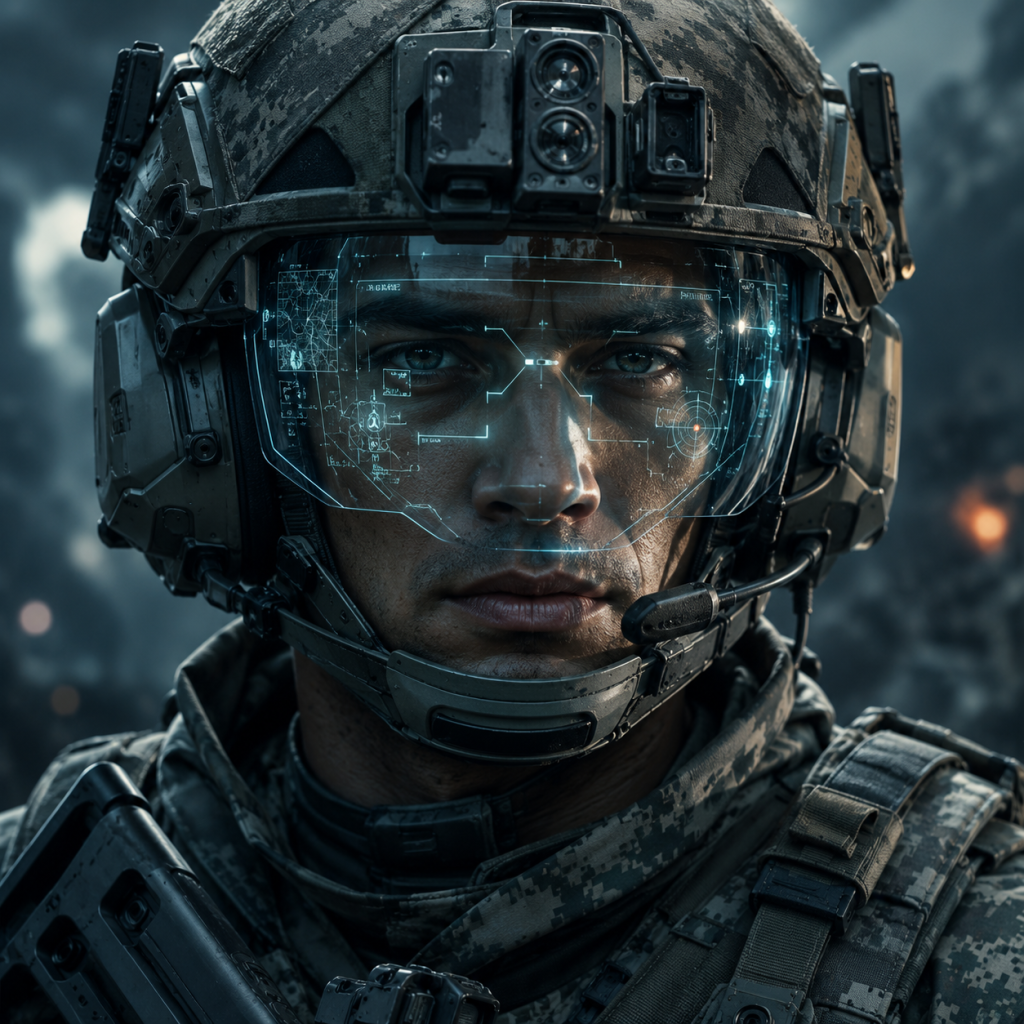

Meta and defense technology company Anduril have officially unveiled EagleEye, an artificial intelligence-powered battlefield augmentation system designed to enhance how soldiers perceive, communicate and coordinate missions. The announcement follows the public rollout of the platform and marks one of the most significant deployments of commercial augmented reality technology into modern defense operations.
Contrary to social media claims, EagleEye is not simply a pair of smart glasses that lets soldiers order drone strikes. Instead, it is a family of integrated warfighter systems that combines augmented reality displays, AI software, sensors, communications and wearable computing into helmets, visors and heads-up displays.
Commercial Technology Moves Into Defense
The EagleEye platform is being developed by Anduril in partnership with Meta, alongside Oakley Standard Issue, Qualcomm and Gentex. The collaboration brings together Meta’s expertise in augmented reality and AI with Anduril’s Lattice autonomous software platform and military systems integration capabilities.
The system overlays real-time battlefield information directly into a soldier’s field of view while integrating digital vision, navigation, threat detection, mission planning and communications.
Operators can also coordinate unmanned systems and robotic teammates through the platform while maintaining situational awareness instead of shifting attention to handheld devices or separate displays.
AI as a Battlefield Assistant
Rather than replacing human decision-making, EagleEye is designed to function as an AI-powered battlefield assistant.
The platform can present mission intelligence, identify friendly forces, highlight potential threats, assist with navigation and streamline communications across connected units. It also enables operators to interact with autonomous systems more efficiently while keeping commanders in the decision-making loop.
While Anduril states the system enables operators to task unmanned vehicles and coordinate battlefield effects, decisions involving the use of force remain subject to military command structures and operational rules, making the viral description of soldiers verbally ordering drone strikes an oversimplification of the technology.
Operational Impact
EagleEye represents a major shift in military technology by adapting commercial AI, wearable computing and augmented reality for operational deployment.
Using proven commercial technologies is expected to reduce development time, accelerate innovation cycles and lower costs compared with building bespoke military hardware from scratch. The modular architecture also allows different configurations depending on mission requirements.
What It Signals for Technology Markets
The EagleEye deployment illustrates how technologies originally developed for consumer products are increasingly being adapted for enterprise and government applications.
For the technology industry, it signals that artificial intelligence, wearable computing and augmented reality are expanding beyond consumer experiences into critical infrastructure, industrial operations and defense systems. It also highlights a growing convergence between Silicon Valley innovation and national security technology, creating new commercial opportunities for AI hardware, software and sensor manufacturers.