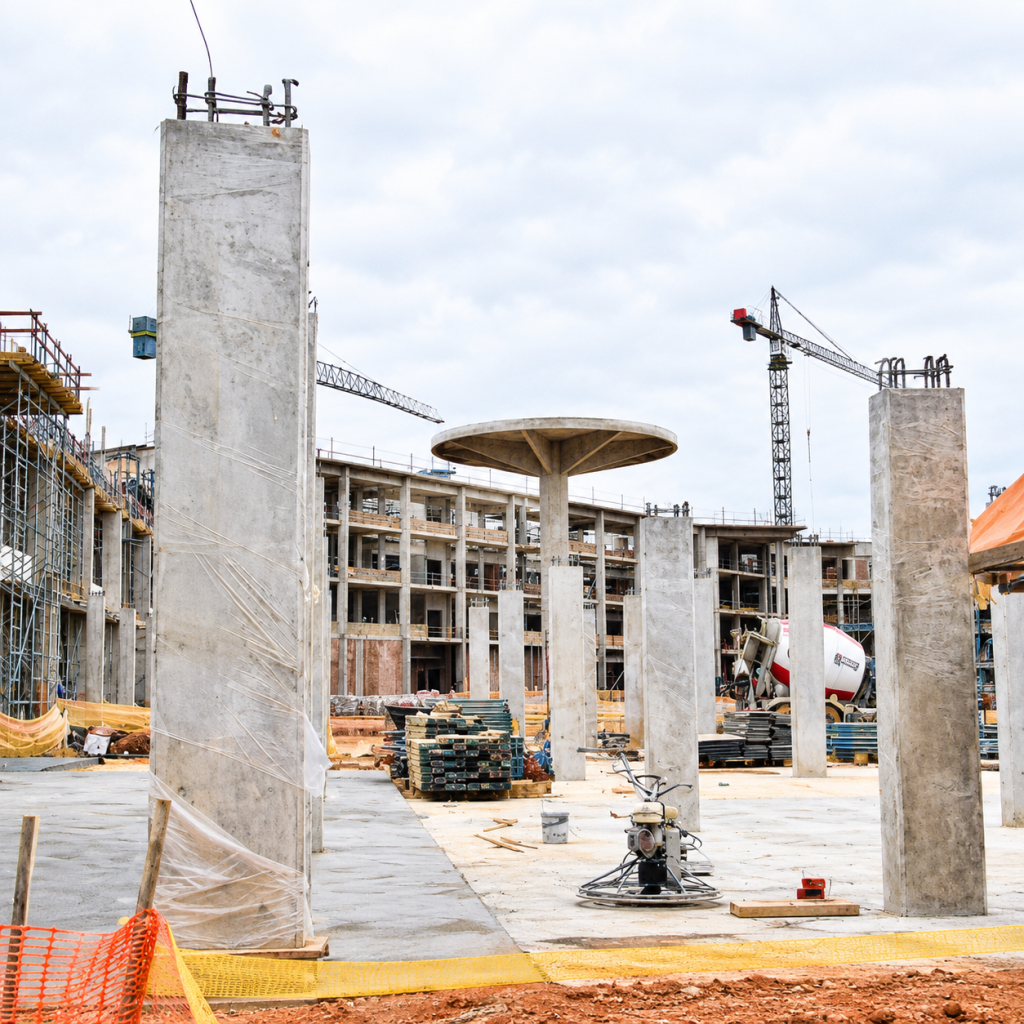

The Limpopo Provincial Government has reaffirmed its commitment to completing the R5.3 billion Limpopo Central Academic Hospital by mid-2028, following recent oversight assessments that confirmed construction remains on track despite earlier revisions to the project’s delivery schedule.
The decision to maintain the 2028 completion target signals continued government commitment to one of South Africa’s most significant public healthcare infrastructure investments. Once completed, the facility is expected to become the country’s first newly built academic hospital since 2004, representing a major expansion of specialised healthcare capacity in the public sector.
Government Reaffirms Strategic Healthcare Investment
Located in Polokwane and supported through collaboration between the Limpopo Department of Health and the Development Bank of Southern Africa (DBSA), the project forms part of a broader effort to strengthen healthcare infrastructure outside South Africa’s major metropolitan centres.
Provincial authorities have indicated that construction milestones continue to be achieved, allowing the project to remain aligned with its revised delivery framework.
The hospital is scheduled to reach practical completion by May 2028, with operational commissioning expected shortly thereafter.
Why the Decision Matters
The continued execution of the project addresses a longstanding challenge facing patients across Limpopo and neighbouring provinces.
Currently, many patients requiring highly specialised treatment are referred to facilities in Gauteng, creating pressure on tertiary healthcare institutions while increasing travel costs and treatment delays for patients.
By maintaining funding and construction momentum, provincial authorities are seeking to decentralise advanced healthcare services and improve access to specialist medical care closer to communities.
Impact on Healthcare, Skills and Regional Development
Beyond patient care, the hospital is expected to strengthen South Africa’s healthcare training ecosystem.
Academic hospitals play a critical role in educating doctors, specialists, nurses and healthcare researchers. The new facility is expected to expand training opportunities while supporting the long-term development of medical expertise within the province.
The project is also generating construction-related economic activity and is expected to support permanent healthcare employment once operational.
What It Signals
The decision to maintain delivery targets despite the scale and complexity of the project sends an important signal about infrastructure execution within South Africa’s public sector.
For investors, healthcare stakeholders and development finance institutions, the project demonstrates continued commitment to long-term social infrastructure investment.
For Limpopo, the hospital represents more than a healthcare facility. It is a strategic institutional asset designed to improve service delivery, strengthen skills development and reduce regional disparities in access to advanced medical treatment.
If delivered according to the current schedule, the Limpopo Central Academic Hospital will become one of the most significant healthcare infrastructure milestones completed in South Africa during the next decade.