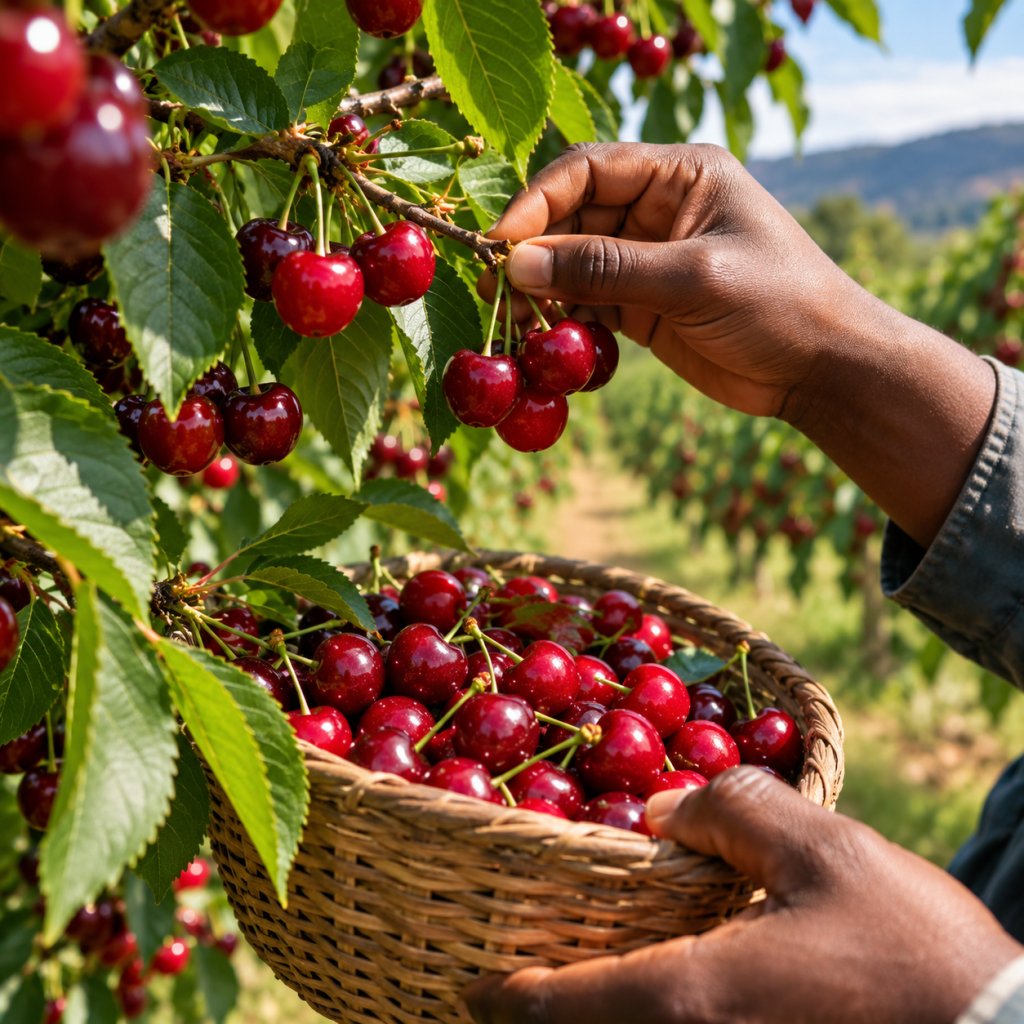

South Africa has secured market access for cherry exports to China following the signing of a new agricultural trade protocol in Beijing, marking a significant expansion of export opportunities for the country’s high-value fruit sector. The agreement was officially signed on 8 September by Agriculture Minister Willie Aucamp and Chinese customs authorities during the 9th Sanitary and Phytosanitary Ministerial Meeting.
The development is strategically important for South Africa’s agricultural export industry because it grants local cherry producers access to one of the world’s largest consumer markets. According to the Department of Agriculture, this is the first time South African cherries will be eligible for export into China under a formal market-access framework.
Expanding Agricultural Export Capacity
The protocol forms part of broader efforts to deepen agricultural trade between South Africa and China. Officials described the agreement as a milestone that broadens the range of South African agricultural products entering the Chinese market while strengthening bilateral trade relations.
China remains one of the world’s most significant importers of premium fruit products, creating substantial opportunities for producers capable of meeting strict phytosanitary and quality standards. Access to the market provides South African growers with the potential to diversify export destinations and reduce reliance on traditional markets.
Logistics and Supply Chain Implications
The agreement is expected to stimulate investment across the cherry value chain, including orchard development, cold storage infrastructure, packing facilities, and export logistics.
Export-oriented fruit industries depend heavily on integrated cold-chain systems to preserve quality during long-distance transport. Greater export volumes could therefore support additional investment in refrigerated transport, port handling capacity, and agricultural processing services. These investments have broader implications for South Africa’s fresh-produce export ecosystem beyond cherries alone.
What It Signals for the Food Sector
The cherry protocol signals continued progress in South Africa’s strategy to expand agricultural exports into high-growth international markets.
For investors and food industry stakeholders, the agreement demonstrates that market-access negotiations remain a powerful tool for unlocking new revenue streams across agriculture. It also highlights growing opportunities for value creation through export-focused farming, logistics, processing, and agricultural technology.
As global demand for premium fruit products continues to grow, South Africa’s entry into China’s cherry market positions producers to participate in a larger share of international agricultural trade while strengthening the country’s food export competitiveness.