
In Beijing, Chancellor Merz Secures Renewed Economic Engagement With China
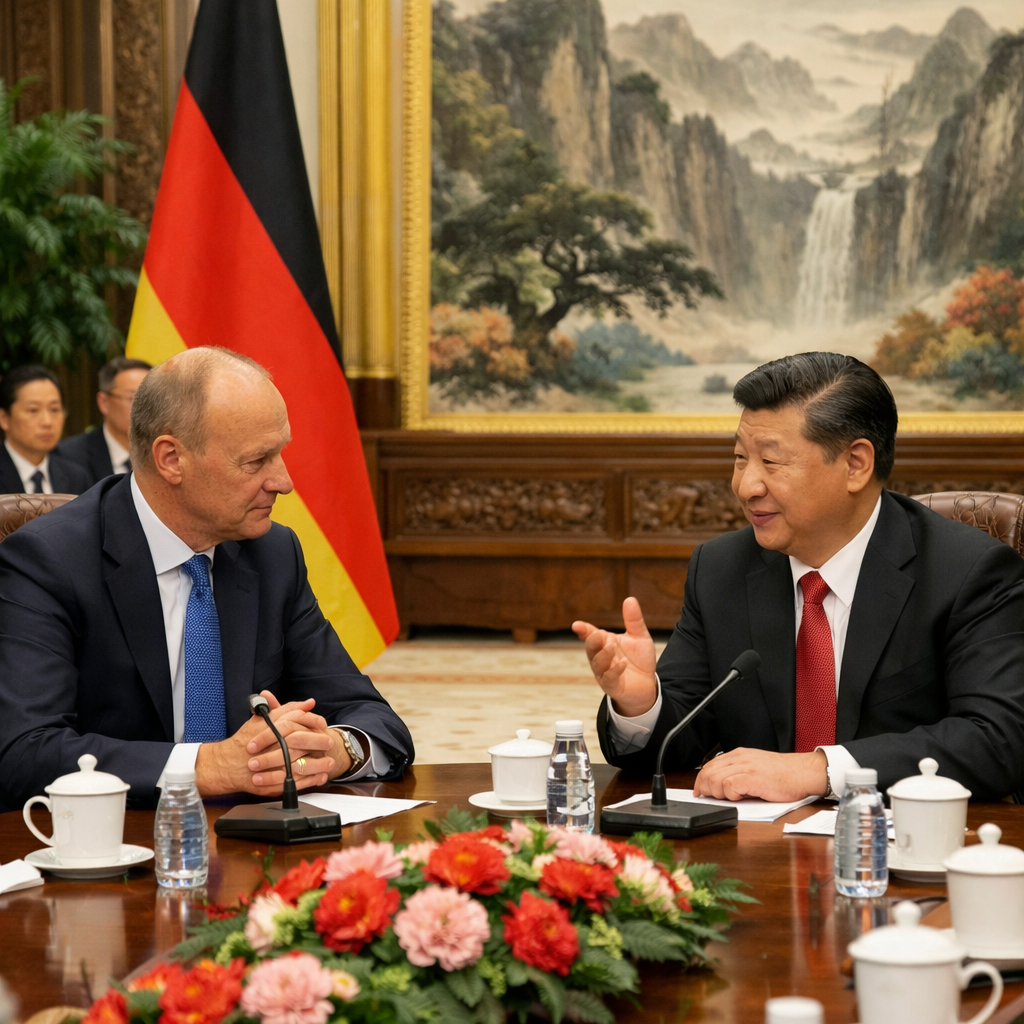
Germany and China have taken a pivotal step toward recalibrating their economic relationship following high-level talks in Beijing on 25 February 2026, with German Chancellor Friedrich Merz meeting Chinese President Xi Jinping and Premier Li Qiang to reinforce strategic cooperation and address persistent trade imbalances.
The visit, accompanied by a significant German business delegation, sought to expand market access, strengthen investment channels, and restore confidence after years of growing economic frictions linked to widening trade deficits and global supply chain disruptions.
What Was Agreed
- Strategic partnership revival: China and Germany reaffirmed their commitment to deepening a “comprehensive strategic partnership” with renewed emphasis on industrial, technological, and climate-related cooperation.
- Market openness: Beijing committed to enhanced openness to German investment and imports, signalling willingness to reduce certain non-tariff barriers and improve conditions for business engagement.
- Sector cooperation: Modest agreements were reached in areas such as climate technology, animal health protocols, and specialty sectors, designed to foster incremental economic collaboration.
While the formal package of agreements stops short of comprehensive trade liberalisation, the visit laid important groundwork for subsequent negotiations and bilateral economic dialogues.
Why It Matters Economically
Germany’s economy has carried one of the largest trade deficits with China among major Western industrial powers — exceeding €90 billion in 2025 — driven by imbalances in manufacturing and high-value technologies.
For German industry, the renewed dialogue provides:
- Market clarity: Forward channels to address regulatory and market access barriers affecting exporters and investors.
- Risk mitigation: Opportunities to diversify supply chains and reduce geopolitical risk through structured cooperation on shared standards and compliance pathways.
- Investment momentum: Potential flow of German capital into expanded renewable technologies and industrial automation sectors within China.
From China’s perspective, greater engagement with the EU’s largest economy reinforces Beijing’s geopolitical economic strategy of sustaining open trade corridors with advanced industrial partners amid global volatility.
What This Means for Capital and Trade
Although broad tariff reductions were not formalised, the visit has substantive capital market implications:
- Investor sentiment improvement: European firms that faced uncertainty over China’s regulatory environment now have a clearer signal of bilateral engagement priorities.
- Supply chain continuity: Agreements on cooperation frameworks may help preserve existing automotive, chemical, and machinery supply chain linkages — key to both German exports and Chinese industrial demand.
- Future negotiation platform: The visit sets the stage for more formal trade talks, potentially including investment protection and services liberalisation discussions, which could unlock deeper economic integration.
Chancellor Merz also signalled his intent to sustain open dialogue with other major partners, including forthcoming engagements in Washington, underscoring Germany’s strategy of balanced multilateral economic diplomacy amid shifting global trade dynamics.