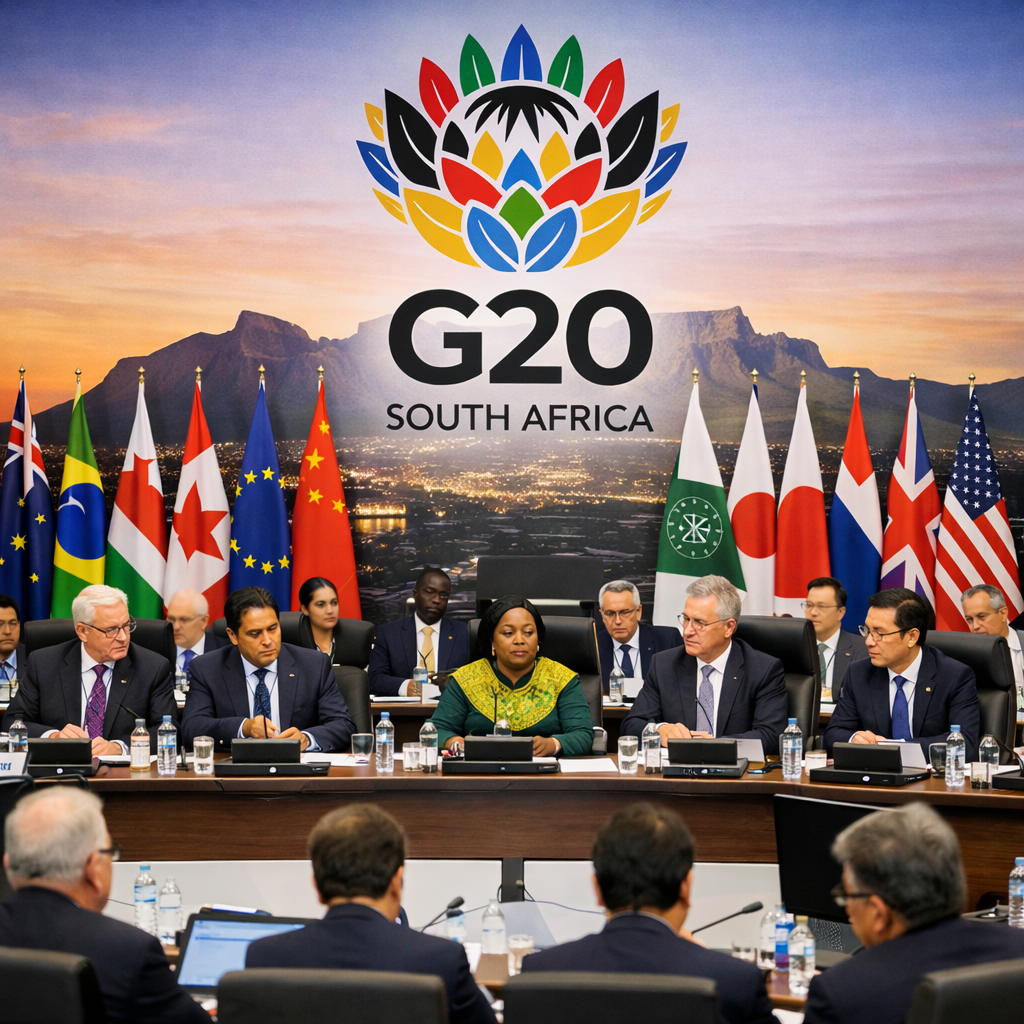

On 25 February 2026, finance ministers and central bank governors meeting under South Africa’s G20 presidency in Cape Town formally endorsed a revised operational framework to accelerate sovereign debt restructurings under the G20 Common Framework, incorporating new coordination mechanisms with the International Monetary Fund and enhanced creditor transparency standards.
While the communiqué itself was technical, the implications are not. The endorsement represents the most concrete institutional shift in global sovereign debt governance since the pandemic-era liquidity crisis. For emerging markets facing refinancing walls in 2026–2028, the change is structural.
This is not about relief. It is about rules.
From Case-by-Case to System Design
Over the past five years, sovereign restructurings in countries such as Zambia and Ghana exposed persistent weaknesses in the Common Framework: fragmented creditor committees, inconsistent comparability-of-treatment standards, and delays between IMF staff-level agreements and creditor sign-offs.
The Cape Town endorsement introduces three critical shifts:
- Standardized creditor coordination timelines tied to IMF program milestones.
- Enhanced disclosure requirements for bilateral and private claims.
- A formalized role for multilateral development banks in restructuring sequencing.
These adjustments are procedural, but procedure is power. In sovereign debt markets, uncertainty is priced immediately. Reducing ambiguity reduces risk premiums.
The Capital Markets Implication
The most immediate effect will not be visible in distressed markets. It will appear in frontier issuance.
When investors believe restructurings can be completed within predictable timelines, required yields fall — even before any country enters distress. This lowers the cost of capital for compliant issuers.
African sovereigns in particular stand to benefit. Countries pursuing fiscal consolidation and reform — rather than emergency financing — gain a reputational premium under a clearer global architecture.
Markets do not reward need. They reward predictability.
If the new framework meaningfully shortens restructuring timelines by even six to nine months, the net present value impact on sovereign bond pricing could be material. For countries facing large Eurobond maturities between 2026 and 2028, that is not academic — it is balance-sheet critical.
China, Paris Club, and Private Credit Alignment
A quiet but important element of the endorsement is creditor alignment. Tensions between Paris Club members and non-Paris Club bilateral lenders — particularly China — have historically slowed progress under the Common Framework.
The Cape Town communiqué reflects a more harmonized position on comparability of treatment principles, reducing the strategic uncertainty that previously plagued negotiations.
Equally important is private-sector participation. Asset managers and hedge funds now operate within a clearer procedural environment, lowering the incentive to delay participation in restructuring committees.
For global capital allocators, this reduces tail risk.
Why This Matters for 2026–2027
The global rate cycle has stabilized but remains elevated relative to the ultra-low era of 2015–2020. A wave of sovereign maturities is approaching across emerging markets.
Without reform, restructurings would likely remain protracted and politically costly. With reform, they become structured financial events.
This distinction matters for three reasons:
• Multilateral financing can be deployed more quickly.
• Domestic banking systems face shorter periods of uncertainty.
• Foreign direct investment decisions are less likely to be frozen during negotiations.
In other words, speed is macroeconomic policy.
The Strategic Opportunity for Reforming States
The revised framework does not eliminate fiscal discipline requirements. In fact, it reinforces them. Countries seeking IMF programs will face clearer conditionality benchmarks linked to creditor engagement.
However, this clarity creates opportunity.
Governments that proactively strengthen revenue administration, digitize tax systems, and rationalize subsidies can enter negotiations from a position of credibility rather than crisis.
For reform-oriented states in Africa, Latin America, and parts of Asia, the new framework is not merely a safety net. It is leverage.
The Thesis
The G20 endorsement in Cape Town signals the transition from ad hoc sovereign crisis management to institutionalized debt governance.
If implemented consistently, this shift could reduce the structural risk premium applied to emerging markets over the next decade.
Debt sustainability is no longer solely about debt ratios. It is about process certainty.
The countries that understand this — and align policy with predictable restructuring architecture — will attract capital first when the next global liquidity expansion begins.
And it will begin.