
Amazon’s autonomous vehicle subsidiary Zoox has officially activated its purpose-built robotaxi deployment in Austin, Texas and Miami, Florida, marking the company’s most significant operational expansion since it launched free public rides in Las Vegas and San Francisco last year. The announcement, made on 24 March 2026, moves Zoox from a two-city operator into a multi-market autonomous ride-hailing network and positions the company as the only operator running a fully autonomous, purpose-built robotaxi fleet across multiple U.S. cities simultaneously.
A Fleet Built From the Ground Up
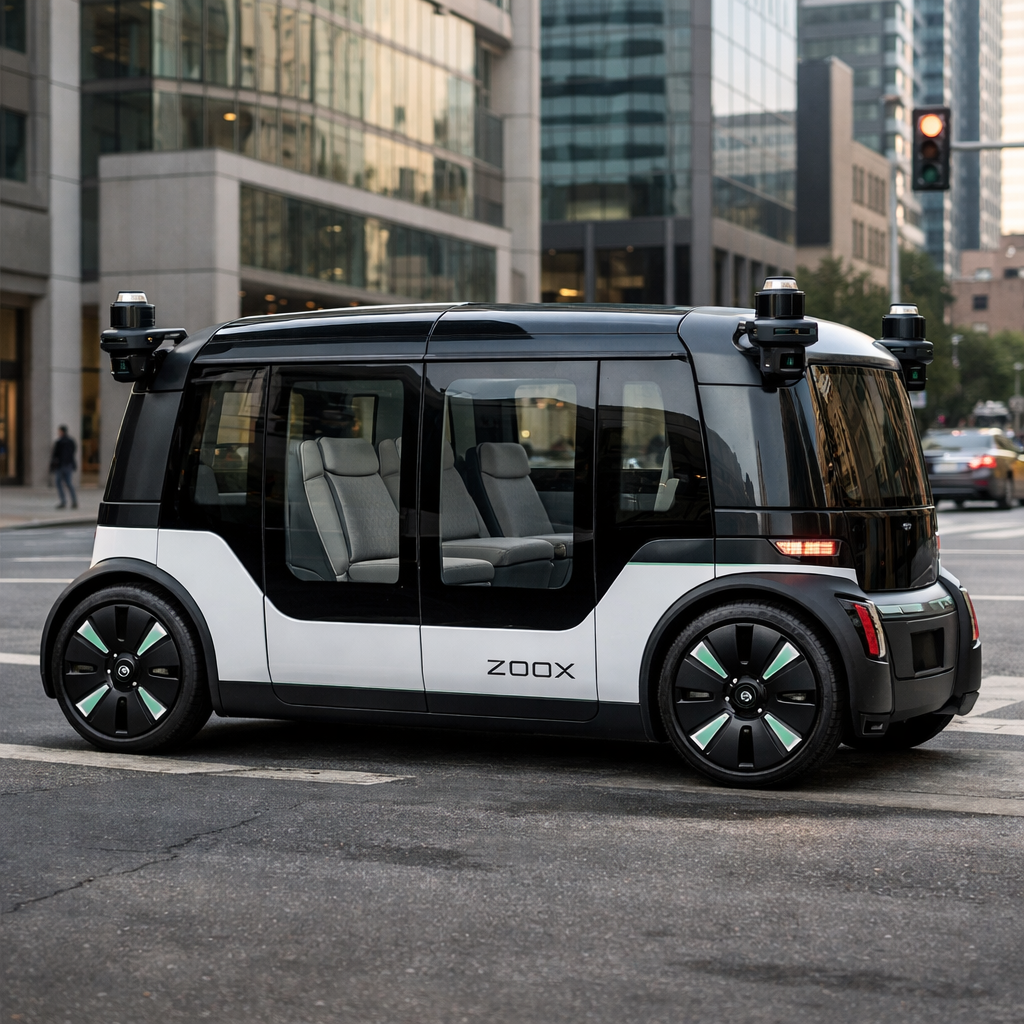
The Zoox vehicle is architecturally distinct from every competitor in the autonomous mobility space. The company operates a purpose-built, fully autonomous vehicle that eliminates steering wheels and pedals, focusing instead on a rider-centric design. CXO Digitalpulse With inward-facing seating and sliding doors on both sides, the vehicle is designed explicitly around the passenger experience — closer in concept to a compact urban transit pod than a converted automobile.
The company has been testing its technology in Austin and Miami with a retrofitted testing fleet since mid-2024 CleanTechnica, making the March deployment the culmination of nearly two years of street mapping, sensor calibration, and operational groundwork in both cities.
Scale and Operational Footprint
As of late March, Zoox said it had served 350,000 riders, with approximately 500,000 people on its waitlist. CNBC The fleet has driven nearly two million autonomous miles across its operating markets, with not a single dollar charged to a passenger. EcoPortal Federal regulations currently bar Zoox from collecting fares because its vehicle lacks the steering wheel and pedals required under Federal Motor Vehicle Safety Standards — a constraint the company is actively working to remove.
In its established markets, the expansion runs parallel to the Austin and Miami rollout. The San Francisco service area is quadrupling in size, with the expansion focused on the eastern half of the city for members of Zoox’s early-rider program. In Las Vegas, where rides remain open to anyone with the Zoox app, the number of destinations is doubling — adding The Sphere, T-Mobile Arena, and the Las Vegas Convention Center. TechCrunch
The Path to Commercial Revenue
The regulatory barrier is moving. The company is awaiting a decision from the National Highway Traffic Safety Administration on its proposal to operate up to 2,500 of its self-driving vehicles on public roads for commercial purposes, with a 30-day public comment period that began on 11 March. CNBC Zoox CEO Aicha Evans has made the commercial ambition explicit: “We’re ready to charge, especially in Las Vegas, where obviously we’ve been there for a long time,” she said. CNBC
Separately, Zoox and Uber have finalized a strategic partnership to deploy Zoox’s purpose-built autonomous vehicles on the Uber ride-hailing network, with a phased rollout beginning in Las Vegas during Summer 2026, followed by Los Angeles operations scheduled for mid-2027. Auto Connected Car The Uber integration is the company’s first partnership with a third-party platform and materially expands the demand-side infrastructure Zoox can access without building its own consumer base from scratch.
Product Evolution Driven by Rider Data
Zoox is using operational data from its existing rides to iterate on the product in real time. Two new features reflect that process: Find My Zoox, a feature where the robotaxi uses distinct lighting and sound cues to help riders identify their specific vehicle in crowded pickup zones, and ZooxCast, which adds Bluetooth audio connectivity inside the cabin. CleanTechnica Both features address practical friction points identified through actual rider behaviour — not laboratory conditions.
Competitive Context
The robotaxi race in the United States is accelerating. Waymo, backed by Alphabet, plans to launch commercial services in 20 new cities globally this year, a pace that significantly outstrips Zoox’s current rollout. TechCrunch The competitive gap is real, but the Zoox model carries a structural differentiator: its vehicle was engineered exclusively for autonomy, meaning its hardware and software are optimised for the same singular use case rather than adapted from a general-purpose platform.
Zoox is also actively mapping streets in Dallas and Phoenix, and already testing in Washington D.C., Seattle, Los Angeles, and Atlanta EcoPortal — a pipeline that points toward the 10-city footprint the company is building toward before its paid service officially opens.
The moment commercial approval arrives, Zoox will be the first operator in the United States to charge passengers for rides in a vehicle that was never designed to have a human driver.