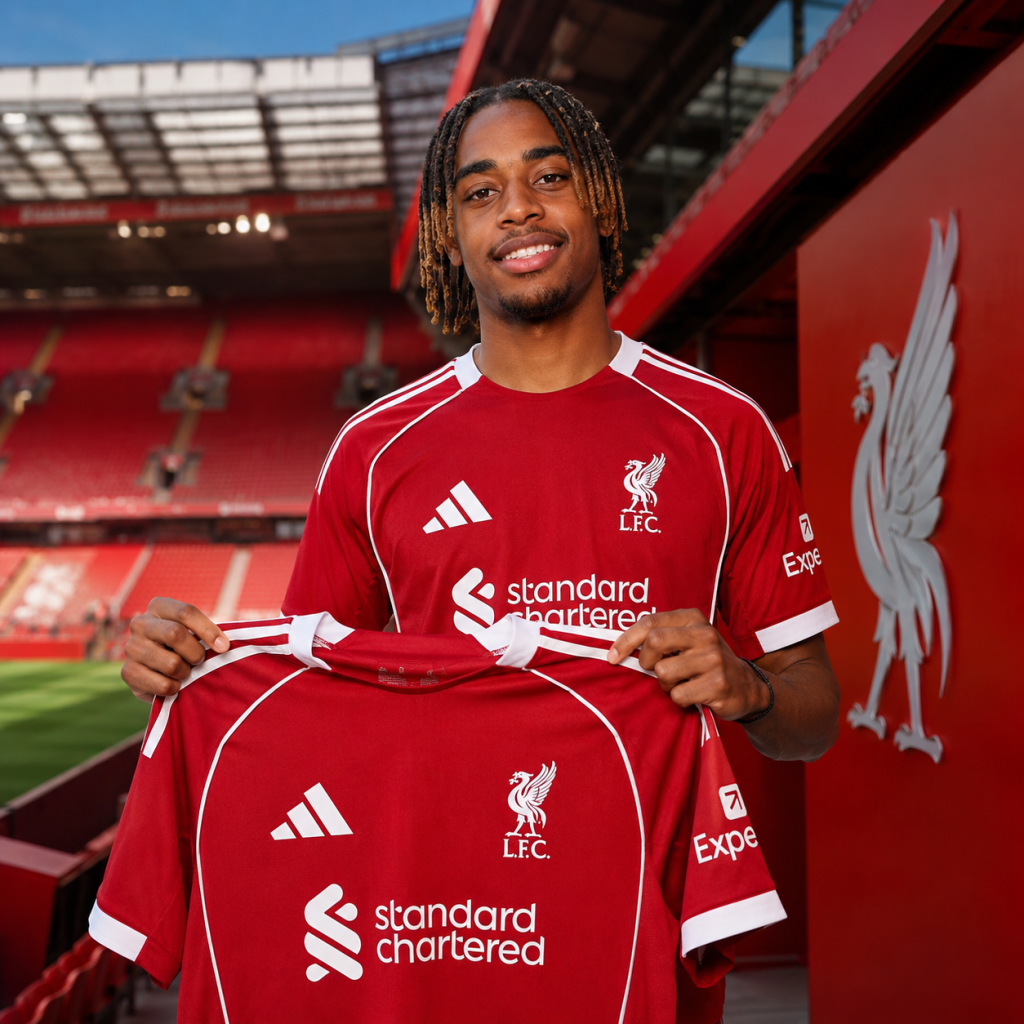

Liverpool have completed the signing of French international Bradley Barcola from Paris Saint-Germain in a deal valued at up to £123 million, making it one of the largest football transfers of 2026 and one of the most significant athlete-related business transactions disclosed in the past 32 hours.
The transfer highlights the continued escalation of elite football asset valuations, with clubs increasingly willing to deploy substantial capital to secure young, high-performing athletes viewed as long-term commercial and sporting investments.
Barcola, who helped Paris Saint-Germain secure major domestic and European honours, joins Liverpool on a long-term contract as part of the club’s broader squad transformation strategy under manager Andoni Iraola. Reports place the transaction at an initial £106 million, with performance-related provisions potentially lifting the total value to approximately £123 million.
Athlete Acquisition as Strategic Capital Allocation
Modern football transfers have evolved far beyond player recruitment.
For leading clubs, elite athletes represent revenue-generating assets capable of influencing:
- Matchday performance
- Global merchandise sales
- Commercial sponsorship attractiveness
- International fan acquisition
- Digital engagement growth
At 24 years old, Barcola arrives with significant upside both on the pitch and within Liverpool’s global commercial ecosystem. The French international already possesses strong brand recognition across European football markets and is entering what many clubs consider the peak value creation phase of an athlete’s career.
Liverpool’s willingness to commit more than £100 million to a single player underscores the growing importance of securing scarce elite talent before valuations rise further.
The Economics Behind Football’s Transfer Boom
The transaction also reflects broader trends across the football industry.
Elite clubs continue to benefit from expanding broadcasting revenues, global sponsorship agreements, streaming partnerships, and international fan monetisation strategies. These revenue streams have helped sustain increasingly aggressive investment in player acquisitions despite heightened scrutiny around financial sustainability.
For Paris Saint-Germain, the sale provides substantial capital flexibility while allowing the club to reshape its own squad structure.
For Liverpool, the acquisition represents a long-term bet that sporting success and commercial growth will justify one of the largest investments in the club’s history.
What It Signals for the Sports Industry
The Barcola transfer reinforces a growing reality across global sport: elite athletes are increasingly treated as premium assets within a highly competitive global marketplace.
Football clubs are operating more like sophisticated investment vehicles, balancing talent acquisition, asset appreciation, revenue growth, and brand expansion.
As ownership groups seek higher returns and global audiences continue to grow, the market for top-tier athletes is likely to remain one of the most aggressive investment segments within the sports economy.
Liverpool’s latest move demonstrates that despite economic uncertainty in other sectors, demand for world-class sporting talent remains exceptionally strong.