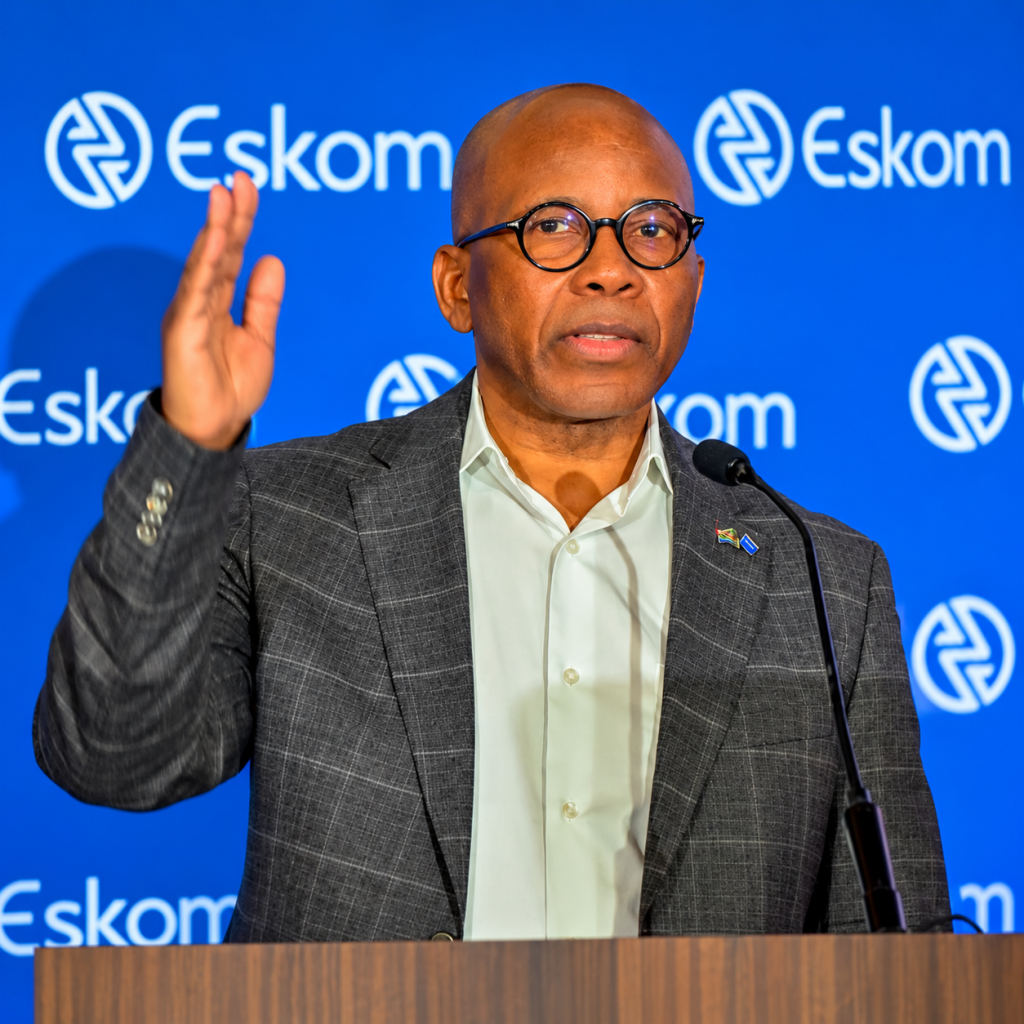

South Africa’s government has formally outlined its expectations for Eskom’s next phase of reform following the appointment of Dr. Mteto Nyati as Chairperson of the utility’s board, a move that places governance, operational performance, and long-term restructuring at the centre of the country’s electricity strategy.
The shareholder expectations were communicated by Electricity and Energy Minister Kgosientsho Ramokgopa in a government update issued on 25 September 2026, placing renewed emphasis on the transition toward what government describes as “Eskom 2.0”.
A Governance Decision With Economic Consequences
The decision is significant because Eskom remains one of South Africa’s most strategically important institutions. The utility’s operational performance directly affects industrial output, investor confidence, infrastructure development, and broader economic growth.
By clarifying shareholder expectations for the incoming board leadership, government is seeking stronger accountability, improved execution, and accelerated implementation of Eskom’s long-term transformation agenda.
The appointment of a new chairperson is more than a governance change. It represents a leadership decision intended to influence how the utility approaches operational reliability, investment planning, and institutional reform.
Why Government Is Acting Now
South Africa has spent several years pursuing reforms aimed at stabilising the electricity sector while expanding generation capacity and encouraging greater private-sector participation.
Government’s latest intervention signals that leadership and governance remain critical components of that strategy. The expectation is that a stronger board structure can support operational discipline while helping guide Eskom through its next stage of restructuring.
The timing is also notable as policymakers continue to focus on maintaining energy security while supporting economic expansion and industrial competitiveness.
Who Is Impacted
The implications extend across multiple sectors:
- Large industrial users dependent on reliable electricity supply.
- Investors assessing South Africa’s infrastructure and energy environment.
- Municipalities and public institutions connected to Eskom’s network.
- Independent power producers participating in the evolving energy market.
- Households and businesses reliant on stable electricity services.
For many market participants, governance decisions at Eskom are closely monitored because they often influence confidence in broader state-owned enterprise reforms.
What It Signals
The government’s public positioning around Eskom’s new leadership suggests continued commitment to institutional reform rather than policy reversal.
For investors and businesses, the message is that governance execution remains a priority within South Africa’s energy strategy. The focus on board leadership, accountability, and shareholder expectations indicates that government views institutional performance as a key lever for supporting economic momentum and infrastructure reliability.
As Eskom enters its next phase of transformation, the effectiveness of the new leadership structure will be closely watched by markets, industry stakeholders, and policymakers alike.