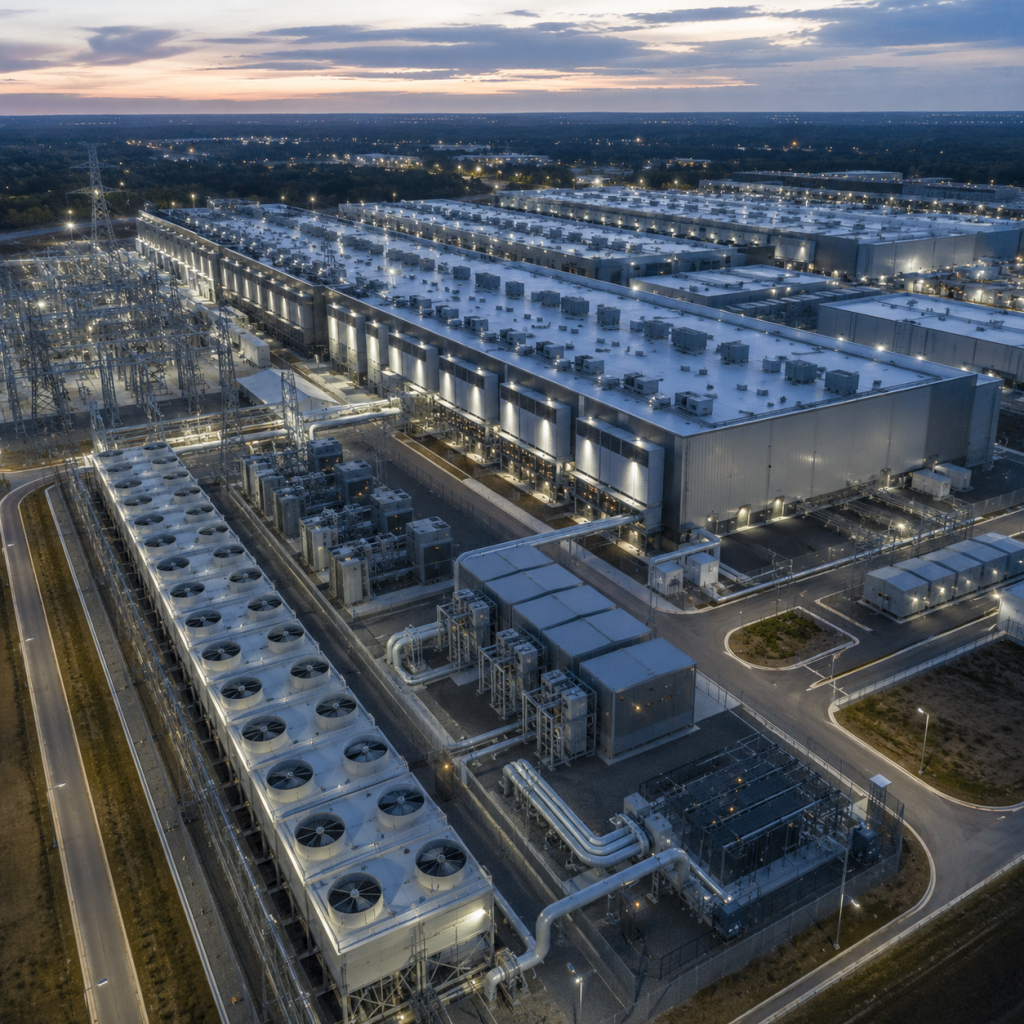

Anthropic has locked in one of the most consequential compute agreements in the generative AI industry to date, signing a deal with SpaceX to take full occupancy of the Colossus 1 data center in Memphis, Tennessee. The agreement, announced on May 6, 2026, gives Anthropic immediate access to more than 300 megawatts of AI compute capacity and over 220,000 Nvidia GPUs, including H100, H200, and next-generation GB200 accelerators. The deal moves directly into live commercial deployment, with Anthropic confirming the capacity will be activated within the month to expand access for Claude Pro and Claude Max subscribers.
The transaction is structurally unusual. SpaceX, which owns rival AI company xAI, is effectively leasing its largest existing data center facility to a direct competitor. Elon Musk, who has publicly criticised Anthropic on multiple occasions, confirmed the arrangement on X, noting that SpaceX and xAI had already transitioned their own model training to the newer Colossus 2 facility, making Colossus 1 available for third-party compute. The deal with Anthropic will see the company hand over just under half of its total GPU fleet of around 500,000 units, with xAI retaining the rest across its newer infrastructure.
Scale That Changes the Competitive Equation
The Colossus 1 agreement does not stand alone. It joins a growing stack of compute commitments that includes an up to 5 gigawatt agreement with Amazon, which includes nearly 1 gigawatt of new capacity by the end of 2026, a 5 gigawatt agreement with Google and Broadcom set to begin coming online in 2027, a strategic partnership with Microsoft and Nvidia covering $30 billion of Azure capacity, and a $50 billion U.S. AI infrastructure investment with Fluidstack. Together, these agreements reflect a deliberate strategy by Anthropic to remove compute scarcity as a constraint on Claude’s commercial growth.
The business logic is direct. The agreement immediately boosts Anthropic’s Claude services, raising Claude Opus API rate limits and doubling Claude Code’s five-hour limits for paid and enterprise customers. For enterprise buyers evaluating AI platforms, this signals that Anthropic now has the infrastructure depth to support deployment at genuine organisational scale, not just at the level of individual users or limited pilot programmes.
Orbital Compute: The Strategic Frontier
Beyond the immediate capacity gain, the agreement contains a forward-looking dimension that reframes the entire partnership. As part of the agreement, Anthropic expressed interest in partnering with SpaceX to develop multiple gigawatts of orbital AI compute capacity. While no financial or timeline commitments have been disclosed for the orbital component, the signal is significant. It positions Anthropic as a potential anchor customer for SpaceX’s ambitions in space-based AI infrastructure, an area in which SpaceX filed with the U.S. Federal Communications Commission earlier this year to deploy a satellite constellation capable of supporting AI data centre workloads.
In January, SpaceX filed with the FCC to deploy a million-satellite orbital AI data centre megaconstellation, though the project still faces significant technical and regulatory hurdles. Anthropic’s expressed interest accelerates the commercial case for that initiative and ties the fortunes of two major frontier technology companies to an infrastructure paradigm that does not yet exist at scale.
Regulated Markets and International Expansion
The timing of the deal also carries implications beyond the United States. Anthropic said it is extending some of its capacity to international markets to serve customers in regions that operate in regulated markets such as healthcare and financial services. This is a direct commercial signal to enterprise buyers across Africa, the Middle East, and emerging markets where data residency, compliance, and service reliability have historically limited AI adoption.
For South African and African enterprise customers, the practical significance is meaningful. Regulated sectors including financial services, healthcare infrastructure, and government-linked institutions have been cautious AI adopters, in part because of concerns around compute availability and service continuity. Anthropic’s expanding infrastructure base, now including a dedicated facility delivering over 300 megawatts of capacity, strengthens the case that Claude can be provisioned as a reliable, enterprise-grade tool for organisations operating under strict governance requirements.
Infrastructure as Competitive Strategy
What the Colossus 1 deal ultimately demonstrates is that the AI industry’s competitive battleground has shifted from model performance alone to compute infrastructure. The ability to deploy at scale, absorb enterprise demand, and guarantee capacity for paying subscribers is now a differentiator in its own right. Anthropic’s willingness to transact with a rival’s infrastructure owner, and SpaceX’s readiness to execute that transaction in pursuit of AI data centre revenue ahead of its planned IPO, illustrates how commercial imperatives are overriding competitive positioning in the current phase of the industry.
The timing matters because SpaceX is weeks away from going public. The Musk-led firm filed confidentially with the SEC on April 1 for an IPO targeting a $1.75 trillion to $2 trillion valuation, with the public S-1 expected by late May and the roadshow set for the week of June 8. Adding Anthropic as a named compute customer strengthens SpaceX’s pitch to investors as more than a launch and satellite business, with AI infrastructure now a disclosed revenue line entering its prospectus period.
For the AI sector broadly, the deal marks another data point in what is becoming a recognisable pattern: the companies that will lead the next phase of enterprise AI adoption are not only those with the best models, but those that have secured the compute capacity to deliver those models reliably, at speed, and at the volumes that institutional customers demand.