
South Africa’s decision to dispatch special envoys across Africa and other regions following recent xenophobic attacks has emerged as one of the most strategically significant political developments on the continent this week.
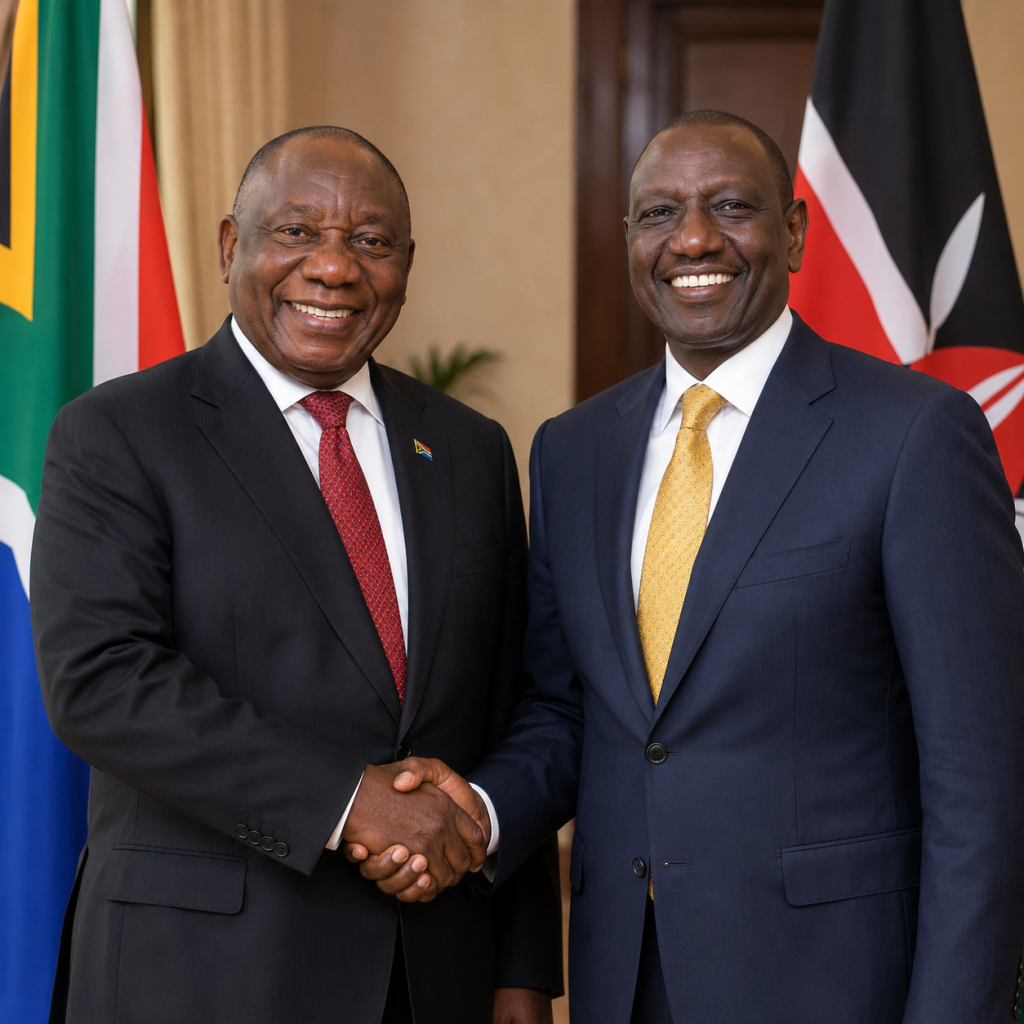
The announcement was made by President Cyril Ramaphosa on 4 June during the State Visit of Kenyan President William Ruto to Pretoria, where both leaders held discussions aimed at strengthening economic, political and strategic cooperation between two of Africa’s most influential economies.
While the immediate trigger was a series of attacks targeting foreign nationals, the broader significance extends far beyond domestic security concerns.
The decision signals a recognition that migration, labour mobility, trade integration and continental diplomacy have become inseparable issues for Africa’s future growth agenda.
A Defining Moment for South Africa’s Regional Leadership
Speaking after bilateral talks with President Ruto, Ramaphosa confirmed that South Africa would send envoys across Africa and internationally to engage stakeholders on migration-related challenges and cooperation. He stressed that migration should be addressed collectively through collaboration between governments and regional partners.
The move places South Africa in a leadership position at a time when migration pressures are becoming increasingly important across emerging markets.
Rather than responding solely through domestic enforcement measures, Pretoria is elevating the issue into a diplomatic and continental policy discussion.
For investors and policymakers, this approach reflects a growing understanding that economic integration under the African Continental Free Trade Area cannot succeed without parallel conversations about people, skills and labour mobility.
Why This Development Stands Out
Many governments facing migration tensions tend to focus primarily on border controls and internal security responses.
South Africa’s decision to launch a diplomatic outreach effort is notable because it reframes migration as a shared African challenge requiring regional solutions.
The timing is equally important.
The announcement came during a high-level engagement with Kenya, one of Africa’s fastest-growing and most influential economies. The visit itself was centred on deepening trade, investment and economic cooperation between the two countries.
By linking migration discussions to broader economic cooperation, both governments are signalling a more integrated approach to continental development.
Implications for Business and Investment
Cross-border trade, logistics, tourism and professional services increasingly depend on predictable regional relationships.
Periods of social tension and anti-immigrant sentiment can create uncertainty for investors, multinational companies and entrepreneurs operating across multiple African markets.
By actively engaging other governments and reaffirming South Africa’s commitment to peaceful coexistence, policymakers are seeking to protect confidence in the country’s position as a gateway economy for the continent.
For businesses with pan-African ambitions, diplomatic stability remains a critical component of investment planning.
The initiative may also contribute to stronger cooperation on labour markets, skills development and regional mobility frameworks over the coming years.
What It Signals for Africa
The significance of this development extends beyond South Africa and Kenya.
It reflects a broader shift toward recognising that Africa’s economic future will depend not only on trade agreements and infrastructure investment, but also on how countries manage human mobility.
As African economies become more interconnected, migration policy is increasingly becoming an economic policy issue.
The decision by South Africa to elevate the conversation through diplomacy rather than isolation may become an important test case for how the continent addresses one of its most complex challenges.
For leaders, investors and institutions watching Africa’s integration agenda, the message is clear.
The future of regional growth will be shaped as much by cooperation between people as by the movement of goods and capital.