
The largest IPO in history is no longer a future possibility. It is now a market reality.
On 12 June 2026, SpaceX completed its landmark public offering, raising approximately $75 billion at a valuation of about $1.75 trillion. The scale of the transaction immediately placed the company among the most valuable publicly traded enterprises in the world. Reuters reported that investor demand exceeded expectations and that the listing represented the largest IPO ever completed.
The immediate market story is obvious: investors want exposure to space infrastructure, satellite networks, launch capabilities, artificial intelligence-linked growth, and Elon Musk’s broader technology ecosystem.
The more important story is what this event reveals about the future structure of global power.
The End of the Traditional Industry Boundary
For most of modern economic history, governments built strategic infrastructure and corporations built commercial products.
That distinction is rapidly disappearing.
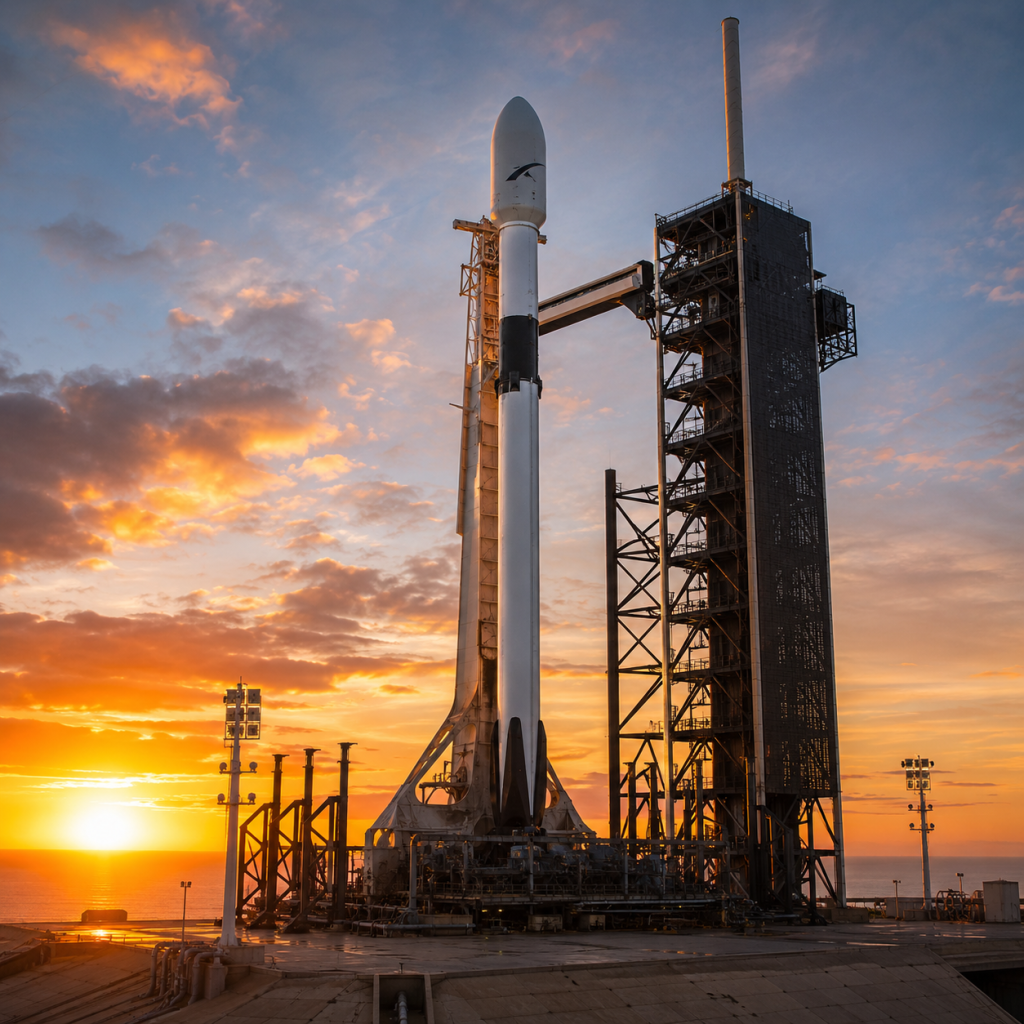
SpaceX is not merely a space company. It operates launch systems, satellite communications infrastructure, national security capabilities, global connectivity networks, and increasingly important digital infrastructure.
Historically, assets of this strategic significance would have been controlled primarily by states.
Today, capital markets are assigning those functions trillion-dollar valuations.
The implication is profound.
The next generation of infrastructure leaders may not be governments. They may be globally scaled technology corporations.
Why Investors Are Thinking Beyond Rockets
Traditional valuation models struggle to explain trillion-dollar outcomes.
The market is increasingly rewarding control of platforms rather than products.
SpaceX sits at the intersection of multiple long-term growth sectors:
- Space transportation
- Satellite communications
- Artificial intelligence infrastructure
- Defence and security systems
- Global connectivity
- Data transmission networks
Investors are not valuing launch activity alone.
They are valuing the possibility that one company could become a foundational layer of the future digital economy.
That distinction matters because platform companies tend to accumulate influence faster than conventional industrial firms.
What This Means for Governments
The strategic question is no longer whether private capital can fund critical infrastructure.
That question has already been answered.
The new question is how governments maintain strategic influence when infrastructure ownership increasingly resides in global corporations.
Countries that rely heavily on externally controlled technology systems may discover that economic competitiveness, communications resilience, and even aspects of national security become linked to decisions made in corporate boardrooms rather than government ministries.
This creates a new policy challenge.
Governments must become sophisticated partners, regulators, investors, and customers simultaneously.
The countries that adapt fastest will likely attract the next generation of strategic industries.
The Opportunity for Africa
For African economies, the lesson extends beyond the space sector.
The rise of companies such as SpaceX demonstrates that capital increasingly flows toward ambitious infrastructure-led innovation rather than incremental business models.
Africa possesses major opportunities in:
- Energy infrastructure
- Digital connectivity
- Advanced manufacturing
- Satellite-enabled services
- Logistics technology
- Artificial intelligence applications
The challenge is creating investment environments capable of scaling globally relevant enterprises.
Rather than viewing technology solely as a consumer market opportunity, African policymakers may need to focus on building companies that own critical infrastructure layers themselves.
The Bigger Shift Investors Should Watch
The significance of the SpaceX IPO is not the share price.
It is the signal.
Capital markets are increasingly willing to assign sovereign-scale valuations to companies that control strategic infrastructure.
That trend is likely to accelerate.
The next decade may be defined by a competition between nations seeking influence and corporations building infrastructure that transcends national boundaries.
The winners will not necessarily be those with the largest populations or the biggest economies.
They may be those that successfully align capital, technology, regulation, and execution around globally significant platforms.
SpaceX’s IPO may ultimately be remembered not as a financial milestone, but as a defining moment in the emergence of the corporate superpower era.