
A growing debate is emerging across South Africa as the June 30 deadline issued by anti-illegal immigration activists approaches.
On social media, in political discussions, and across community forums, comparisons are increasingly being drawn between recent anti-immigration unrest in Ireland and Northern Ireland and the possibility of heightened tensions in South Africa at the end of June.
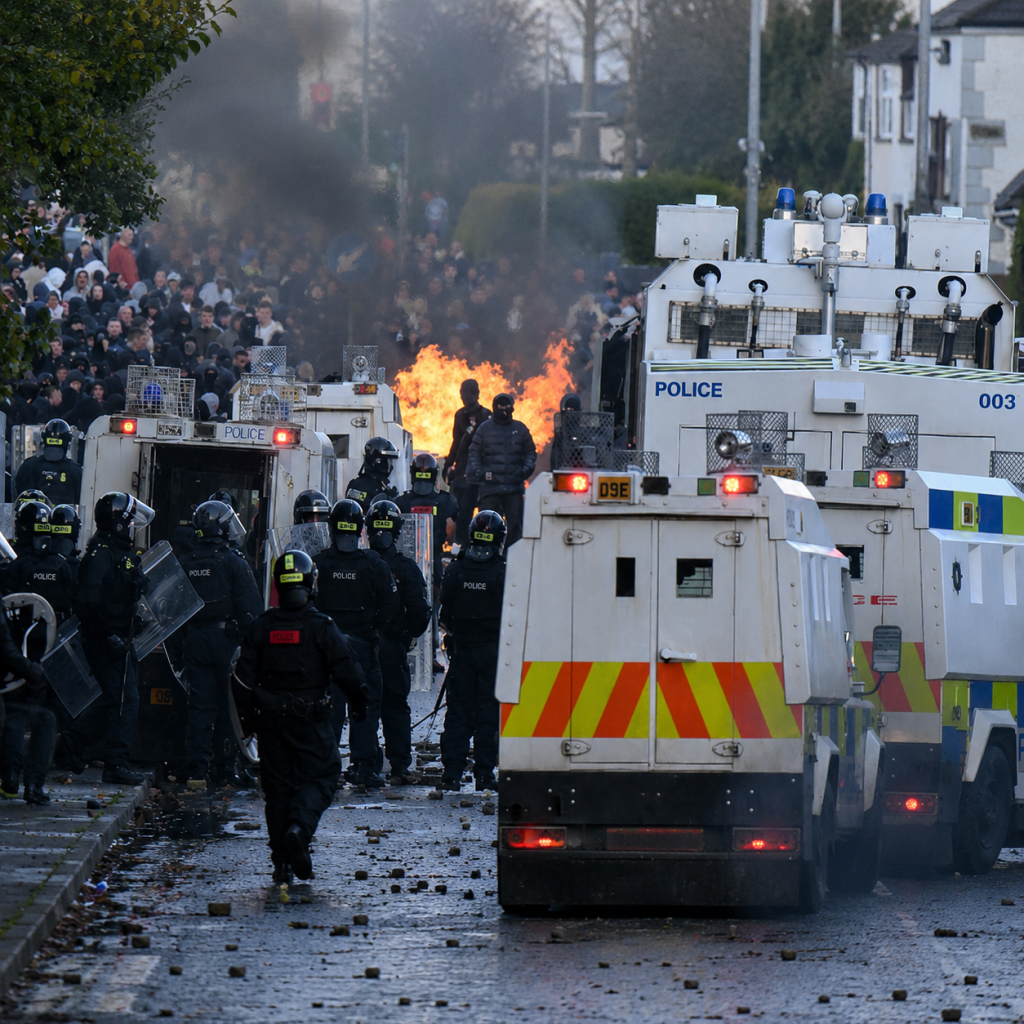
The comparison follows several days of anti-immigration protests and violent unrest in Belfast, Northern Ireland, after a knife attack allegedly involving a Sudanese refugee. The events quickly evolved into a broader national discussion around immigration policy, border controls, public services, and social cohesion.
At the same time, South Africa is experiencing its own heated debate over undocumented migration, economic pressure, unemployment, and border management. Activist groups have publicly called for June 30 to become a turning point in the country’s approach to illegal immigration.
Why Ireland Is Being Mentioned
The Irish situation has become a reference point because it demonstrates how quickly immigration concerns can move from political debate into economic and social disruption.
In Ireland and Northern Ireland, protests have disrupted transport routes, damaged property, required increased police deployment, and generated significant political pressure on governments to tighten immigration controls. Recent demonstrations in Dublin have also focused on migration policy and new asylum regulations being introduced under Ireland’s updated immigration framework.
For many South Africans following these developments, the question is not whether the situations are identical, but whether public frustration around immigration can reach a similar level of intensity.
South Africa’s Economic Reality
South Africa faces a very different economic environment from Ireland.
The country continues to struggle with high unemployment, pressure on public services, slow economic growth, and widespread concerns around crime.
These challenges have increasingly become linked, fairly or unfairly, to discussions around undocumented migration.
Recent weeks have already seen rising tensions in several communities, prompting President Cyril Ramaphosa to publicly condemn xenophobic violence while simultaneously promising stronger immigration enforcement and reforms.
The result is a politically sensitive environment where immigration policy has become intertwined with economic frustration.
What Markets Will Be Watching
For investors and businesses, the key issue is not immigration alone.
The real concern is stability.
Financial markets generally react negatively to uncertainty, disruptions to commerce, violence, supply chain interruptions, or signs of weakening social cohesion.
If June 30 passes peacefully, investors may view it as evidence that South Africa’s institutions remain capable of managing difficult national debates through lawful and democratic processes.
However, if large-scale unrest emerges, markets could focus on:
- Retail and commercial disruptions
- Tourism perceptions
- Foreign investment confidence
- Business operating risks
- Security costs
- Government response effectiveness
These factors often influence investment decisions more than the underlying political issue itself.
The Bigger Strategic Question
The deeper issue extends beyond immigration.
Across much of the developed and developing world, governments are confronting a common challenge: balancing economic growth, labour market needs, border management, and social stability.
Ireland’s recent unrest reflects this tension.
South Africa’s June 30 discussions reflect the same underlying pressures, although within a very different economic and historical context.
The strategic question facing South Africa is whether concerns around immigration can be addressed through policy reform, enforcement, and institutional action, or whether public frustration continues to build outside formal channels.
What This Signals
The growing comparison between Ireland and South Africa is significant because it reveals a broader global trend.
Immigration is increasingly becoming an economic issue rather than simply a border issue.
For business leaders, investors, and policymakers, the lesson from Ireland is not the protests themselves.
It is the speed with which economic frustration, political dissatisfaction, and immigration concerns can combine into a single national conversation.
As June 30 approaches, South Africa’s response may become an important test of institutional leadership, public trust, and economic resilience.
The outcome could influence not only domestic stability but also how global investors assess South Africa’s ability to navigate one of the most complex policy debates facing modern economies.