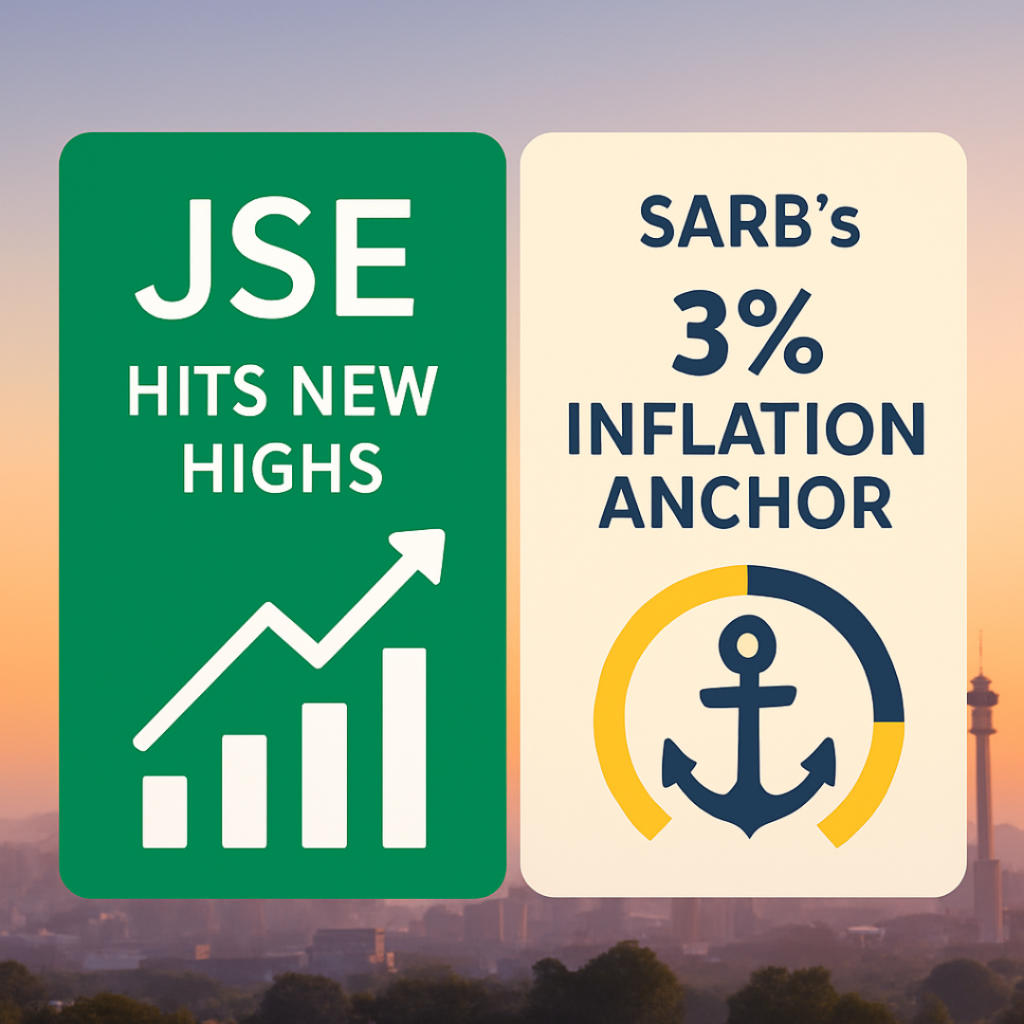

As the first trading week of 2026 unfolds, the South African economy is operating under a fundamentally different “gravity” than it did just twelve months ago. The transition to a formal 3% inflation target—developed in coordination between the National Treasury and the South African Reserve Bank (SARB)—has moved from a policy proposal to the primary anchor for market expectations. With inflation cooling to 3.5% as of late 2025, the narrative has shifted from fighting price surges to managing a steady, disinflationary growth path.
The Interest Rate Glide Path
The “easing cycle” that defined 2025 is set to continue into the new year. Following a cumulative 150 basis points (bps)of cuts that brought the repo rate to 6.75% and the prime lending rate to 10.25%, the SARB’s Quarterly Projection Model (QPM) indicates that the bottom has not yet been reached. Market analysts expect an additional 50 to 75 bps of relief over the course of 2026, provided the new 3% anchor remains firm.
This sustained reduction in borrowing costs is expected to peak in its impact on consumer spending by mid-2026. For homeowners, a projected 75 bps cut in 2026 could translate into monthly savings of nearly R840 on an average home loan of R1.69 million, providing a significant boost to household disposable income.
JSE and the “Wealth Effect”
The Johannesburg Stock Exchange (JSE) enters 2026 on the heels of a historic bull run. The FTSE/JSE All-Share Index reached fresh all-time highs of over 116,000 points in late 2025, driven by a combination of domestic credit rating upgrades from S&P and a global rally in precious metals.
Gold’s record-breaking climb past $4,000 an ounce in late 2025 has been a primary tailwind for the mining-heavy index, swelling South Africa’s export receipts and lending support to the rand. While the JSE has seen some “thin holiday trading” and cautious positioning as 2026 opens, the underlying technical structure remains constructive, with strong support for the Top 40 index at the 108,000 level.
The Rand’s Resilience and Global Winds
One of the most surprising success stories of the past year has been the Rand’s performance. The local unit ended 2025 nearly 13% stronger against the US dollar—its biggest annual gain since 2009. Stabilizing around the R17/$ level, the Rand is benefiting from a combination of local fiscal discipline and a broad weakening of the US dollar amid shifting American trade policies.
However, the outlook is not without risks. The South African economy must still navigate potential shocks from “Trump-era” tariff waves and ongoing logistics challenges at Transnet. Despite these hurdles, the SARB’s growth forecast of 1.4% for 2026—up from 1.2% in 2025—suggests a slow but steady acceleration as more reliable energy and logistics infrastructure come online.