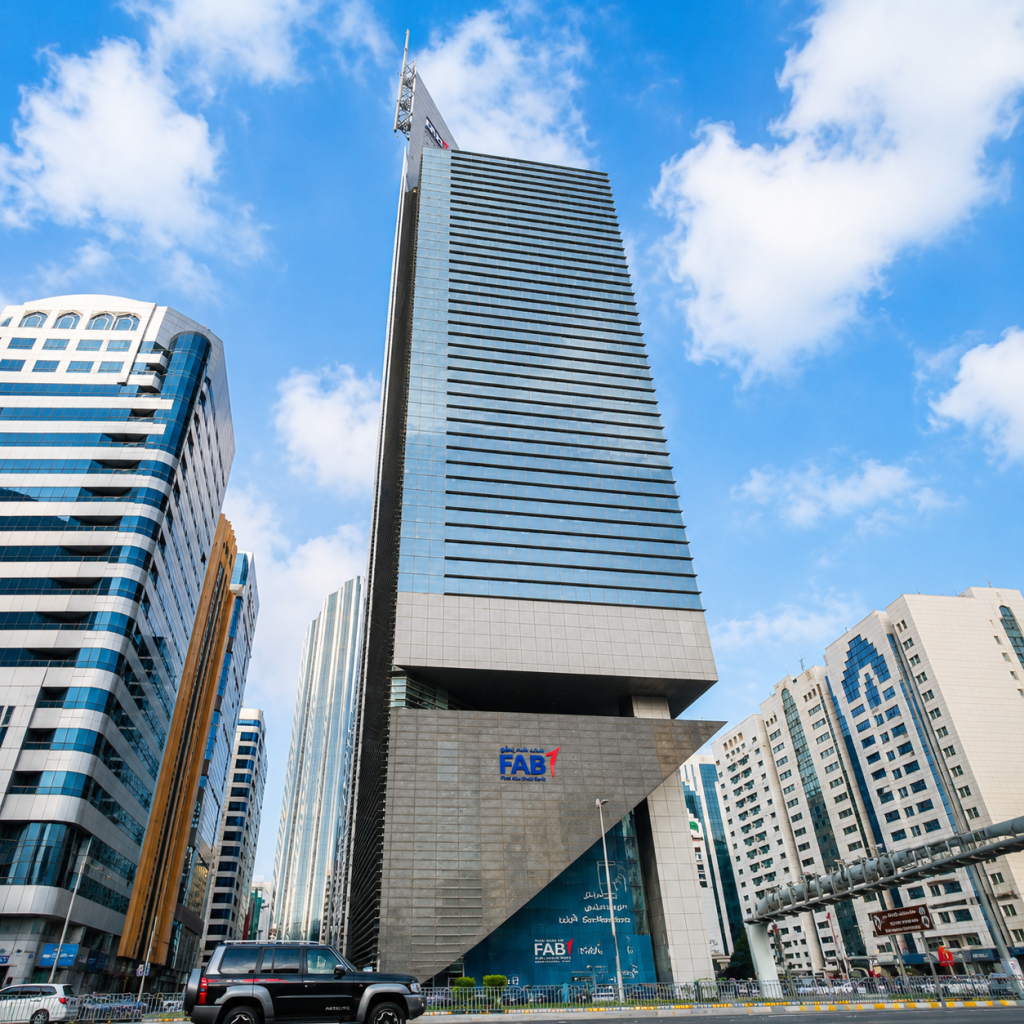

South Africa’s banking sector could soon welcome one of the world’s largest lenders.
First Abu Dhabi Bank (FAB), the United Arab Emirates’ largest bank, has confirmed that it intends to apply for a South African banking licence after securing a significant legal victory in its long-running trademark dispute with FirstRand, the parent company of FNB. The development marks an important step in the bank’s expansion strategy into Africa’s most developed financial market.
The Supreme Court of Appeal ruled in favour of FAB, dismissing FirstRand’s challenge against the registration of the “First Abu Dhabi Bank” trademarks in South Africa. During the proceedings, FAB confirmed that obtaining trademark protection was the first stage of its broader plan to establish banking operations in the country before pursuing a formal banking licence from regulators.
A Banking Giant with Global Scale
FAB manages approximately US$406 billion, equivalent to about R6.6 trillion in assets, making it the largest bank in the UAE and one of the Middle East’s most influential financial institutions. The lender operates across five continents, serving governments, multinational corporations, institutional investors and private clients.
Its balance sheet exceeds the combined assets of several major South African banking groups, underscoring the scale of capital that could eventually enter the local financial system should regulatory approval be granted.
What the Court Decision Means
The legal dispute centred on whether FAB’s trademarks were too similar to those of FNB.
The Supreme Court of Appeal rejected FirstRand’s arguments, noting that there was no reason to believe FAB would fail to comply with South Africa’s regulatory requirements should it proceed with a banking licence application. The judgment effectively removes a significant obstacle to the UAE lender’s expansion plans.
While the ruling does not automatically authorise FAB to operate as a bank in South Africa, it allows the institution to continue building its legal and commercial presence ahead of any licensing process with the Prudential Authority.
What It Signals for South Africa’s Financial Markets
FAB’s stated intention to enter South Africa reflects continued international confidence in the country’s financial infrastructure despite an increasingly competitive banking landscape.
For investors, the move signals several important trends:
- Continued institutional capital interest from the Gulf region.
- Potential for increased competition within South Africa’s banking sector.
- Greater opportunities for cross-border trade finance between Africa and the Middle East.
- Possible expansion of financing options for corporate, infrastructure and investment projects across the region.
Should FAB ultimately secure a banking licence, it would become one of the largest foreign banking entrants into South Africa in recent years, strengthening financial links between the UAE and Africa’s largest economy.
A Strategic Expansion Beyond Banking
The announcement also reflects a broader pattern of Gulf financial institutions increasing their presence across African markets.
South Africa’s sophisticated regulatory framework, deep capital markets and role as a gateway for regional investment continue to attract major international financial institutions seeking long-term growth opportunities.
Although regulatory approvals remain outstanding, FAB’s court victory represents a significant milestone in its African expansion strategy and could reshape competitive dynamics within South Africa’s banking sector over the coming years.