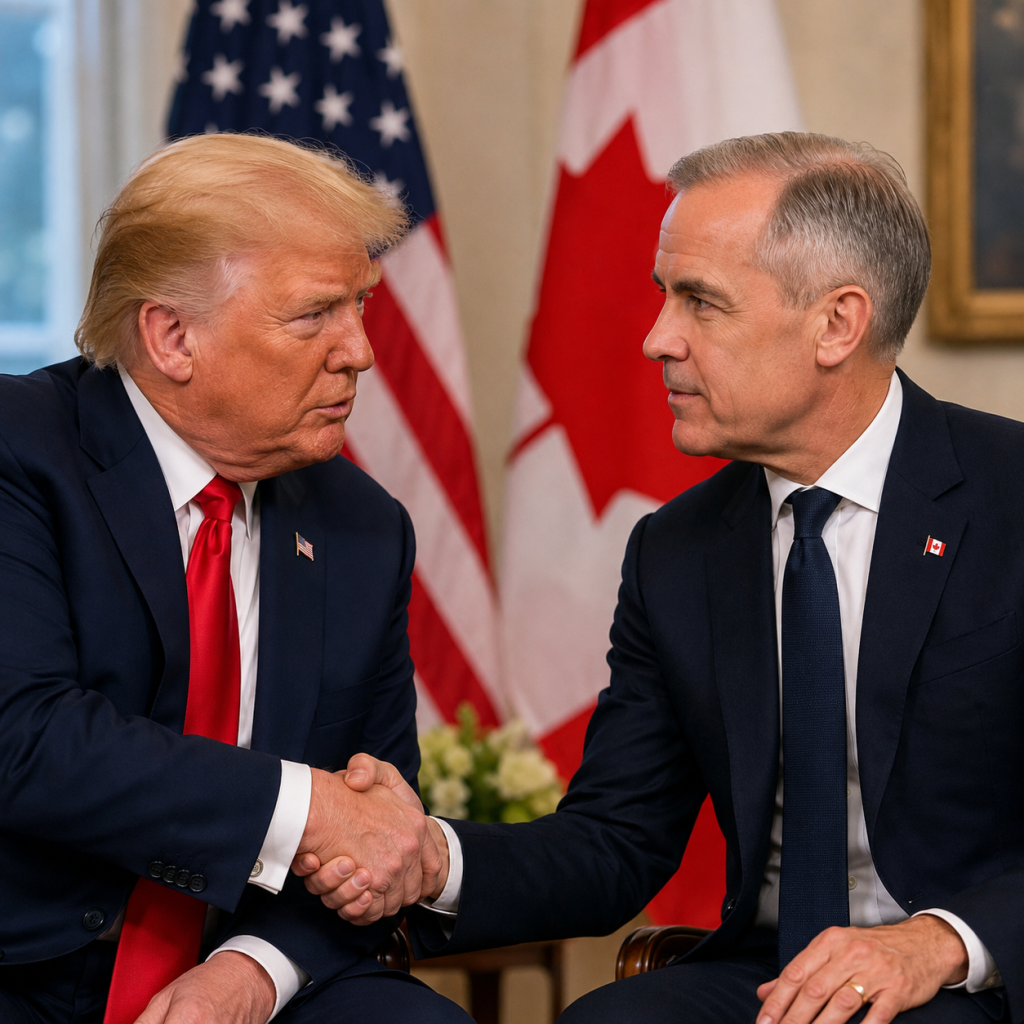

The United States and Canada entered a critical phase of trade negotiations this week as President Donald Trump and Canadian Prime Minister Mark Carney held direct discussions ahead of a looming tariff deadline that could reshape North American trade flows. The talks were officially disclosed within the past day as both governments attempt to avoid the implementation of new US tariffs on approximately $20 billion worth of Canadian exports.
At the centre of the dispute is Washington’s plan to impose tariffs of up to 50% on a range of Canadian products. The proposed measures would affect sectors including automotive manufacturing, lumber, dairy, and other industrial exports that have traditionally benefited from protections under the United States-Mexico-Canada Agreement (USMCA).
High-Stakes Negotiations Between Key Allies
The discussions involve some of the world’s closest economic partners. Canada remains the United States’ largest export market and one of its most significant trading partners, while the US is by far Canada’s largest destination for goods exports.
Negotiators from both countries have been working intensively in Washington. Canadian Trade Minister Dominic LeBlanc and senior officials have engaged with US Trade Representative Jamieson Greer and other American counterparts in an effort to bridge remaining differences before the deadline.
One of the most contentious issues concerns automotive trade. Both sides have explored potential reductions in vehicle tariffs, but disagreements remain over how North American content should be calculated within supply chains. The outcome could have major implications for manufacturers operating across Canada, the United States, and Mexico.
Why This Matters Economically
The dispute extends far beyond bilateral trade.
North America’s automotive sector operates through deeply integrated supply chains, with components crossing borders multiple times before final assembly. Higher tariffs could increase production costs, disrupt investment decisions, and place additional pressure on manufacturers already navigating a more fragmented global trade environment.
Business groups on both sides of the border have warned that the measures could affect jobs, industrial competitiveness, and future capital investment. The tariffs would also challenge assumptions about the stability of North American trade integration under the USMCA framework.
Strategic Implications for Global Trade
The negotiations are being closely watched by governments and investors worldwide because they reflect a broader shift toward more assertive trade policies among major economies.
For Canada, securing a compromise would preserve market access and investor confidence. For the United States, the talks represent another test of its willingness to use tariff measures as leverage in trade negotiations.
The outcome could influence future trade discussions with other partners and shape perceptions of North America’s long-term economic architecture. It also raises questions about whether bilateral arrangements could increasingly replace traditional multilateral trade frameworks.
What Happens Next
With the tariff deadline approaching rapidly, negotiators face mounting pressure to reach at least an interim agreement.
A successful breakthrough would provide relief for manufacturers, exporters, and investors across North America. Failure to reach a deal could trigger one of the most significant trade escalations between the two allies in years, creating uncertainty for industries that depend on seamless cross-border commerce.