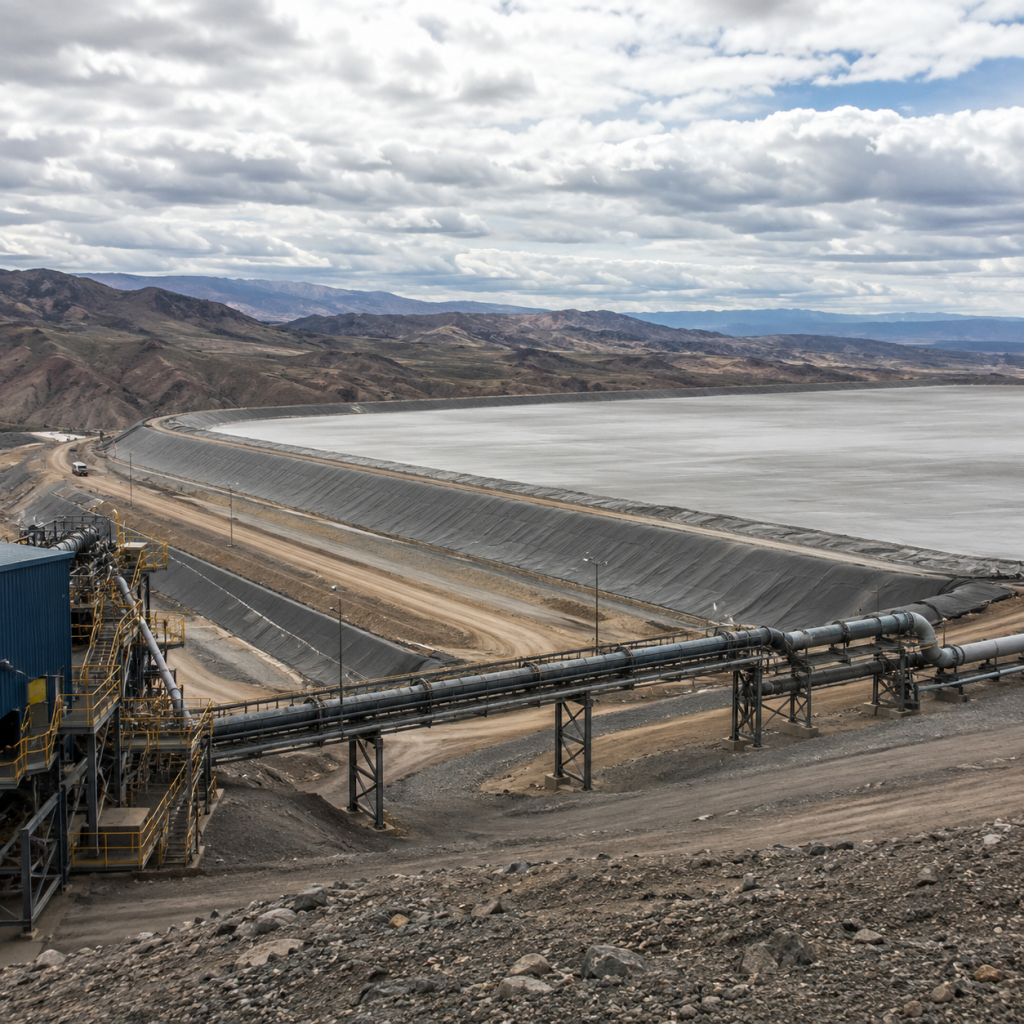

The legal walls have closed in on BHP. On 6 May 2026, London’s Court of Appeal refused the world’s largest miner permission to appeal a High Court ruling that found it legally liable for the 2015 collapse of the Fundão tailings dam in Mariana, Brazil, keeping the landmark liability decision intact and paving the way toward a damages trial.
The Court of Appeal was unequivocal. In a written ruling, it found there was “ample evidence” to justify the High Court’s findings, dismissing BHP’s argument that the trial judge had failed to properly consider the company’s submissions. The Court of Appeal rejected BHP’s argument that the trial judge failed to properly consider the company’s submissions.
What Collapsed — and What It Cost
The collapse of the Fundão tailings dam in Mariana unleashed a torrent of toxic sludge that killed 19 people, displaced thousands, destroyed forests, and contaminated the Doce River along hundreds of kilometres. The Fundão dam was owned and operated by Samarco, a joint venture between Australia-headquartered BHP and Brazilian company Vale.
The legal claim, brought in English courts on behalf of hundreds of thousands of affected parties, is now one of the largest group actions in British legal history. BHP cannot challenge findings that it is liable for a £36 billion ($49 billion) claim over the collapsed dam, as a London appeals court ruled Wednesday that the trial judge had not unjustly failed to engage with the miner’s case.
How the Liability Was Established
The court’s determination was grounded in BHP’s degree of control over Samarco. Having made these findings on BHP’s control over Samarco, the court held BHP was in sufficient control of Samarco to be considered directly and/or indirectly responsible for the activity of Samarco which caused the collapse.
Critically, the court found that documented evidence of structural instability warnings at the Fundão facility had gone unaddressed in the period leading up to the November 2015 failure, raising the question of foreseeability alongside the strict liability determination.
What Comes Next
BHP has indicated it will seek further legal avenues, but its options have narrowed sharply. A further trial to decide on any damages to be paid is expected to begin in April 2027. With liability now settled, the damages phase will determine how much of the £36 billion exposure BHP must ultimately bear, a figure that could materially affect the company’s balance sheet and capital allocation for years.
The ruling carries implications well beyond BHP itself. This decision has fundamentally altered the legal calculus for every multinational resource company with a footprint on a major international stock exchange. Parent companies can no longer assume jurisdictional distance provides a reliable shield from overseas operational disasters. The principle of duty of care, applied transnationally, is now a demonstrated legal reality in one of the world’s most influential court systems.
Why This Matters for the Sector
Tailings infrastructure remains one of the mining industry’s most significant physical and financial risks. The Fundão ruling signals to operators globally, including those executing projects across Africa, Latin America, and Southeast Asia, that the legal and reputational exposure tied to tailings mismanagement is no longer containable within domestic regulatory frameworks alone.
For mining companies scaling production to meet critical minerals demand, the ruling delivers a clear directive: governance of joint venture operations, infrastructure safety protocols, and response to internal warnings must meet the same standards expected of fully owned assets. The cost of not doing so is now being measured in tens of billions.