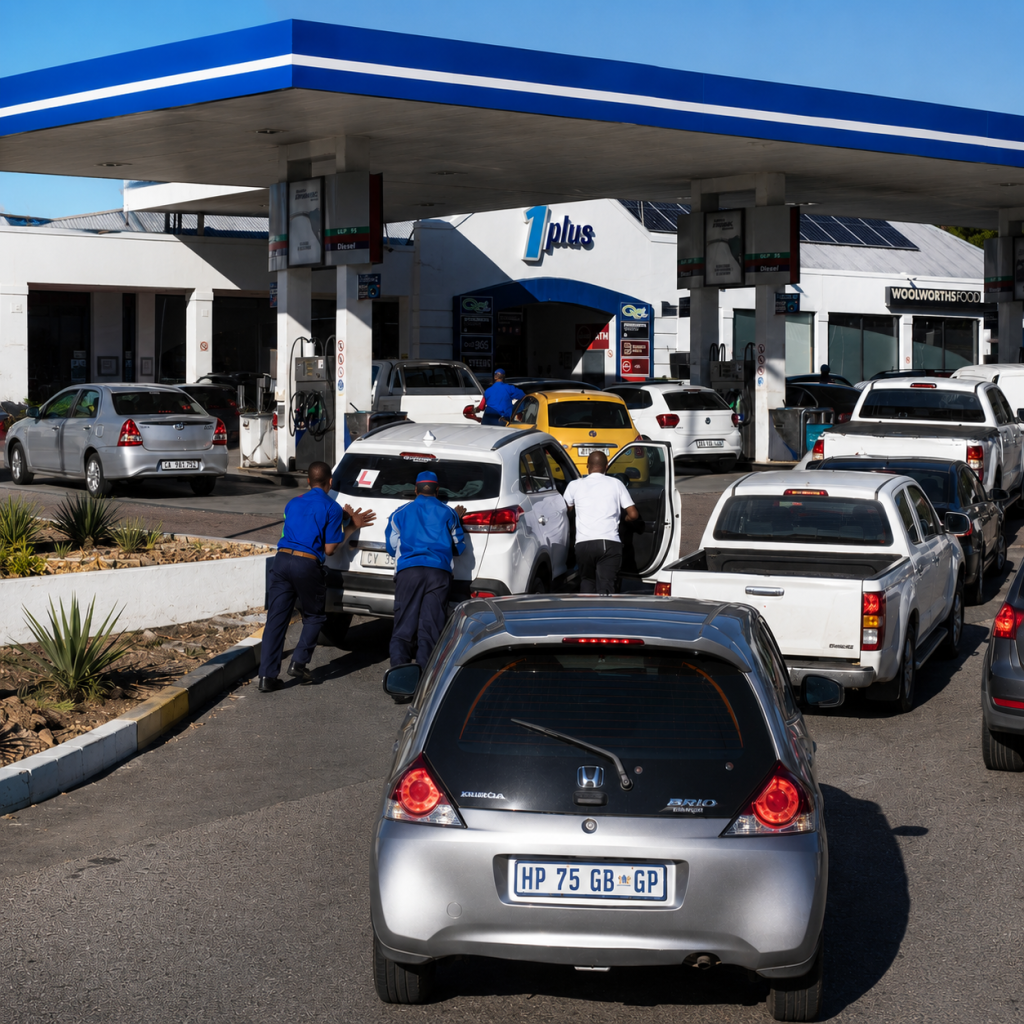

South Africa’s National Treasury has confirmed the structured phase-down of its emergency fuel levy relief, setting a hard deadline of 30 June 2026 for the end of one of the most expensive fuel interventions in the country’s democratic history. The decision, which locks in a two-stage withdrawal of subsidised pricing starting 3 June, now sits at the centre of the country’s near-term inflation outlook and is drawing scrutiny from economists, agricultural bodies, and logistics operators who warn that households will absorb a compounded shock: rising global oil costs and the simultaneous return of state tax revenue.
The relief programme was initially introduced on 1 April 2026 in response to a severe disruption of global oil supply triggered by the US-Iran conflict and the effective closure of the Strait of Hormuz. To provide further relief and to address concerns of higher inflation and negative impacts on economic growth due to increasing fuel prices, Finance Minister Enoch Godongwana and Minister of Mineral and Petroleum Resources Gwede Mantashe extended the R3 per litre general fuel levy reduction through to 2 June, while simultaneously cutting diesel levy relief to zero, at a combined estimated cost of R17.2 billion in foregone tax revenue from April through June.
The structural decision now being felt is what happens next. From 3 June 2026, the petrol levy relief drops from R3.00 per litre to R1.50 per litre, while diesel, which had effectively carried a zero levy through May, rises to R1.97 per litre. The full general fuel levy for petrol returns to R4.10 per litre, and for diesel R3.93 per litre, from 1 July onwards.
The timing matters. Mid-month data from the Central Energy Fund, published this week, indicates that petrol recoveries are tracking a marginal under-recovery of between 11 and 19 cents per litre before taxes. South African motorists may get some breathing room in June after months of punishing fuel price hikes, with the latest mid-month data pointing to significantly lower diesel prices and only modest petrol increases. However, that base-level stability will be overridden by the partial return of the general fuel levy from 3 June. What would have been a roughly 15-cent per litre petrol movement becomes a projected R1.65 per litre increase once the reintroduced levy is factored in.
The cumulative effect across the April-to-June adjustment cycle is severe for certain sectors. More than 70% of goods in South Africa are transported by road, meaning fuel prices carry direct and immediate pass-through into the cost of living. Persistent fuel price pressure is expected to add approximately 0.6% to monthly inflation, potentially pushing CPI toward 4.2%. That figure is consequential. The South African Reserve Bank held its repo rate at 6.75% in March, citing supply-side risks, and convenes again on 28 May. Current economic indicators point towards the SARB keeping interest rates unchanged, though the MPC is expected to maintain a cautious stance in the face of emerging inflationary pressures and heightened global uncertainty.
Parallel to the levy phase-down, a longer-term structural decision is now formally underway. The Department of Mineral and Petroleum Resources is urgently reviewing the Basic Fuel Price formula for diesel, as the reference markets previously used carry a heavy weighting towards Gulf supply and no longer reflect the current sources from which South Africa is actually importing. The review is in direct response to the structural shift in import geography forced by the Middle East conflict, and its outcome could materially reshape how domestic pump prices are calculated and regulated on a permanent basis.
The agricultural sector is watching the levy clock closely. AgriSA and Agbiz have welcomed the extended relief but warned that the measures do not fully address broader structural pressures, including fuel availability constraints, rising input costs, and global oil price volatility. Joint surveys indicate ongoing concerns around supply reliability and partial deliveries during critical operational periods. A projected 6% decline in wheat plantings for the 2026/27 season, reaching a 12-year low, has been attributed in part to rising fuel-driven input costs and production uncertainty.
The government has been explicit that the subsidy programme was designed as a temporary, fiscally neutral buffer, not a structural price fix. Treasury confirmed the relief measure would be funded through a combination of higher-than-expected tax revenue and underspending, with no impact on the fiscal framework adopted by Parliament following the 2026 Budget. Critics, including the Organisation Undoing Tax Abuse, acknowledged the intervention as appropriate but questioned its late execution, while TopAuto has noted that the fuel price formula review mirrors a series of similar government commitments made since 2024, none of which produced lasting structural reform.
What the June phase-down confirms is this: South Africa successfully cushioned one of the largest external commodity shocks in recent memory without breaking its fiscal framework. The harder question, now visibly on the policy agenda, is whether the country’s fuel pricing architecture is built for a world where Gulf supply routes are permanently compromised, where more than 60% of refined product is imported, and where the next geopolitical flashpoint is never more than one shipping chokepoint away. The formula review is the decision that will matter most when the subsidy is gone.