
The African Development Bank Group has warned that rising fuel and fertilizer costs linked to escalating Middle East tensions are beginning to threaten Africa’s food systems, with the continent’s economic growth forecast revised lower amid mounting supply-chain pressure.
In its latest economic outlook released on Tuesday, the bank said Africa’s growth is now expected to slow to 4.2% in 2026, down from 4.4% last year, as disruptions in energy and agricultural input markets begin affecting production costs across key farming economies.
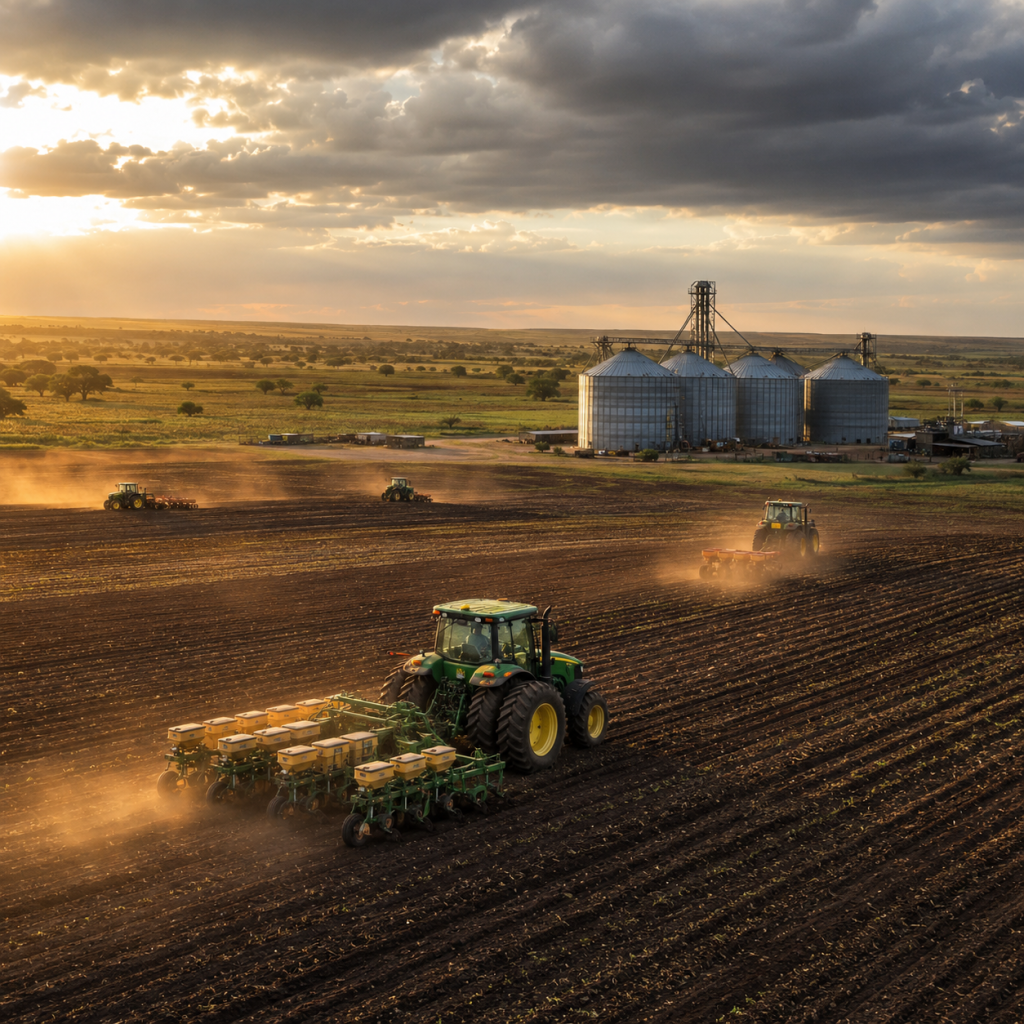
The warning comes at a critical period for African agriculture as countries across Southern, East, and West Africa enter planting and procurement cycles heavily dependent on imported fertilizer, fuel, and logistics infrastructure.
According to the AfDB, the duration of the current geopolitical disruption will determine the severity of the impact on food inflation, agricultural productivity, and macroeconomic stability across the continent.
Fertilizer Dependency Exposes Food Supply Chains
Africa remains highly exposed to global fertilizer and fuel volatility, particularly through import dependence tied to Gulf shipping routes and international commodity markets.
Recent market monitoring reports show fertilizer prices have already surged sharply in recent months, while logistics costs are rising across several African trade corridors. Countries including South Africa, Kenya, Nigeria, and Zambia rely heavily on imported agricultural inputs to support commercial-scale farming and food processing industries.
For commercial agriculture operators, rising fertilizer costs threaten planting margins, output efficiency, and downstream food affordability.
The warning is particularly significant for grain production, poultry feed supply chains, edible oils, and large-scale food manufacturing sectors already managing elevated operating costs after multiple years of climate and currency pressure.
Pressure Builds on African Food Security Strategy
The AfDB’s outlook reinforces growing urgency around agricultural self-sufficiency, regional fertilizer production, and intra-African food trade expansion.
Governments and agribusiness operators across the continent have accelerated investment into irrigation systems, storage infrastructure, agro-processing facilities, and regional logistics networks in an effort to reduce dependence on volatile import channels.
The continent’s broader food economy is increasingly being viewed not only as a social priority but also as a strategic industrial sector tied directly to economic resilience, export competitiveness, and political stability.
Despite the warning, the AfDB noted that Africa remains among the world’s fastest-growing regions, supported partly by stronger agricultural output and improving macroeconomic management in several markets.
What This Signals for Investors and Food Operators
The latest AfDB assessment is likely to intensify focus on:
- Local fertilizer manufacturing
- Regional grain storage capacity
- Cold-chain logistics investment
- Agri-tech deployment
- Water-efficient farming systems
- Cross-border food trade infrastructure
For investors, the current volatility is also accelerating the strategic value of food security infrastructure across Africa.
As global supply routes remain unstable, the continent’s ability to industrialize agriculture and localize food production is rapidly becoming an economic necessity rather than a long-term policy ambition.