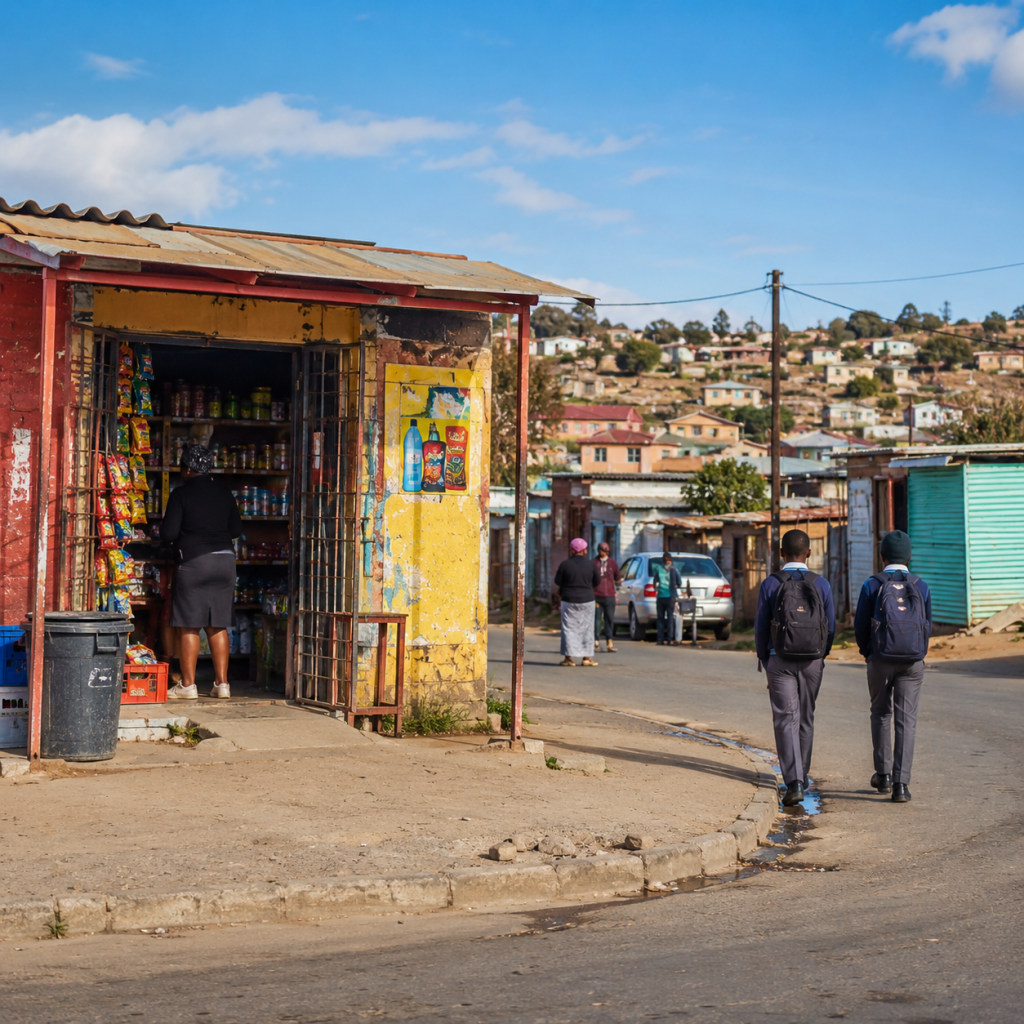

South Africa’s R500 million Spaza Shop Support Fund was launched as a targeted intervention to strengthen township and rural retail businesses, improve compliance, and support informal traders transitioning into the formal economy.
On paper, the programme represents one of the most direct attempts in recent years to channel public funding into micro-retail enterprises that form the backbone of daily consumer life in many communities.
Yet a growing public debate is now emerging, not about the existence of the fund, but about its visibility.
Government has announced that hundreds of millions of rand have been approved for qualifying spaza shop owners through development finance institutions, including the National Empowerment Fund and SEDFA-linked channels. However, detailed public-facing information on individual beneficiaries has not been widely published in an easily accessible register format.
This gap is now shaping public perception.
The Core Public Question
Across social platforms and informal business networks, a recurring question is being asked:
Who actually benefited from the funding?
Many citizens say they have not seen clear, publicly documented examples of funded spaza shop owners within their own communities. This has created a growing demand for greater transparency around beneficiary selection, geographic distribution, and business impact.
The concern is not necessarily that funding did not occur, but that outcomes are not visible enough to build public confidence.
In development finance, perception often becomes a policy variable in itself. Without visible proof of impact, even legitimate programmes can face credibility pressure.
A Sector Already Defined by Complexity
The informal retail sector in South Africa is highly diverse and competitive, shaped by both local entrepreneurs and migrant-owned businesses operating within township economies.
In many areas, spaza shops are run by South Africans alongside entrepreneurs from other African countries and parts of Asia, including Somali, Ethiopian, Bangladeshi and Pakistani business owners, depending on local market dynamics.
However, there is no authoritative national dataset confirming dominance by any single nationality, and ownership patterns vary significantly by region, township density, and commercial opportunity.
This complexity matters because funding programmes aimed at “spaza shops” are not engaging a uniform sector. They are engaging a fragmented ecosystem with differing levels of formalisation, documentation, and financial readiness.
That fragmentation increases both the importance of verification systems and the challenge of ensuring equitable access.
The Transparency Gap Driving Public Debate
The current debate around the Spaza Shop Support Fund is not primarily about the existence of funding.
It is about the absence of a publicly accessible beneficiary register.
In most modern public finance systems, transparency is a core mechanism for legitimacy. Published beneficiary lists, anonymised datasets, or municipal breakdowns are commonly used to demonstrate that funds reached real operating entities.
Without this layer of visibility, three risks emerge:
First, public uncertainty about whether funding reached active businesses or dormant entities.
Second, reduced confidence among small business owners who may feel excluded from the process.
Third, increased speculation in the absence of verifiable data.
None of these outcomes confirm wrongdoing. They reflect an information gap.
The Policy Question Now Emerging
The central policy question is no longer only about funding allocation.
It is about disclosure architecture.
Should government publish a structured beneficiary register for programmes of this nature, even if partially anonymised for privacy protection?
Such a register could include:
- Province and municipality
- Type of business supported
- Funding category or instrument
- Date of approval
- Compliance status
- Broad outcome indicators
This would not require exposing sensitive personal data, but it would significantly strengthen public accountability.
Why This Matters Going Forward
South Africa is increasingly using targeted funding instruments to support small enterprises, township economies, and informal sector integration.
As these interventions expand, trust becomes a critical input into their effectiveness.
If entrepreneurs believe funding is inaccessible or opaque, participation declines.
If citizens cannot see outcomes, confidence weakens.
If beneficiaries remain invisible, peer learning does not occur.
In contrast, visible success stories can create multiplier effects, encouraging replication, mentorship, and broader uptake of support programmes.
The Real Test of the Spaza Fund
The success of the Spaza Shop Support Fund will ultimately not be measured only in approval figures or disbursement totals.
It will be measured in whether funded businesses are:
- Operating sustainably
- Increasing turnover
- Creating employment
- Improving compliance and infrastructure
- Becoming visible contributors to local economies
But equally important, it will be measured by whether the public can see that those outcomes are real.
In modern governance, legitimacy is not only delivered through policy.
It is reinforced through transparency.