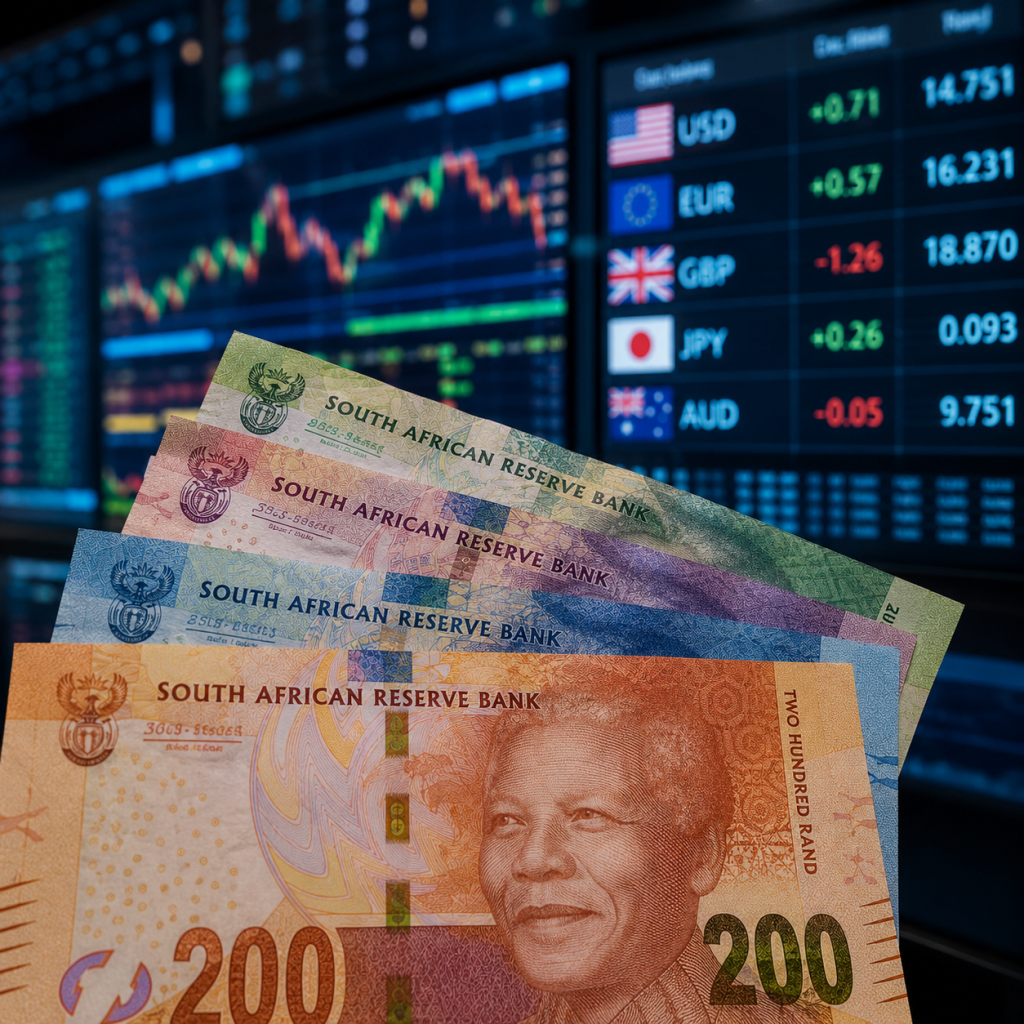

The South African rand weakened on Friday after new data showed a decline in the country’s foreign exchange reserves, while global markets remained focused on ongoing U.S.-Iran negotiations that continue to influence investor sentiment and energy market expectations.
The currency move came as traders assessed a drop in South Africa’s gross reserves during May, adding pressure to the rand after a period of heightened volatility linked to global inflation concerns and geopolitical uncertainty.
Reserves Data Triggers Market Reaction
Foreign exchange reserves are closely monitored by investors because they provide a measure of a country’s ability to withstand external economic shocks and support financial stability.
The latest reserve figures showed a decline from the previous month, prompting a cautious reaction in currency markets. While the decrease does not immediately threaten South Africa’s financial position, it contributed to weaker sentiment toward the rand at a time when investors are already navigating elevated global risks.
Market participants remain sensitive to any signals that could affect capital flows into emerging markets.
Global Events Continue to Influence Emerging Market Currencies
Investor attention also remained fixed on developments surrounding U.S.-Iran discussions.
The talks have become a major factor influencing global oil prices and inflation expectations. Any escalation in tensions could place renewed upward pressure on energy costs, while progress toward stability could ease inflation concerns across global markets.
For South Africa, oil prices remain a critical variable. Higher fuel costs typically feed into transport expenses, consumer inflation and business operating costs, creating additional challenges for monetary policymakers.
Why It Matters
The rand is one of the most actively traded emerging market currencies and often reacts quickly to both domestic and international developments.
The combination of lower reserves and ongoing geopolitical uncertainty highlights the delicate balance facing investors. South Africa is simultaneously navigating inflation risks, higher interest rates and a challenging global economic environment.
Recent action by the South African Reserve Bank to tighten monetary policy has demonstrated the central bank’s determination to keep inflation under control, even as external risks remain elevated.
What It Signals for Markets
Friday’s currency weakness signals that investors remain highly sensitive to economic data and geopolitical developments.
For equity markets, bond investors and businesses exposed to international trade, the rand’s direction will remain closely linked to global risk appetite, energy prices and confidence in South Africa’s economic fundamentals.
If geopolitical tensions ease and inflation pressures moderate, the rand could regain support. However, sustained uncertainty around global energy markets and international capital flows is likely to keep currency volatility elevated in the months ahead.