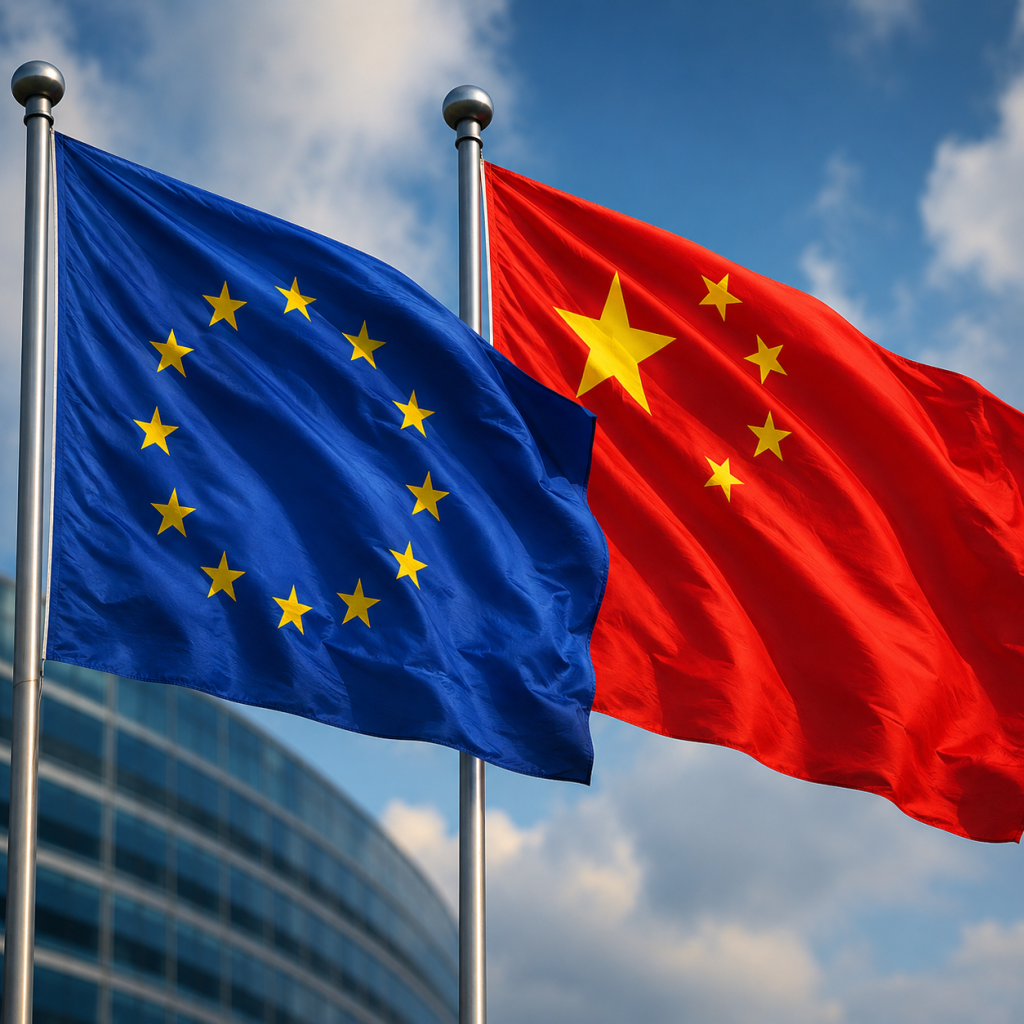

The European Union and China have agreed to launch a new three-month ministerial trade consultation aimed at addressing a trade imbalance valued at approximately €360 billion, marking the first formal bilateral trade consultation mechanism between the two sides in seven years. The agreement was reached following talks in Brussels between European Trade Commissioner Maroš Šefčovič and Chinese Commerce Minister Wang Wentao and was officially announced on 29 June 2026.
The initiative establishes a structured framework for dialogue on some of the most contentious issues affecting one of the world’s largest trading relationships. Both governments committed to strengthening cooperation while seeking a more balanced commercial partnership rather than allowing tensions to escalate into broader trade disputes.
Four Strategic Areas
According to the joint announcement, discussions will focus on four priority areas:
- Rebalancing bilateral trade.
- Export controls, including access to rare earth minerals.
- Intellectual property protection.
- Reform of the multilateral trading system through the World Trade Organization.
A joint monitoring mechanism will also be introduced to identify unusual trade patterns before they develop into larger commercial disputes, allowing both governments to engage politically before new restrictions are imposed.
Why the Talks Matter
The negotiations come as European policymakers have become increasingly concerned about growing imports from China across sectors including manufacturing, clean technology, industrial components and machinery.
The EU’s merchandise trade deficit with China reached around €360 billion, prompting calls from several member states for stronger defensive trade measures while maintaining commercial engagement with Beijing. At the same time, European manufacturers continue to depend on Chinese supply chains for critical minerals and industrial inputs.
Rather than immediately expanding tariffs or quotas, Brussels has opted to pursue structured negotiations that could reduce friction while preserving access to strategically important goods.
Strategic Implications
For China, the talks provide an opportunity to prevent further deterioration in relations with one of its largest export markets at a time when global supply chains remain under pressure.
For the European Union, the consultations reflect a broader strategy of balancing economic openness with industrial resilience. The discussions also complement recent European efforts to diversify supply chains and reduce strategic dependence on single-country suppliers without severing commercial ties.
Should meaningful progress be achieved before the next ministerial meeting scheduled for October in Beijing, the consultations could reduce the likelihood of additional trade restrictions and provide greater certainty for exporters, manufacturers and investors operating across both markets.
What It Signals
The launch of formal consultations signals that both Brussels and Beijing remain committed to resolving strategic economic differences through institutional dialogue rather than immediate escalation.
For global markets, the development may ease concerns over a new round of tariff disputes between two of the world’s largest trading powers. For industries reliant on international manufacturing networks, including automotive, technology, renewable energy and advanced manufacturing, the negotiations will be closely watched for signs of improved policy coordination and supply chain stability.