
The event that changed the conversation
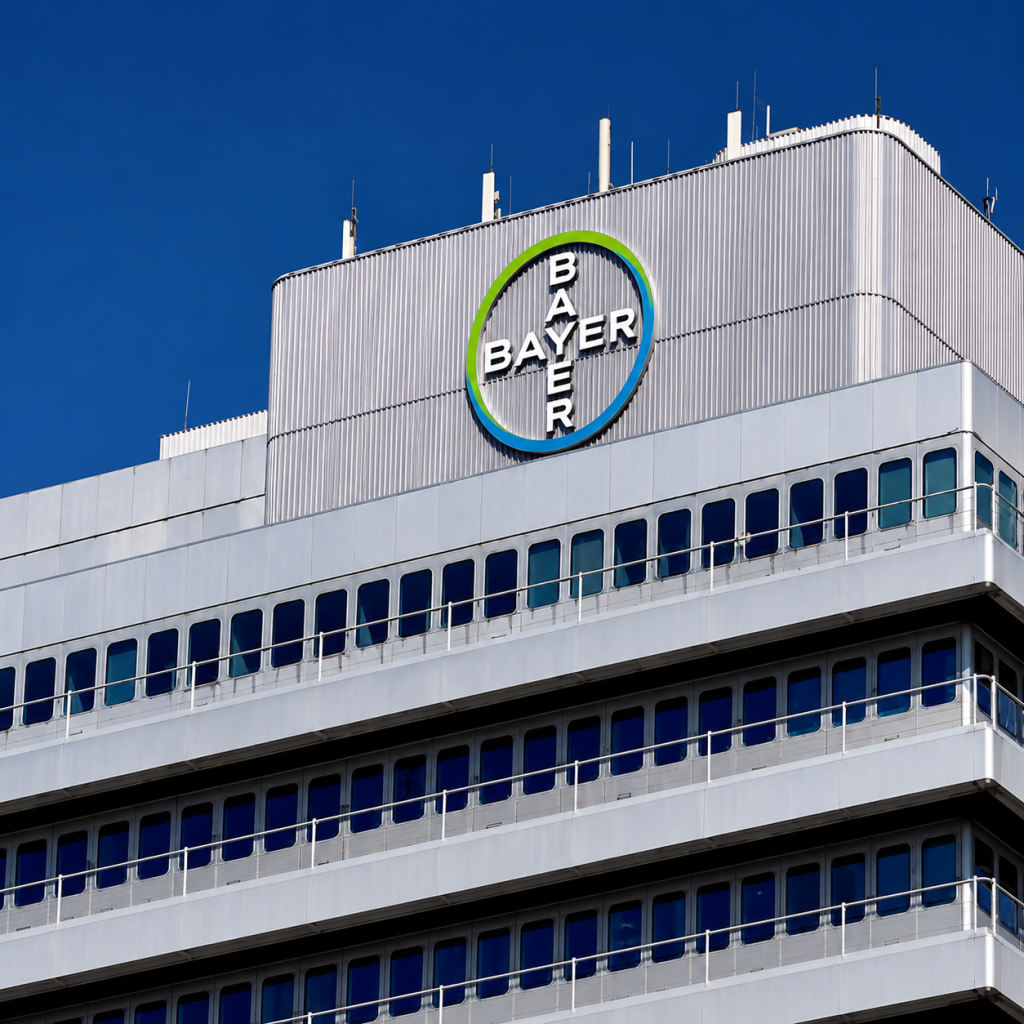
German life sciences company Bayer announced that it is placing its Roundup business into a separate operating unit, a move that immediately intensified speculation over a broader corporate restructuring. While the company has not announced a formal breakup, the decision represents one of its most significant strategic shifts since acquiring Monsanto in 2018.
The immediate news is about organisational structure.
The longer-term story is about how multinational companies are redesigning themselves to survive a world of persistent legal risk, changing capital markets and faster technological disruption.
Why this matters beyond Bayer
For decades, corporate diversification was viewed as a strength.
Large conglomerates could balance cyclical industries, spread risk and leverage shared resources across business units.
That assumption is now being challenged.
Investors increasingly reward companies that are easier to value, easier to manage and easier to separate if one division creates disproportionate legal or financial risk.
The Roundup business has generated years of litigation costs and uncertainty for Bayer. By separating the unit operationally, the company may be creating greater strategic flexibility while protecting the performance and investment appeal of its pharmaceuticals and crop science operations.
Whether or not a full separation ultimately occurs, the direction of travel is becoming increasingly clear.
Corporate resilience is no longer defined only by scale.
It is increasingly defined by optionality.
The rise of the modular corporation
A broader structural trend is emerging across global business.
Companies are moving away from highly integrated conglomerates toward more modular organisations that can adapt more quickly to regulatory change, litigation, geopolitical uncertainty and technological disruption.
This approach offers several strategic advantages:
- Capital can be allocated more efficiently.
- High-growth divisions receive clearer valuations.
- Operational risks become easier to isolate.
- Strategic partnerships become simpler to execute.
- Investors gain greater transparency into business performance.
Rather than building ever-larger organisations, many executives are beginning to ask a different question:
How can the company be redesigned to remain adaptable over the next decade?
That represents a fundamental shift in executive thinking.
Implications for South Africa and Africa
African companies should not view this purely as a European corporate story.
As capital becomes more selective, investors are increasingly assessing governance structures alongside financial performance.
Businesses operating across mining, financial services, telecommunications, manufacturing and infrastructure may eventually face similar pressure to simplify complex holding structures, improve disclosure and separate businesses with materially different risk profiles.
For African family businesses approaching succession, the lesson is equally important.
Future competitiveness may depend less on preserving historic corporate structures and more on creating businesses that can evolve, attract investment and respond quickly to changing markets.
The companies most likely to attract international capital will increasingly be those that demonstrate strategic clarity rather than organisational complexity.
What decision-makers should understand
The significance of Bayer’s announcement is not simply about litigation.
It reflects a broader evolution in corporate strategy.
Boards are moving from asking how to make businesses larger to asking how to make them more resilient.
In an environment shaped by geopolitical fragmentation, regulatory expansion, artificial intelligence and higher capital costs, flexibility is becoming a competitive advantage.
The next generation of corporate leaders may therefore build organisations designed not for permanence, but for continuous adaptation.
Bayer’s latest move may ultimately be remembered less as a response to a legal challenge and more as an early signal of how global corporations intend to organise themselves for the next decade.