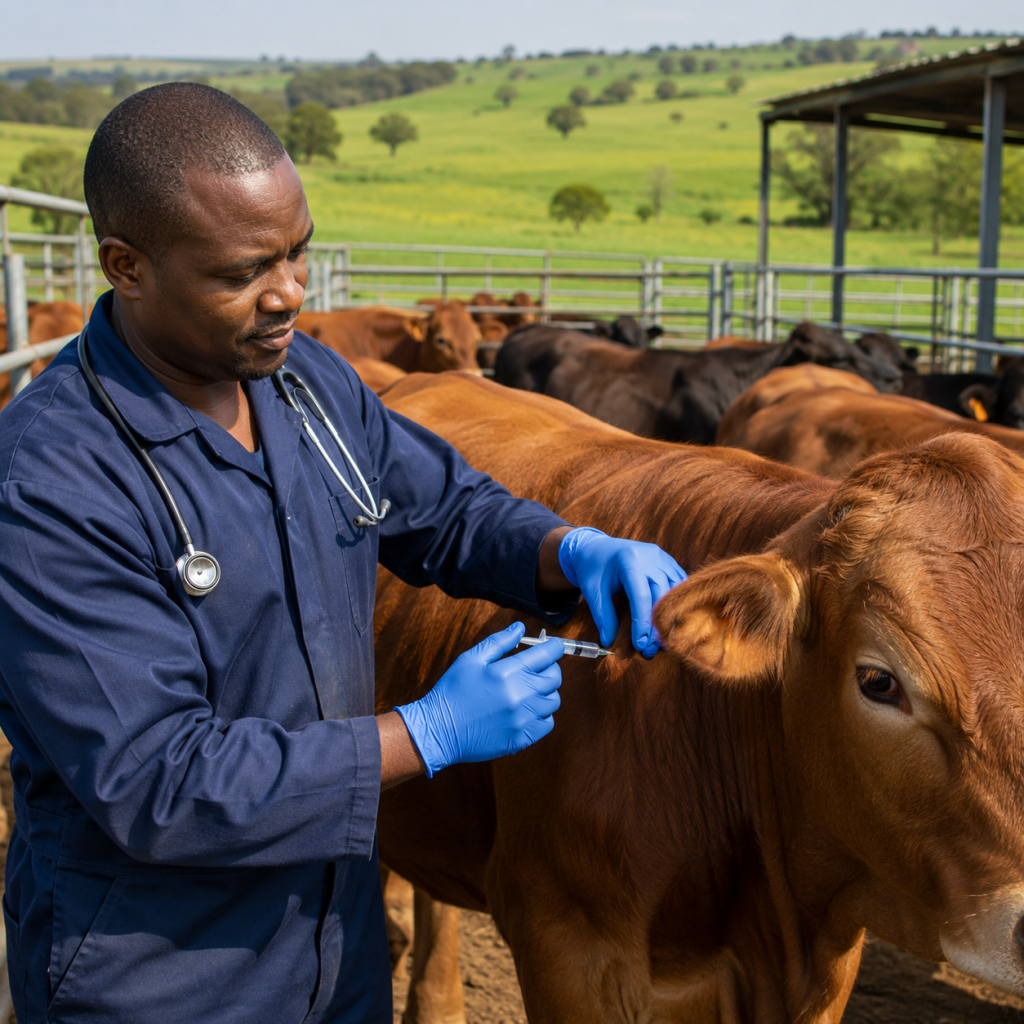

South Africa has formally opened the door for private-sector participation in the procurement, importation and administration of Foot and Mouth Disease (FMD) vaccines after the Department of Agriculture reached a settlement agreement with agricultural industry organisations. The agreement, announced in recent days, marks the implementation of a significant policy shift aimed at strengthening the country’s livestock disease response and protecting agricultural production.
The settlement follows months of engagement between government and industry over improving access to vaccines during recurring FMD outbreaks. Under the new framework, approved private organisations will be able to source vaccines through regulated processes, complementing government-led vaccination programmes rather than replacing them. This is expected to increase vaccination capacity and improve response times across South Africa’s cattle industry.
Strengthening Food Supply Chains
The livestock industry is a critical component of South Africa’s food system, supporting beef, dairy and related agricultural value chains that employ thousands of people and contribute significantly to rural economies.
Faster access to vaccines is expected to reduce operational disruptions caused by disease outbreaks, minimise livestock movement restrictions and improve continuity for processors, feed suppliers, transport operators and food retailers. More efficient disease management also lowers the risk of prolonged production interruptions that can affect domestic food supply and export commitments.
Supporting Export Competitiveness
Protecting South Africa’s animal health status remains essential for maintaining confidence among international trading partners.
The new framework provides producers with greater operational flexibility while maintaining regulatory oversight by the Department of Agriculture. By enabling quicker disease intervention, the agreement is expected to strengthen South Africa’s ability to safeguard livestock exports and reinforce the resilience of its agricultural economy.
Industry groups have welcomed the agreement as a practical collaboration between the public and private sectors that improves preparedness without weakening national biosecurity controls.
Why It Matters
The agreement signals a more collaborative model for managing livestock diseases in South Africa.
Rather than relying solely on state-controlled vaccine distribution, regulated private-sector participation is expected to improve vaccination capacity, enhance food supply-chain resilience and strengthen the country’s long-term agricultural competitiveness. For investors, processors and exporters, the development demonstrates a commitment to protecting one of South Africa’s most important food production industries while supporting future export growth.