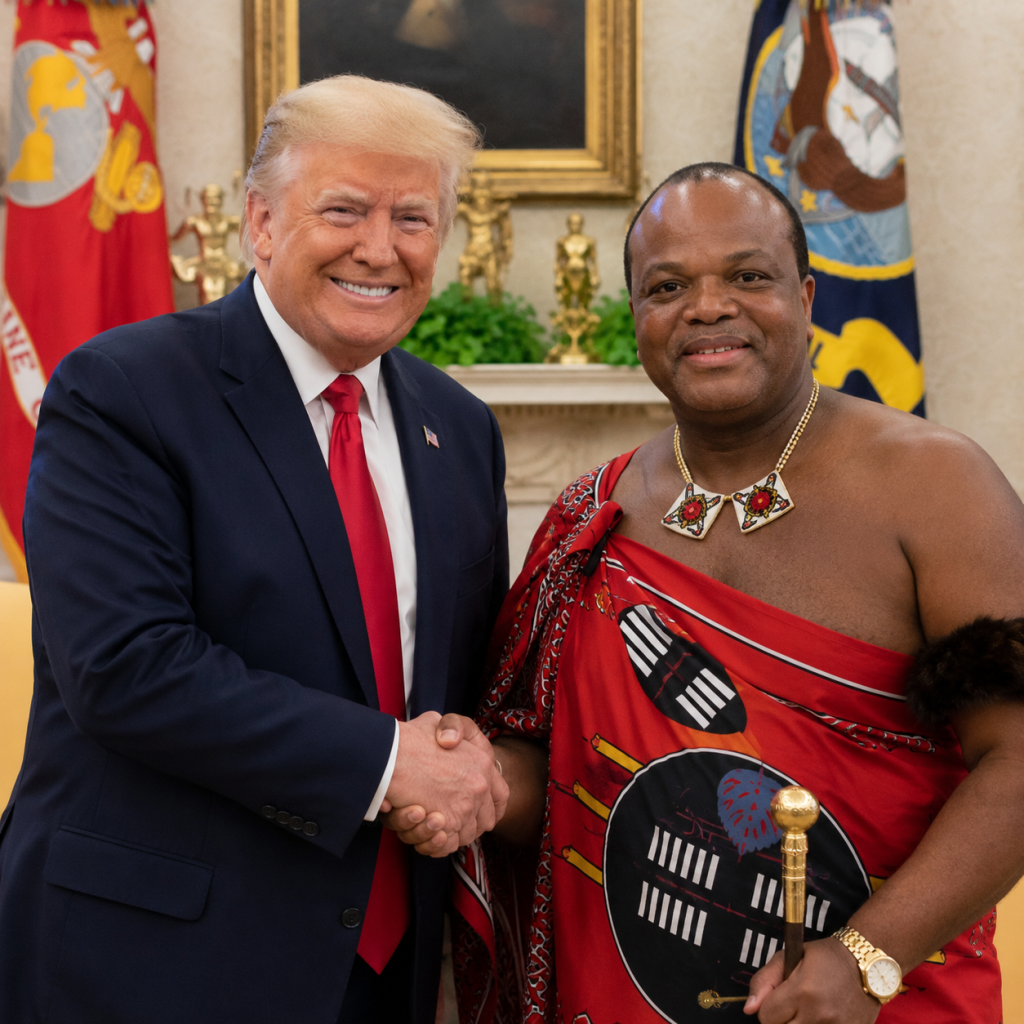

The United States and the Kingdom of Eswatini are facing renewed international scrutiny after Eswatini confirmed it had received an additional group of 11 third-country nationals deported from the United States under a bilateral migration agreement. The latest arrivals mark the fourth transfer under the programme, which has become a focal point in debates over immigration policy, international law and diplomatic cooperation.
According to Eswatini’s government, the individuals will remain in the country temporarily while authorities work with international partners on their eventual repatriation. Officials stated that the deportees’ fundamental rights will be protected in accordance with Eswatini’s laws and its international obligations.
The arrangement forms part of a broader U.S. policy of relocating certain migrants to third countries when direct repatriation to their countries of origin is not immediately possible. Eswatini is one of several countries that have entered into such agreements with Washington.
Legal and diplomatic questions intensify
The latest transfer has attracted additional attention after legal representatives claimed that at least two of the deportees had active legal protections that should have prevented their removal from the United States. Those claims are likely to fuel further legal challenges surrounding the programme and its implementation.
Human rights organisations have also questioned the transparency of third-country deportation agreements and the conditions under which deportees are temporarily accommodated. The Eswatini government has maintained that security measures are in place while also committing to respect the rights of those transferred into its custody.
Why it matters
The development highlights how immigration policy is increasingly becoming an instrument of international diplomacy.
For the United States, agreements with partner governments expand its ability to enforce deportation orders in cases where countries of origin refuse or delay accepting their nationals.
For Eswatini, participation strengthens bilateral engagement with Washington while placing the kingdom under greater international scrutiny regarding human rights, legal safeguards and migration governance.
The agreement also illustrates how migration management is becoming an increasingly important component of cross-border diplomatic negotiations, alongside trade, security and development cooperation.
As more countries consider similar arrangements, governments, investors and international institutions will be watching how these agreements evolve, particularly as legal challenges and human rights concerns continue to shape global migration policy.