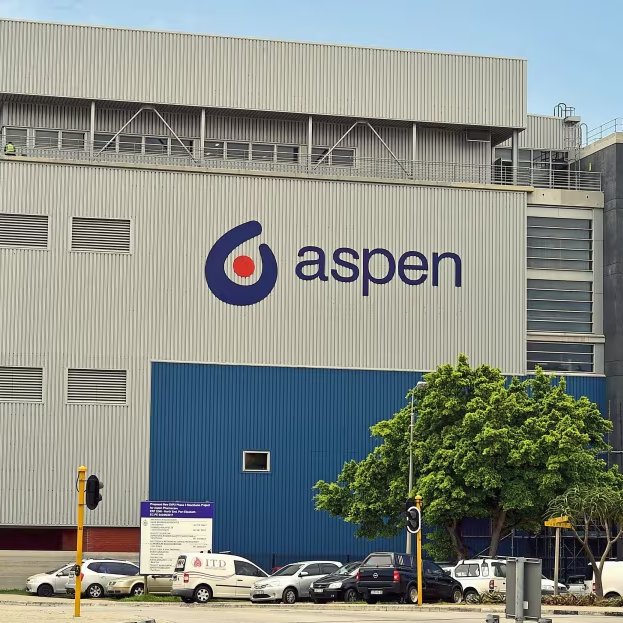

South African pharmaceutical group Aspen Pharmacare has agreed to sell the European commercialisation rights and related intellectual property for its women’s health product Ovestin to Ennogen Healthcare International, in a transaction valued at €197 million, strengthening Aspen’s capital allocation flexibility as it sharpens its focus on emerging markets.
The agreement, announced through the Johannesburg Stock Exchange’s Stock Exchange News Service (SENS) on 2 November 2026, includes an additional estimated €4 million for related inventory. The transaction represents a significant portfolio restructuring decision by one of South Africa’s largest pharmaceutical manufacturers. JSE listed company SENS+1
A €197 Million Capital Transaction
Under the agreement, Aspen Global Incorporated, Aspen’s wholly owned subsidiary based in Mauritius, will transfer the European commercialisation rights, intellectual property, product registrations, marketing authorisations and related goodwill associated with Ovestin to Ennogen.
The principal purchase consideration is €197 million, payable upon completion. The additional inventory consideration, currently estimated at €4 million, will be settled when the inventory is delivered.
The transaction remains conditional on Ennogen’s funding arrangements becoming unconditional. Consequently, the announced consideration should not yet be interpreted as cash already received by Aspen.
Ennogen is a privately owned pharmaceutical and medical device company established in 2011, with its head office function in Dubai and offices in the United Kingdom and Ireland. Its commercial focus is primarily European markets. JSE listed company SENS+1
Aspen Records an Estimated R2 Billion Disposal Gain
The financial significance of the transaction extends beyond the headline purchase price.
According to Aspen’s JSE announcement, Ovestin generated approximately R756 million in revenue, R521 million in gross profit and R238 million in profit after tax during the 2026 financial year.
The assets had a net asset value of approximately R1.60 billion as at 30 June 2026. Based on the transaction consideration and the company’s stated exchange-rate assumptions, Aspen estimates a profit on disposal of approximately R2 billion.
This represents a substantial value-unlocking opportunity, particularly given that the business being sold generated meaningful earnings for the group.
Aspen has indicated that the transaction offers an attractive valuation for an asset outside its strategic emerging-markets focus. JSE listed company SENS+1
Manufacturing Relationship Continues for at Least 10 Years
Importantly, the transaction does not represent a complete withdrawal by Aspen from the European Ovestin supply chain.
The agreement provides for manufacturing and supply arrangements under which Aspen will continue supplying the active pharmaceutical ingredient and cream formulation of Ovestin to Ennogen in Europe.
The initial manufacturing and supply agreements will run for ten years, with the possibility of extension by mutual agreement.
Aspen Global Incorporated will also provide Ennogen with strategic facilitation services for five years at a fee of €1 million per month. This represents potential service revenue of €60 million over the full five-year period, assuming the agreement runs for its entire initial term.
Additionally, transitional distribution services will be provided for a maximum of three years, attracting a fee equivalent to 4% of net product sales.
These arrangements create an ongoing commercial relationship in which Ennogen takes responsibility for European commercialisation while Aspen retains a manufacturing and services role. JSE listed company SENS+1
Capital Allocation and Shareholder Returns
Aspen has indicated that proceeds from the transaction will be allocated according to its established capital allocation framework.
Share buybacks remain management’s preferred mechanism for returning capital to shareholders, although the company has not committed the entire proceeds to a specific repurchase programme.
The transaction therefore provides management with additional flexibility to consider shareholder distributions, balance-sheet priorities and other investment opportunities.
For investors, the distinction is important. The disposal converts an established European commercial asset into a substantial potential capital inflow while preserving selected manufacturing and service relationships.
What the Transaction Signals for Institutional Investors
Aspen’s agreement with Ennogen highlights an important development in corporate capital management: strategic divestments can generate shareholder value without necessarily requiring a company to abandon its underlying manufacturing capabilities.
The transaction allows Aspen to concentrate its commercial portfolio more closely around emerging markets while transferring European commercialisation responsibilities to a buyer with an established regional focus.
For institutional investors, three elements stand out.
First, the €197 million purchase consideration demonstrates the potential value of established pharmaceutical intellectual property and commercial rights.
Second, the ten-year manufacturing arrangement preserves a long-term supply relationship, creating continuity beyond the ownership transfer.
Third, the proceeds provide Aspen with greater capital allocation flexibility at a time when investors are closely assessing how major companies deploy capital, manage portfolios and deliver shareholder returns.
The completion of the transaction remains dependent on Ennogen securing unconditional funding. Its eventual financial impact will therefore depend on the fulfilment of this condition and the subsequent settlement of the purchase consideration.
The broader investment signal is clear: Aspen is pursuing portfolio optimisation through asset monetisation while retaining selected industrial capabilities, a strategy that could reshape how the group allocates capital across its international operations.