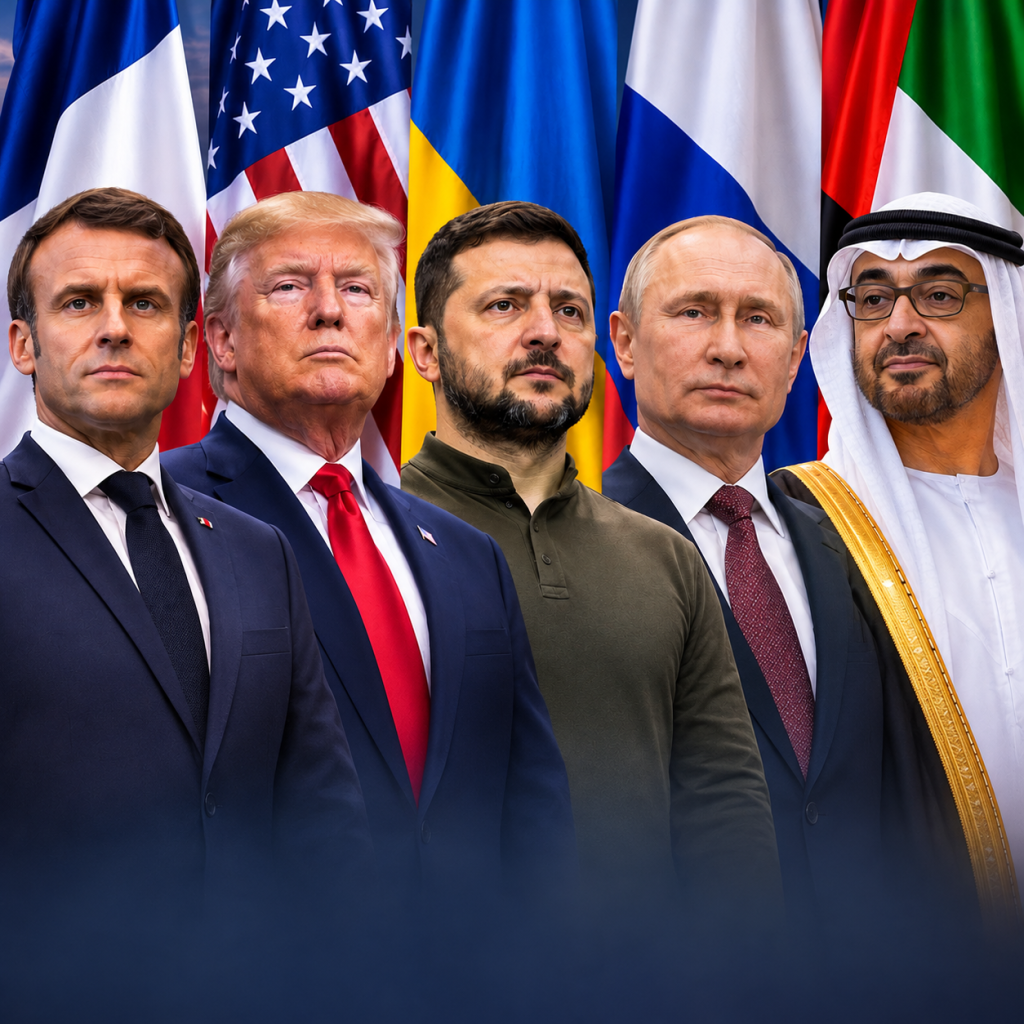

France has confirmed that it will participate in upcoming diplomatic discussions involving Ukraine and Russia in Abu Dhabi, adding a European dimension to a renewed US-led effort to negotiate an end to the war.
French Foreign Minister Jean-Noël Barrot announced on Sunday, 8 November 2026, that European representatives, including France, would attend the discussions scheduled for 10 and 11 November.
The announcement follows confirmation from US envoy Steve Witkoff that Washington intends to bring Ukrainian and Russian delegations together in the United Arab Emirates.
The diplomatic development was reported by Reuters on 8 November 2026.
Europe Moves to Secure a Seat at the Negotiating Table
The planned discussions represent an important diplomatic moment because the outcome of negotiations between Washington, Kyiv and Moscow could reshape Europe’s security environment and its economic relationship with Russia.
France’s decision to participate signals that European governments want a direct role in discussions that could determine the future security architecture of the continent.
For European governments, the stakes extend beyond the immediate question of ending hostilities. Any settlement could influence future defence spending, energy security, sanctions policy, reconstruction financing and cross-border investment.
Ukraine’s post-war reconstruction is also a significant economic consideration. A credible settlement and enforceable security arrangements could eventually create conditions for international capital to participate in rebuilding transport infrastructure, energy networks, industrial capacity and housing.
However, the diplomatic discussions should not be mistaken for an agreement. No ceasefire, peace settlement or post-war security framework has been announced as part of this latest development.
The United Arab Emirates Strengthens Its Diplomatic Position
The choice of Abu Dhabi as the venue also places the United Arab Emirates at the centre of an important international diplomatic initiative.
By hosting discussions involving major international stakeholders, the UAE continues to demonstrate its capacity to facilitate engagement between governments with competing strategic interests.
The meeting also highlights the growing importance of diplomatic platforms outside traditional European and North American centres of international negotiation.
For the UAE, facilitating discussions of this significance reinforces its international diplomatic positioning and the value of its relationships with major global powers.
What the Negotiations Could Mean for Global Markets
Investors and governments will be watching the discussions for indications of whether diplomatic progress is possible.
A credible reduction in geopolitical tensions could eventually influence several economic areas:
- Energy markets: Changes in the conflict’s trajectory could affect perceptions of geopolitical risk surrounding European energy supplies.
- Defence industry: Any post-war security arrangement could reshape European defence procurement and long-term military investment.
- Infrastructure: Ukraine’s eventual reconstruction could generate substantial opportunities for international engineering, construction and infrastructure companies.
- Financial markets: Improved prospects for stability could influence investor confidence, sovereign risk assessments and capital allocation across European markets.
The immediate significance, however, lies in the diplomatic process rather than any confirmed economic agreement.
A Critical Test for International Diplomacy
The participation of France and other European representatives introduces an important dimension to the upcoming discussions.
Washington’s ability to bring Ukrainian and Russian representatives together will be closely watched, but the durability of any eventual settlement will depend on the security guarantees, political commitments and international cooperation surrounding it.
For Europe, securing a meaningful role in the process is particularly important because the consequences of any settlement will extend directly into its security, trade, energy and investment environment.
The Abu Dhabi discussions therefore represent more than another diplomatic meeting. They are an opportunity to test whether competing international interests can move towards a negotiated framework with implications for the global economy.