
Lusaka became the focal point of Southern Africa’s agribusiness calendar today as the AFMASS Food Expo Zambia and Southern Africa 2026 opened its doors at the Radisson Blu Hotel, drawing producers, millers, feed manufacturers, technology providers, regulators, and development partners from across the SADC region and beyond. The three-day event, running from 13 to 15 May, marks the third edition of the expo in Zambia and signals the accelerating commercial maturity of the region’s grain, milling, and feed processing sectors.
The expo is powered by Andritz Feed and Biofuel, with Buhler Group serving as Technical Session Sponsor. Delegations have arrived from Zimbabwe, Botswana, South Africa, Namibia, Angola, the Democratic Republic of Congo, Malawi, Mozambique, and further afield, making Lusaka a genuine regional hub for cross-border business exchange.
The presence of Buhler and Andritz is not incidental. Both companies are among the most consequential infrastructure suppliers to Africa’s food processing industry, and their institutional commitment to the Lusaka platform reflects a calculated read on where capital deployment is heading in the SADC food corridor.
The conference programme is structured around the issues that are actively shaping investment decisions. The opening session is a high-level CEO and industry leadership roundtable addressing investment trends and market dynamics across the food, milling, and feed sectors. Technical sessions follow, covering grain storage and milling innovations, advancements in animal feed processing, and emerging trends in food and beverage manufacturing.
The second day sharpens the focus on structural challenges that carry direct capital implications. Day two broadens the conversation to address the region’s protein gap, evolving regulatory frameworks, and the growing importance of food safety and quality standards. These are not peripheral concerns. The protein gap in Southern Africa represents both a food security vulnerability and an investable gap along the animal feed, aquaculture, and processed food value chains.
On the final day, Andritz Feed and Biofuel hosts a dedicated Customer Day, inviting participants to deeper engagement through focused sessions and discussions. The structure reflects a shift in how global agrifood equipment manufacturers are approaching Africa, moving from periodic exhibition to sustained commercial relationship-building.
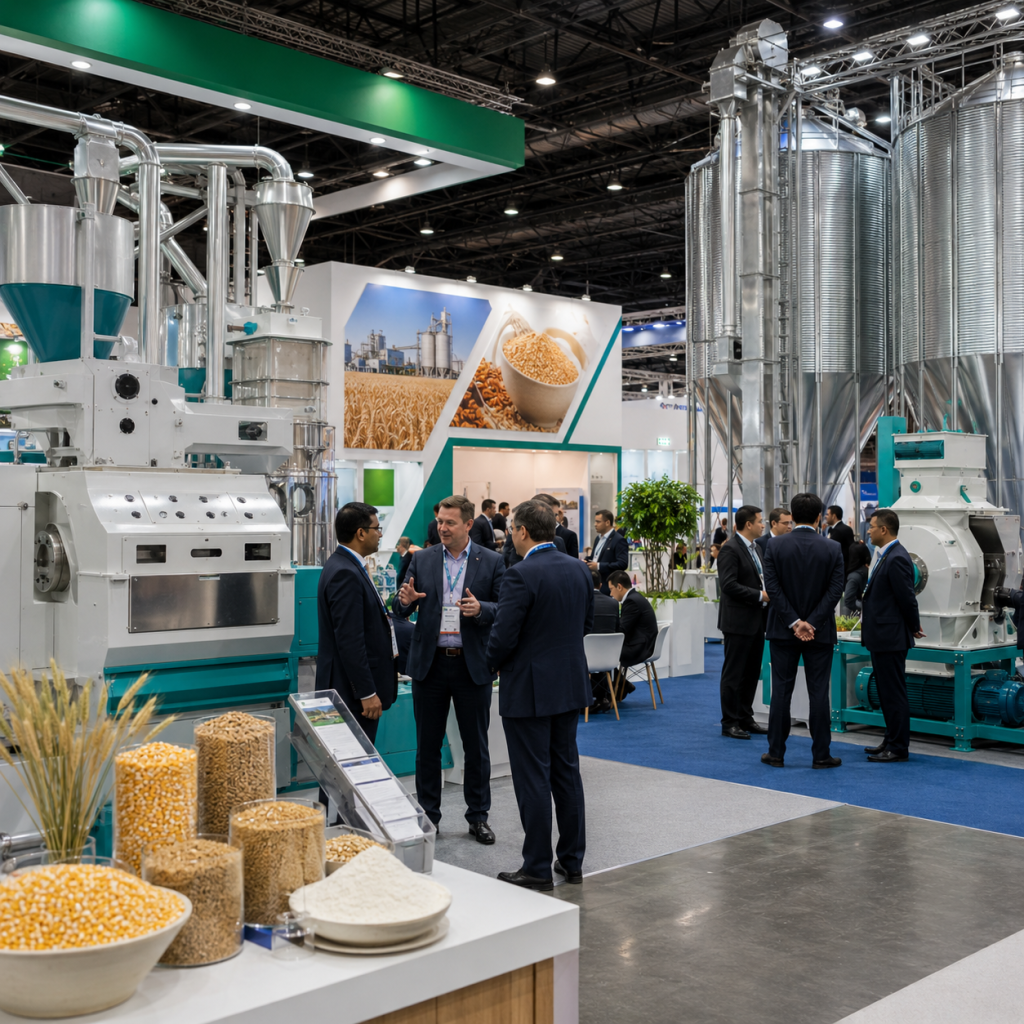
The expo floor itself is a live inventory of where the Southern African food system is modernising. Visitors will encounter advanced grain storage systems and silos, modern milling equipment and feed processing technologies, ingredients, packaging, and supply chain solutions. Bulk material handling systems, food formulation, packaging, logistics, quality control technologies, and digital tools for plant optimisation further highlight the industry’s shift toward automation and precision.
Among the exhibitors confirmed are ALTINBILEK GROUP COMPANIES, PHOSPHEA, IFF, Pakmaya, Nilpeter, and the Sefar Group, alongside regional and local players. The breadth of the floor reflects an industry that is no longer sourcing only basic processing equipment but actively evaluating integrated, technology-led production systems.
The commercial context surrounding the expo reinforces why Lusaka is drawing this level of attention. Southern Africa’s grains milling industry has witnessed significant new investments in recent years across corn, maize, wheat, rice, and cassava, as well as animal and aqua feed. That investment activity is now creating demand for second-generation upgrades and expansion, which is precisely what this event is designed to facilitate.
Africa has emerged as the fastest-growing region globally for flour milling machines, signalling new opportunities for investment, according to recent industry data. The expansion of bakery, convenience food, and animal protein segments in West, East, and Southern Africa is accelerating the adoption of high-capacity milling systems. For Southern Africa specifically, this translates into procurement cycles, technology partnerships, and project financing that are increasingly competitive and regionally sophisticated.
South Africa’s grain market adds further weight to the regional picture. The South Africa grain market is valued at approximately USD 9.69 billion in 2026, forecast to reach USD 12.57 billion by 2031, growing at a CAGR of 5.34%. Corn accounts for the largest share of output, while rail corridor upgrades and water infrastructure spending are improving logistics and irrigation capacity across key production zones. Processing firms in Gauteng and KwaZulu-Natal are scaling capacity, and the regulatory environment is becoming more investment-friendly, with biofuel mandates stimulating demand for non-traditional grain uses including sorghum.
For decision-makers evaluating where to deploy capital in Africa’s food processing sector, the Lusaka expo does more than showcase equipment. It concentrates the deal flow, the regulatory dialogue, and the technology roadmap into one commercial space for three days. The SADC food corridor, long discussed as an opportunity, is demonstrating the characteristics of an industry moving from potential to execution.