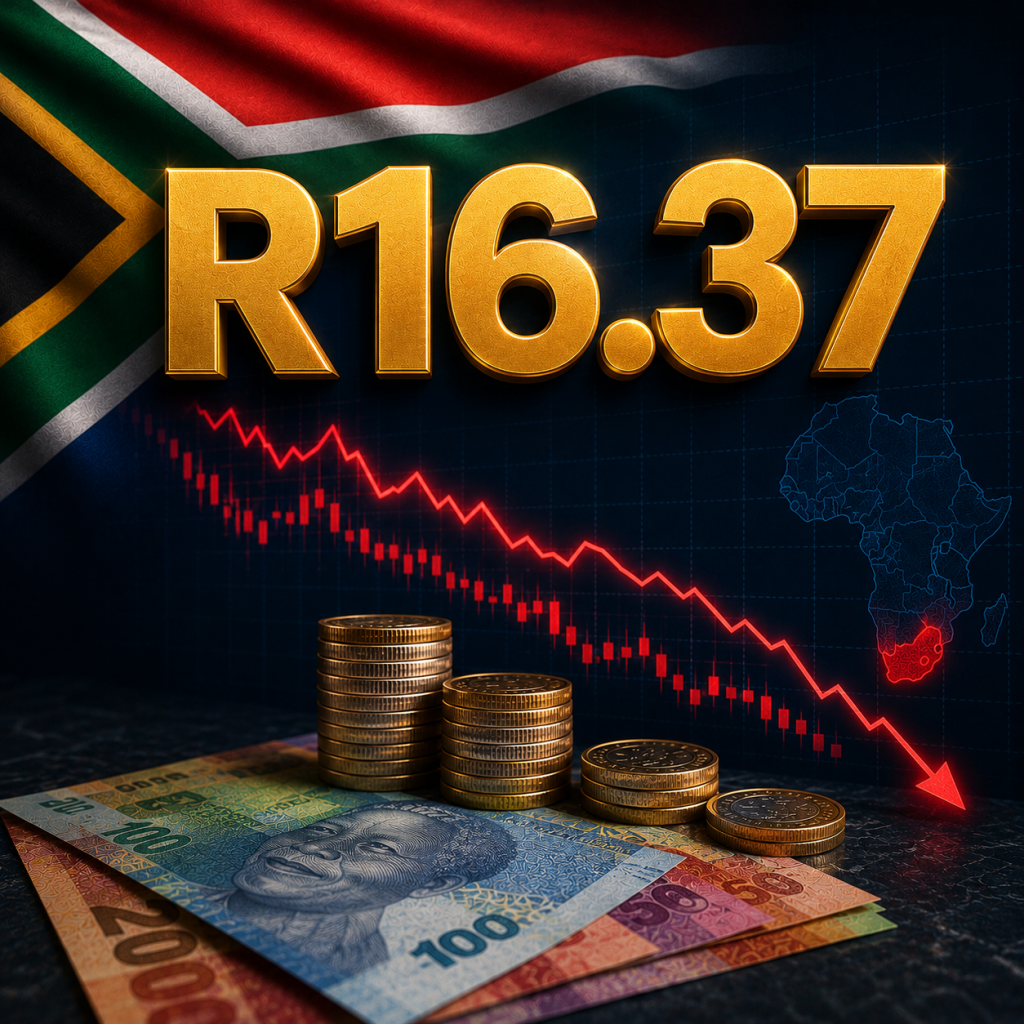

South African financial markets turned cautious on Thursday as the rand weakened ahead of a closely watched interest-rate decision by the South African Reserve Bank, with investors reassessing inflation risks linked to global oil prices and geopolitical instability.
The rand slipped in early trade against the US dollar as traders positioned for the Monetary Policy Committee announcement later in the day. Markets have been increasingly sensitive to signals from the central bank after inflation pressures began accelerating again in recent weeks.
Investor attention has shifted sharply toward inflation expectations following April consumer price data and repeated warnings from Reserve Bank Governor Lesetja Kganyago that policymakers may need to keep all interest-rate options open.
South Africa’s inflation environment has become more complicated after higher global oil prices, partly linked to Middle East tensions, started feeding into transport and fuel costs. As a major oil importer, South Africa remains exposed to global energy shocks that can rapidly affect domestic inflation and household spending.
Markets are now balancing two competing forces.
On one side, inflation has remained relatively contained compared to historical averages, supported by the Reserve Bank’s aggressive inflation-targeting strategy and the stronger rand seen earlier this year. On the other side, rising fuel costs and global geopolitical uncertainty are increasing the probability that inflation could move back above the Reserve Bank’s preferred path toward its 3% objective.
Bond markets have also reflected the growing uncertainty.
South African government bond yields have remained elevated in recent weeks as traders adjusted expectations around future borrowing costs and inflation risks. Longer-dated bonds remain highly sensitive to any indication that rates could stay higher for longer.
The Reserve Bank’s current policy rate stands at 6.75%, following consecutive pauses earlier this year after previous rate reductions. Markets are now focused not only on whether rates move, but also on the tone of the central bank’s forward guidance.
For investors, the decision carries implications far beyond the currency market.
A more hawkish stance from the Reserve Bank could support the rand and reinforce South Africa’s credibility among global bond investors, particularly as international capital increasingly searches for stable emerging-market yields. However, tighter monetary conditions could also place additional pressure on consumer spending, credit growth, and business expansion at a time when economic growth remains fragile.
The latest market reaction signals that South Africa’s inflation battle is entering a more delicate phase.
While the country has made significant progress in stabilising inflation and restoring investor confidence, external shocks are once again testing the Reserve Bank’s ability to balance price stability with economic recovery. Markets are now watching whether policymakers prioritise inflation protection or growth support as global volatility intensifies.