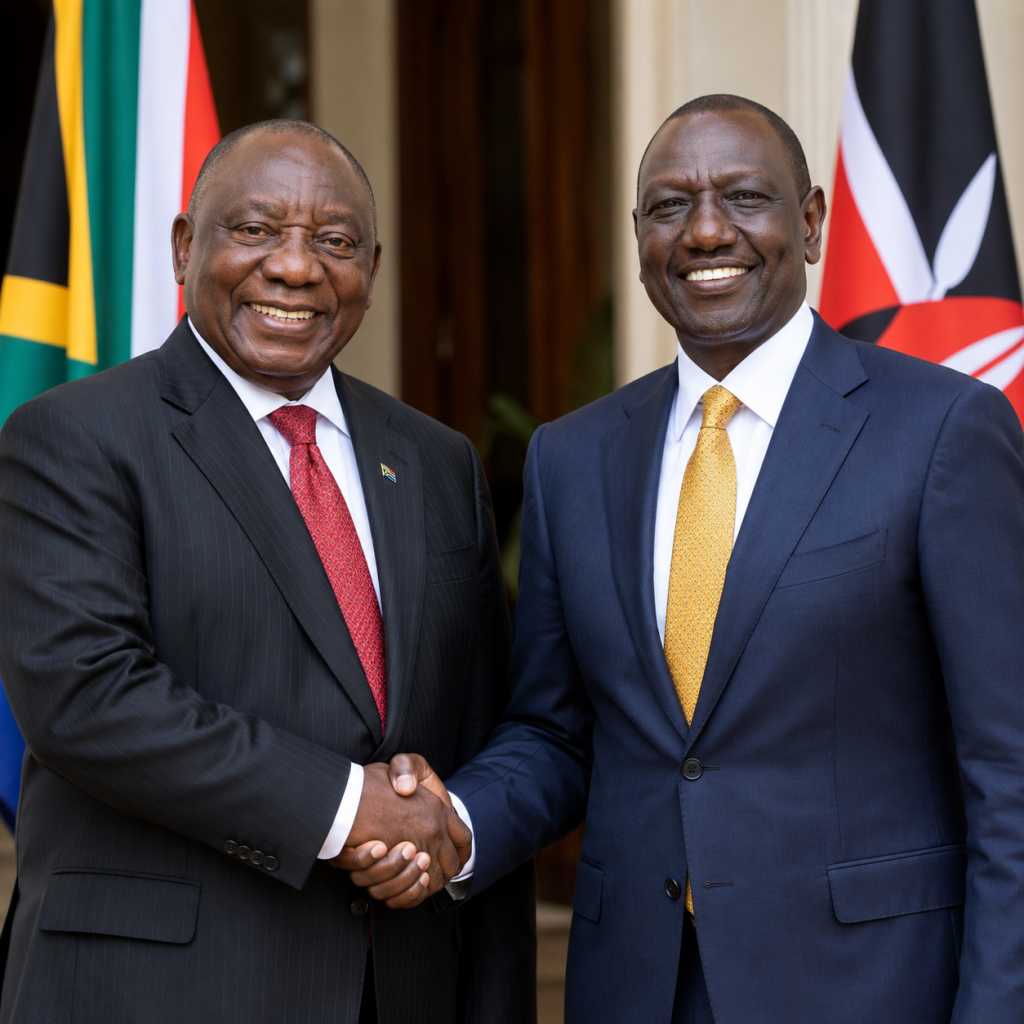

South Africa and Kenya are preparing for one of the continent’s most strategically significant diplomatic engagements of 2026, following the official announcement by the Presidency that President Cyril Ramaphosa will host Kenyan President William Ruto for a State Visit in Tshwane from 3 to 5 June.
The announcement, made on 29 May, immediately elevated attention across government, business and diplomatic circles due to the scale of economic cooperation expected to be discussed during the visit.
Unlike routine diplomatic exchanges, the upcoming engagement will include a dedicated Business Forum focused on unlocking trade, investment and commercial partnerships between two of Africa’s most influential economies.
Why This Visit Stands Out
South Africa and Kenya occupy unique positions within the African economic landscape.
South Africa remains the continent’s most industrialised economy and financial hub, while Kenya continues to strengthen its position as East Africa’s commercial, logistics and technology gateway.
The Presidency confirmed that discussions between the two leaders will focus on deepening economic cooperation and facilitating business partnerships across strategic sectors.
The significance lies not only in bilateral relations, but in the growing recognition that African growth increasingly depends on stronger intra-African investment corridors rather than reliance on external markets.
At a time when governments across the continent are seeking higher levels of industrialisation, regional integration and private-sector expansion, the South Africa-Kenya relationship carries outsized strategic importance.
A Signal to African Markets
The planned Business Forum sends a clear message to investors and corporations operating across Africa.
Large African economies are increasingly positioning themselves as partners rather than competitors.
The visit comes amid rising efforts to accelerate implementation of the African Continental Free Trade Area, improve cross-border investment flows and strengthen regional value chains.
For multinational companies, banks, infrastructure developers and technology firms, closer alignment between South Africa and Kenya could create new opportunities in sectors including financial services, logistics, digital infrastructure, manufacturing, agriculture and energy.
The broader implication is that Africa’s largest economic centres are becoming more coordinated in pursuing growth and investment.
Leadership Beyond Diplomacy
The announcement also reflects a wider shift in continental leadership dynamics.
As global economic fragmentation continues and competition for capital intensifies, African governments are increasingly using strategic state visits as platforms for economic execution rather than symbolic diplomacy.
This approach aligns with growing pressure on governments to deliver measurable outcomes, attract investment and accelerate job creation.
For both Ramaphosa and Ruto, the visit provides an opportunity to demonstrate practical leadership focused on economic growth, commercial partnerships and regional influence.
What It Signals Next
The State Visit is likely to be closely watched by business leaders across Africa because it may indicate the direction of future economic cooperation among major African economies.
If meaningful investment commitments, trade agreements or sector partnerships emerge from the Business Forum, the visit could become a reference point for a more integrated African growth model.
More importantly, it reinforces a broader narrative emerging across the continent: African economic influence is increasingly being shaped through strategic partnerships between African nations themselves.
That shift may prove to be one of the defining economic stories of the decade.