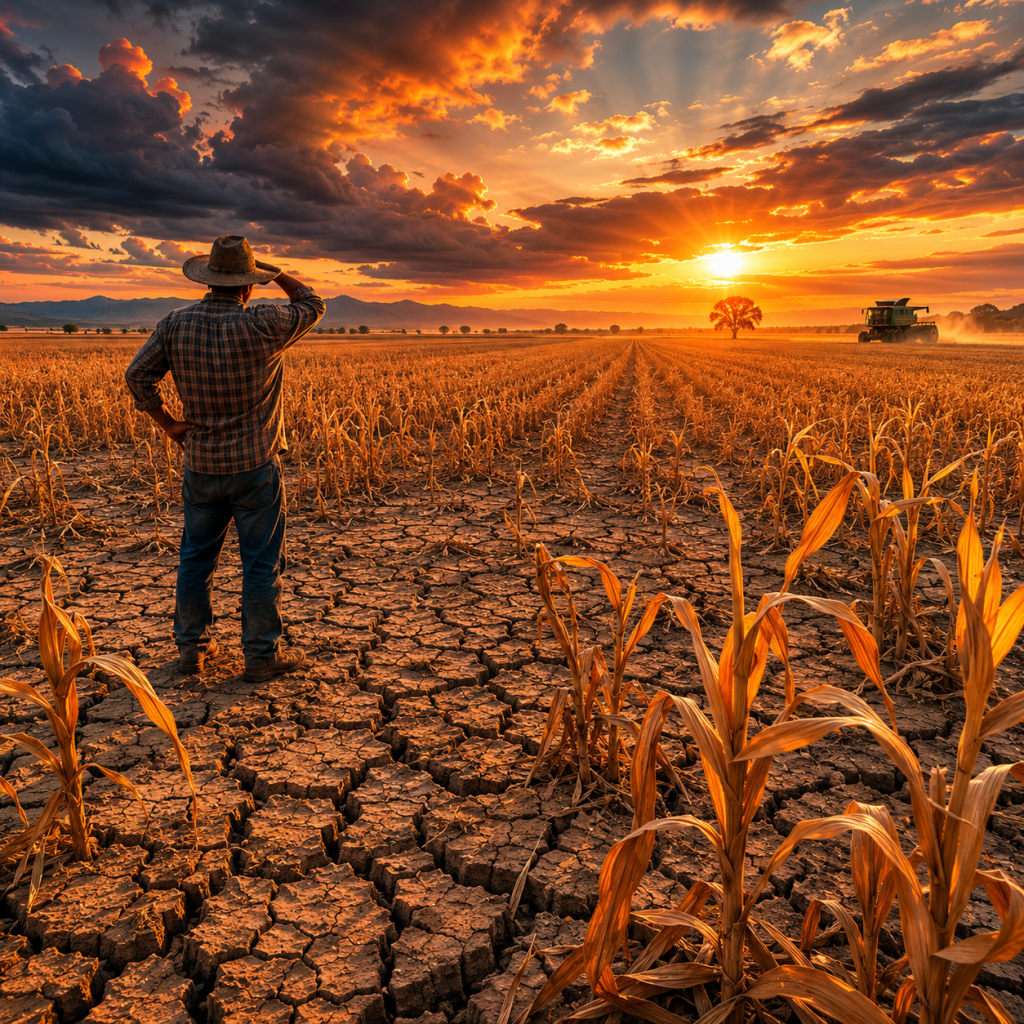

A rapidly strengthening El Niño weather pattern is beginning to disrupt agricultural production across major food-producing regions in Asia, raising concerns about global food supply chains, commodity prices, and export availability.
The development was reported on 4 June 2026 as farmers across India, Southeast Asia, and Australia faced delayed planting schedules, lower rainfall, and growing risks to crop yields. The weather disruption is already influencing global grain markets, with wheat prices rising approximately 20% and rice prices increasing around 15% amid fears of reduced output.
Food Production Systems Under Pressure
India’s grain-producing regions are experiencing delayed sowing activity due to weaker-than-expected monsoon conditions. Market participants are increasingly monitoring the possibility of export restrictions should weather conditions deteriorate further.
Across Southeast Asia, reduced rainfall is affecting rice cultivation and palm oil production, two commodities that play a central role in regional food security and global agricultural trade. Extended dry conditions are limiting productivity and increasing uncertainty for food processors and exporters.
Australia’s wheat industry is also preparing for potential production challenges as meteorological forecasts point to drier conditions later in the season. Wheat remains one of the world’s most strategically important traded food commodities, making Australian production closely watched by international buyers.
Supply Chains Face Additional Strain
The weather challenge is arriving at a time when agricultural input markets are already under pressure.
According to recent global food security assessments, disruptions to fertilizer flows and rising input costs have pushed agricultural commodity prices higher. Fertilizer affordability has deteriorated significantly in 2026, increasing production costs for farmers and creating additional risks for crop yields across developing and emerging markets.
The combination of climate volatility and input inflation is creating a more complex operating environment for food producers, processors, retailers, and governments responsible for maintaining stable food supplies.
Implications for Africa and Emerging Markets
For African economies that rely on imported wheat, rice, and fertilizer products, sustained price increases could place additional pressure on food inflation and import bills.
Southern Africa has also been identified as one of the regions vulnerable to the broader effects of an emerging El Niño cycle. Analysts warn that reduced agricultural output in multiple producing regions simultaneously could amplify supply risks across global food systems.
Countries with investments in irrigation, climate-resilient farming technologies, storage infrastructure, and diversified food supply chains are expected to be better positioned to manage future disruptions.
What It Signals
The latest developments highlight the increasing strategic importance of agricultural resilience.
As climate-related disruptions become more frequent, investment in food production infrastructure, agri-tech solutions, water management systems, and domestic processing capacity is becoming a critical economic priority rather than a purely agricultural concern.
For investors, policymakers, and food companies, the emerging El Niño cycle represents an early test of how resilient global food systems have become in an era of increasing climate volatility.