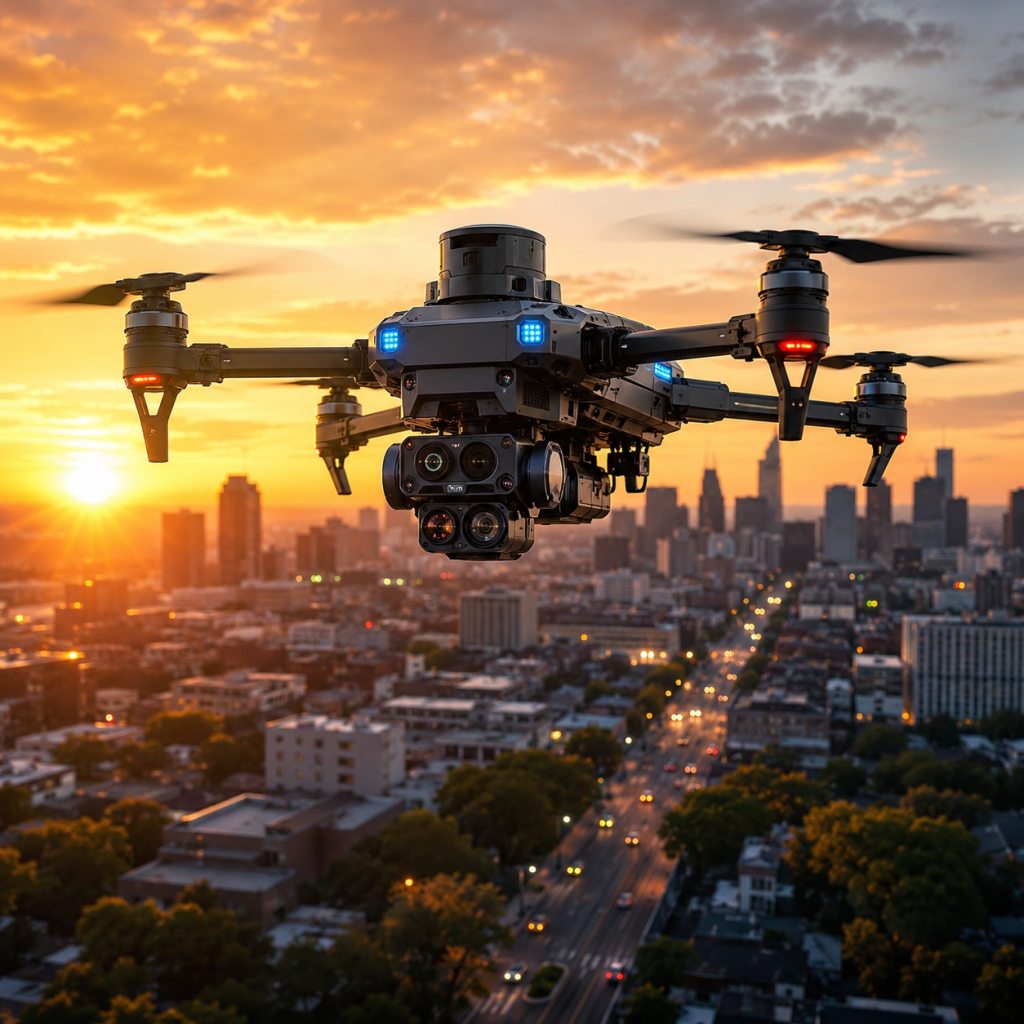

Public safety technology company Axon has outlined its next frontier in law enforcement innovation, revealing that it is actively researching drones capable of physically stopping dangerous suspects using non-lethal technology. The comments were made by Axon co-founder and CEO Rick Smith during a newly released Yahoo Finance Power Players interview published within the past week.
Axon, best known for its TASER devices, body-worn cameras and digital evidence platform, said today’s drones already provide officers with real-time situational awareness by reaching emergency scenes before police arrive. However, Smith said the company’s longer-term research aims to develop drones that can safely intervene without using lethal force.
“The drone that is capable of stopping somebody is in the future,” Smith said, adding that the company is actively conducting research and development into technologies that could eventually allow drones to have a direct, non-lethal operational effect.
From surveillance to intervention
Current Axon drones are primarily used for aerial surveillance, emergency response and incident awareness. They provide live video intelligence to officers, helping emergency services assess evolving situations before personnel enter potentially dangerous environments.
The proposed next generation would extend that capability by combining autonomous flight systems, AI-assisted perception and non-lethal intervention technologies. According to Smith, Axon has no intention of developing lethal weaponised drones, maintaining that the company’s mission remains reducing the need for deadly force.
Building a broader public safety technology platform
Axon has evolved far beyond its origins as a TASER manufacturer.
The company now provides an integrated ecosystem that includes body cameras, in-car cameras, cloud-based digital evidence management, real-time operations software, drones and counter-drone technology. The acquisition of Dedrone strengthened its capabilities in detecting and managing unauthorised drones around critical infrastructure and public events.
The company’s strategy increasingly positions AI and connected hardware as integrated components of modern public safety operations rather than standalone products.
What it means for the industry
The announcement highlights how AI, robotics and autonomous systems are becoming increasingly central to emergency response.
Rather than replacing officers, these technologies are designed to improve situational awareness, reduce response times and potentially expand the range of non-lethal options available during high-risk incidents.
However, any future deployment of drones capable of physically intervening is likely to face significant regulatory, legal and ethical scrutiny. Axon’s earlier proposals for TASER-equipped drones generated widespread debate among ethicists and privacy advocates, prompting the company to emphasise that any future system would require robust safeguards and responsible governance.
As artificial intelligence continues to reshape policing and emergency response, Axon’s research reflects a broader shift toward intelligent autonomous systems that prioritise information, precision and de-escalation over conventional force.