
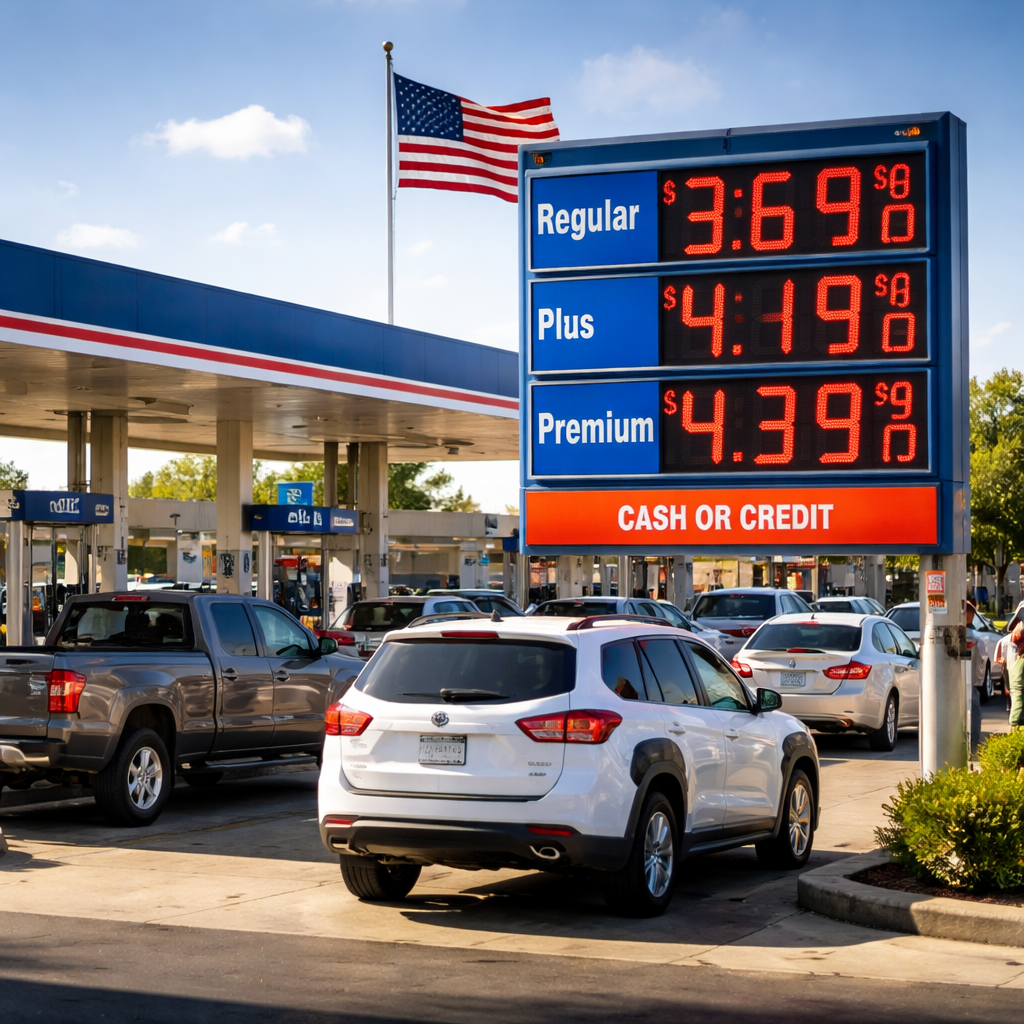

Energy Shock Begins to Hit Consumer Confidence
U.S. consumer sentiment declined in early March 2026, highlighting the first measurable economic impact of rising energy prices triggered by escalating geopolitical tensions in the Middle East.
According to the latest University of Michigan Surveys of Consumers, the Consumer Sentiment Index fell to 55.5 in early March, down from 56.6 in February, as households reacted to sharply higher fuel costs and growing uncertainty about personal finances.
The survey, conducted between 17 February and 9 March, showed that initial optimism at the start of the period reversed once energy markets began to react to the conflict. The result came slightly above economists’ expectations of 55.0 but still signals deteriorating confidence across the economy.
Fuel Prices Drive the Shift
The primary trigger behind the drop in sentiment has been the rapid rise in gasoline prices. U.S. average fuel costs surged more than 21% to about $3.63 per gallon following the start of the conflict, pushing household energy spending sharply higher.
The surge in fuel costs has quickly filtered through consumer expectations, with households across income groups reporting worsening views about their financial outlook.
Survey data showed declines in sentiment across all demographic categories, including age groups, income levels, and political affiliations. The broad-based nature of the decline suggests the shock is being felt across the entire consumer economy rather than in isolated segments.
Inflation Expectations Remain Anchored
Despite the drop in sentiment, inflation expectations remained relatively stable.
The survey showed one-year inflation expectations holding at 3.4%, while five-year expectations edged slightly lower to 3.2% from 3.3%.
This stability suggests that households still believe the Federal Reserve can maintain control over long-term price pressures, even as short-term inflation risks rise due to energy markets.
However, economists warn that sustained oil price increases could eventually push expectations higher if the energy shock persists.
Markets Reprice the Growth Outlook
Financial markets are closely watching the sentiment data because consumer spending accounts for roughly two-thirds of U.S. economic activity.
A sustained drop in consumer confidence can lead to slower discretionary spending, which in turn weakens overall economic growth.
At the same time, higher energy prices complicate the Federal Reserve’s policy outlook. Rising fuel costs tend to push inflation higher, while falling sentiment signals weakening demand — creating a classic growth-versus-inflation policy dilemma.
What This Signals for Markets
The early-March sentiment decline provides one of the first macro indicators showing how the energy shock may ripple through the broader economy.
For markets, three signals are emerging:
1. Energy prices are becoming the dominant inflation driver.
Oil and fuel costs are now shaping inflation expectations and central-bank policy discussions globally.
2. Consumer resilience is starting to weaken.
Confidence remains near historically low levels, suggesting households are becoming more cautious.
3. Central banks face a more complex policy path.
Policymakers must balance inflation risks from energy markets against the possibility of slowing consumer demand.
With oil prices and geopolitical developments continuing to drive market volatility, upcoming data on inflation, employment, and retail spending will determine whether this decline in sentiment marks a temporary shock — or the beginning of a broader slowdown in consumer activity.



metoprolol beta blocker
metoprolol beta blocker
furosemide 40 mg
furosemide 40 mg
lamotrigine 100 mg
lamotrigine 100 mg
dexlansoprazole 60 mg
dexlansoprazole 60 mg
sildenafil tablets 200mg
sildenafil tablets 200mg
dapoxetine online delivery
dapoxetine online delivery
dutasteride 0.5 mg-tamsulosin
dutasteride 0.5 mg-tamsulosin
semaglutide texas
semaglutide texas
semaglutide vs tirzepatide for weight loss
semaglutide vs tirzepatide for weight loss
propecia side effects
propecia side effects
ozempic coupon $25
ozempic coupon $25
doxycycline for bronchitis and pneumonia
doxycycline for bronchitis and pneumonia
flagyl dental dose
flagyl dental dose
sildenafil 20 mg tablet how many to take
sildenafil 20 mg tablet how many to take
bupropion hcl 150 mg tablet
bupropion hcl 150 mg tablet
liraglutide vs wegovy side effects
liraglutide vs wegovy side effects
ketoconazole for skin conditions
ketoconazole for skin conditions
ivermectin information FAQ
ivermectin information FAQ
ivermectin systemic exposure
ivermectin systemic exposure
minoxidil foam vs liquid comparison
minoxidil foam vs liquid comparison
PDE5 inhibitor authenticity check
PDE5 inhibitor authenticity check
nitrate interaction warning
nitrate interaction warning
vardenafil warning list
vardenafil warning list
orlistat not recommended
orlistat not recommended
orlistat mechanism explained
orlistat mechanism explained
augmentin vs amoxicillin medical summary
augmentin vs amoxicillin medical summary
bacterial bronchitis
bacterial bronchitis
pneumonia clinical signs
pneumonia clinical signs
Sildenafil Educational Reference
Sildenafil Educational Reference
Understanding Onset With Food
Understanding Onset With Food
Alcohol Interaction Mechanisms
Alcohol Interaction Mechanisms
Sildenafil Duration Dynamics
Sildenafil Duration Dynamics
Sildenafil vs vardenafil clinical comparison
Sildenafil vs vardenafil clinical comparison
Sildenafil vs Avanafil Clinical Evidence
Sildenafil vs Avanafil Clinical Evidence
Viagra vs Generic Sildenafil Differences
Viagra vs Generic Sildenafil Differences
sildenafil ADME
sildenafil ADME