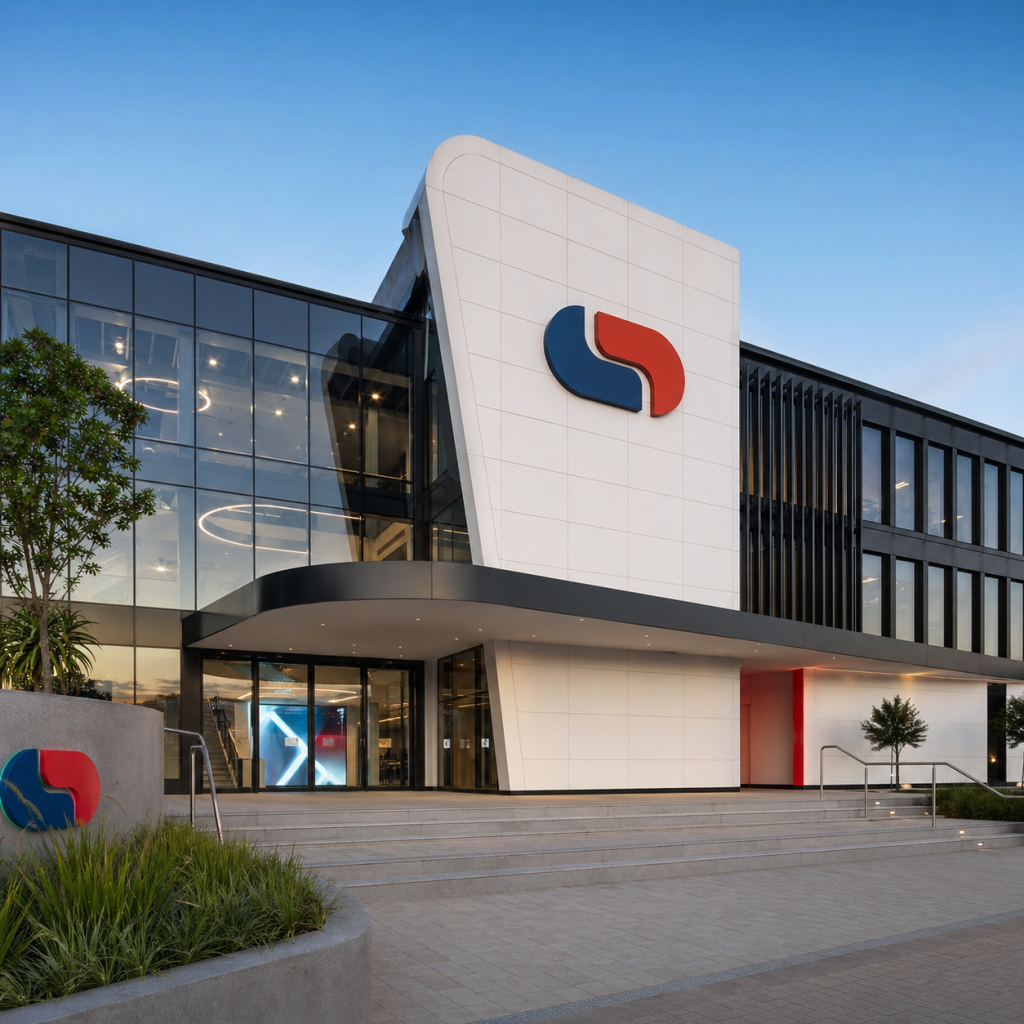

Capitec Bank has posted the strongest financial results in its 25-year history, reporting headline earnings of R16.8 billion, equivalent to $1.02 billion, for the financial year ended 28 February 2026. The 23% year-on-year increase marks a structural turning point: a bank built to serve South Africa’s unbanked majority has crossed the billion-dollar profit threshold for the first time, overtaking long-established institutional rivals on the metrics that matter most to investors.
The Stellenbosch-based lender confirmed that headline earnings rose from R13.7 billion in the prior year to R16.8 billion, with net interest income climbing 19% to R24.1 billion and total loan disbursements growing 34% to R98.3 billion. The results were released on the JSE’s SENS platform on 22 April 2026.
The Income Shift That Defines the New Capitec
What the headline profit figure obscures is a deeper structural transformation in how Capitec generates revenue. The bank’s traditional lending engine remains powerful, but non-interest income now accounts for 67% of income from operations after credit impairments, a sign that Capitec has successfully diversified beyond its original microlending model.
Value-added services and Capitec Connect, the bank’s mobile virtual network operator, grew 38% to R6.1 billion. Insurance income jumped 38% to R5.2 billion. Operating profit before tax reached R22.18 billion. These are not supplementary lines, they represent the core architecture of a financial services group that has quietly assembled the building blocks of a platform business.
Client Scale as Competitive Moat
Capitec’s active client base reached 26 million during the financial year. Personal Banking clients increased 7% to 25.2 million, while fully banked clients grew 12% to 9.9 million, now accounting for 39% of the total base. For context, that client footprint exceeds the combined retail banking reach of several of South Africa’s legacy institutions.
The bank’s net interest income rose 19% to R24.1 billion, driven by 27% and 48% increases in loan disbursements for Personal Banking and Business Banking respectively. Business Banking, built on the foundation of the 2019 acquisition of Mercantile Bank, is now scaling at a pace that is beginning to draw competitive attention from FNB and Standard Bank.
Capital Returns and Shareholder Discipline
Capitec declared a final dividend of R53.60 per share, bringing the total 2026 dividend to R79.80 per share, a 23% increase year-on-year. Return on equity reached 31%, compared to 29% in 2025. A return on equity at that level, sustained while growing a 26-million client book, is a figure that very few banks globally, let alone on the African continent, can match in the current interest rate environment.
Risk Profile: Credit Quality Under Scrutiny
The results are not without complexity. The group’s net credit impairment charge on loans and advances increased by 21%, and its credit loss ratio moved from 7.5% to 8.1%. As Capitec scales its lending aggressively into personal and business segments, the credit loss trajectory warrants close monitoring, particularly given the still-elevated unemployment rate in South Africa and the pace at which the book is expanding.
Management has indicated that data-driven credit scoring and AI-powered risk tools are central to containment strategy. The bank’s AI fraud systems blocked more than 131,000 suspicious beneficiaries and prevented potential client losses of R673 million during the year. The technology infrastructure is being deployed not only for growth but for balance-sheet protection.
What This Signals for South Africa’s Financial Sector
Capitec’s billion-dollar profit is not an isolated data point. It arrives as South Africa’s broader financial system is gaining credibility with global investors, supported by the country’s removal from the FATF grey list, a credit rating upgrade from S&P, and declining inflation that allowed the South African Reserve Bank to cut the repo rate from 7.5% to 6.75%.
For institutional investors with emerging market mandates, the results confirm that South Africa’s banking sector is not simply resilient, it is structurally competitive. Capitec, in particular, represents a rare convergence of mass-market distribution, platform economics, and capital discipline, all within a single balance sheet.
In its own results commentary, Capitec stated: “That is several years of compounding momentum, a trajectory very few can match. We are not a growth story that has peaked. We are still building.”
That assessment, backed by the numbers, is difficult to dispute.