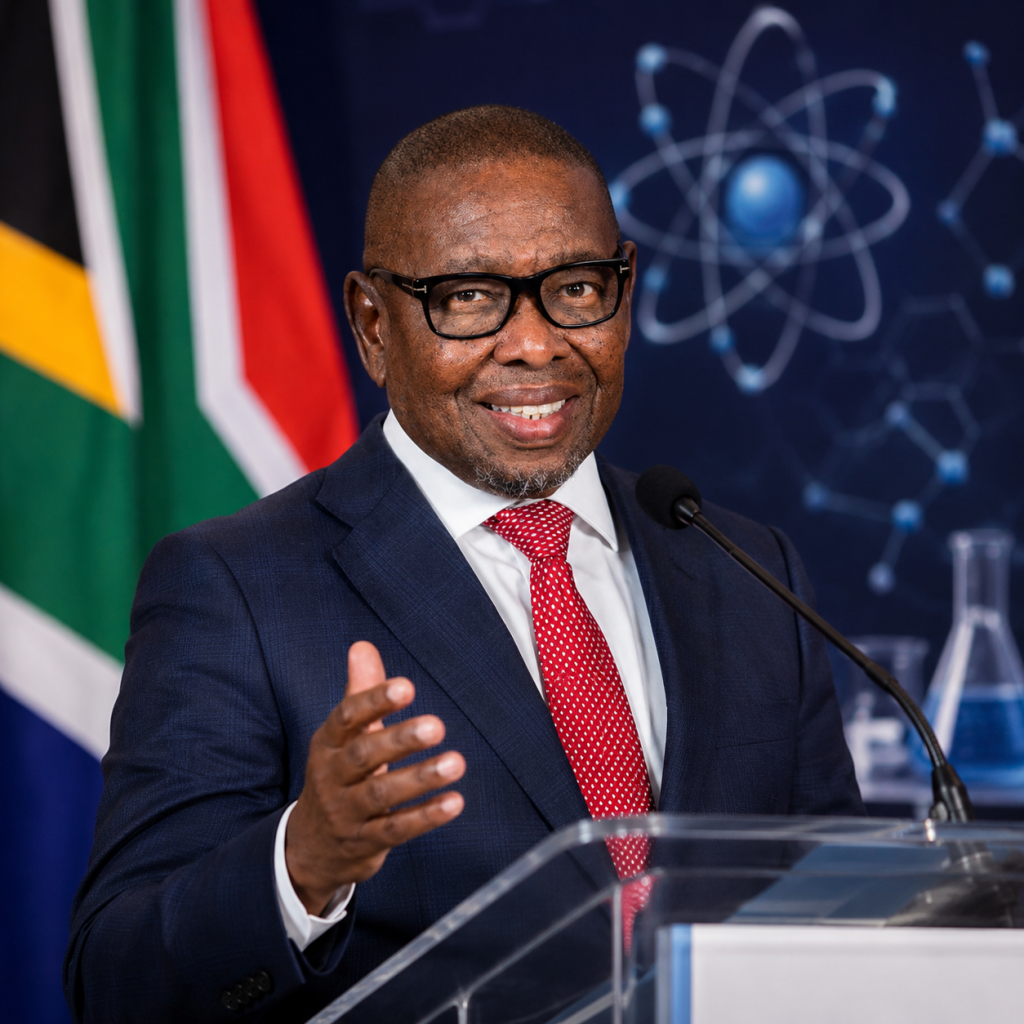

South Africa has officially launched its inaugural National Science Month under a renewed national framework, marking a significant shift in how the country intends to position science, technology and innovation as drivers of long-term economic competitiveness. The launch, led by Science, Technology and Innovation Minister Blade Nzimande on 4 July, represents more than a public awareness campaign. It signals a strategic effort to embed scientific capability into the country’s development agenda.
A defining moment for South Africa’s innovation agenda
National Science Month has historically consisted of science outreach activities. This year’s launch introduces a broader national focus that connects scientific research with industrial development, education, entrepreneurship and economic growth.
The initiative seeks to expand public participation in science while encouraging greater collaboration between government, universities, research institutions and industry. It also aims to inspire more young South Africans to pursue careers in science, technology, engineering and mathematics, strengthening the country’s future talent pipeline.
For South Africa, where economic competitiveness increasingly depends on knowledge-intensive industries, building scientific capacity has become a strategic priority rather than simply an educational objective.
Why this stands out
The launch comes as countries worldwide compete to secure leadership in artificial intelligence, biotechnology, advanced manufacturing, clean energy and digital infrastructure.
South Africa has already demonstrated strengths in astronomy, medical research, renewable energy innovation and mining technologies. Expanding scientific literacy and innovation capability creates opportunities to commercialise more locally developed technologies while attracting greater international research partnerships and private investment.
The launch therefore represents an institutional investment in future economic resilience rather than a standalone awareness campaign.
Building the next generation of innovators
A central objective of the programme is expanding access to science among learners and communities across the country.
Government plans to use exhibitions, public demonstrations, educational programmes and partnerships throughout July to improve public engagement with science and innovation.
For business, this creates a stronger long-term foundation for industries that rely on highly skilled professionals, research capability and technological advancement.
As South Africa continues investing in digital infrastructure, renewable energy, advanced manufacturing and high-value services, strengthening domestic scientific capacity becomes increasingly important to sustaining economic growth.
What it signals
The launch of the inaugural National Science Month reflects South Africa’s intention to compete through innovation rather than solely through natural resources or traditional industries.
It signals an institutional commitment to developing the human capital required for emerging technologies, strengthening collaboration between academia and industry, and positioning scientific excellence as a national economic asset.
For investors, universities, technology companies and research organisations, the initiative reinforces South Africa’s ambition to become one of Africa’s leading knowledge economies.