
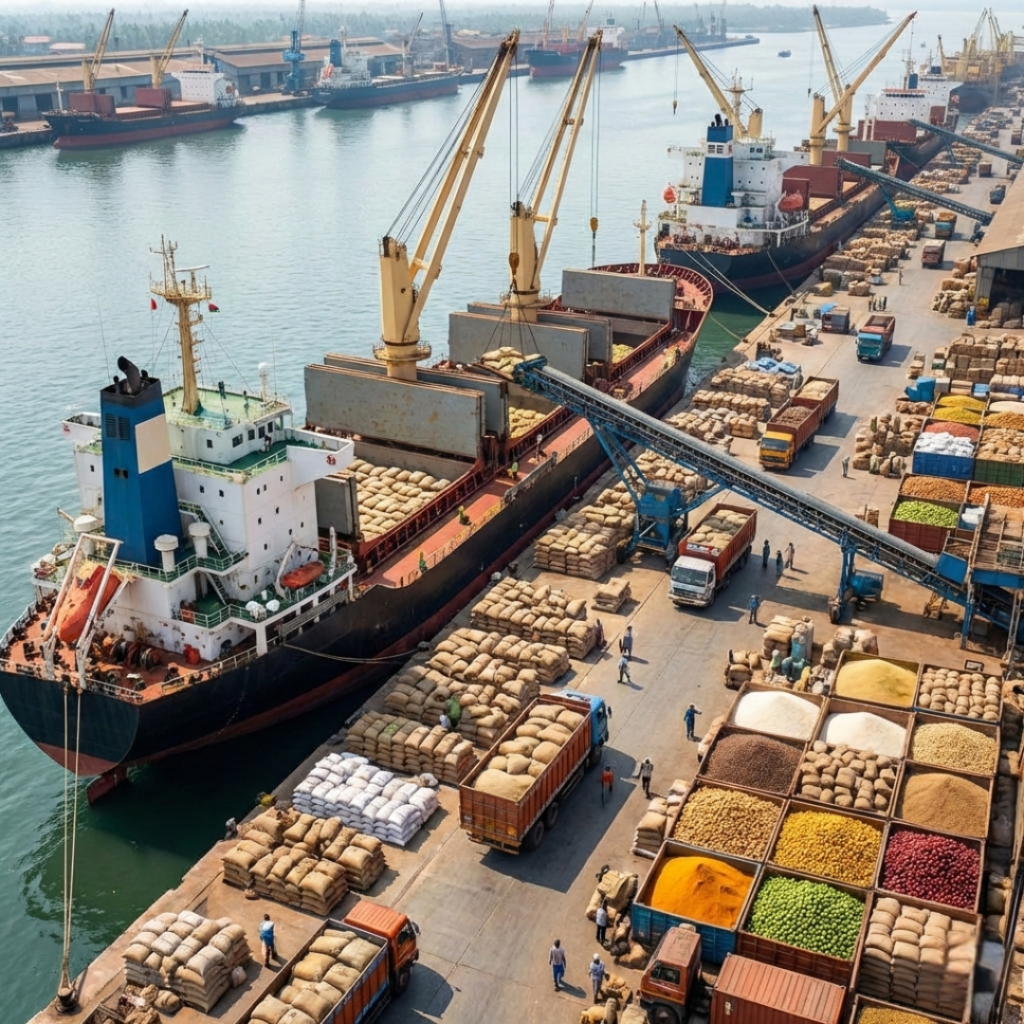

India is accelerating its ascent in global agriculture and food markets following recent government remarks that new free trade agreements (FTAs) will open significant export opportunities for the country’s agricultural producers and food processors. The policy shift — championed by India’s Minister of State for Commerce and Industry, **Jitin Prasada — signals a strategic pivot toward boosting trade, enhancing competitiveness, and integrating domestic agricultural supply chains into booming markets in Africa, the Middle East, Europe, and Asia.
Prasada’s announcement on January 9, 2026, positions India to leverage broader market access, reduce tariff barriers, and attract investment into food processing infrastructure — a critical move that could reshape global food trade flows. The push accords with long-term national goals to deepen agricultural value chains, expand downstream food manufacturing, and harness India’s demographic dividend in agribusiness.
The implications for agribusiness investors and food producers are substantial:
- Export Growth: With reduced tariffs and smoother market entry conditions, Indian producers of staples such as rice, spices, horticulture, and processed foods could scale exports dramatically.
- Food Manufacturing Expansion: FTAs typically incentivise multinational food processors to establish local facilities — boosting production capacity and employment.
- Supply Chain Investment: Improved trade frameworks encourage capital inflows into cold chain logistics, high-tech processing units, and quality certification services.
Domestic stakeholders stand to benefit too. As India integrates more extensively into global food markets, farmers and food MSMEs will gain greater price stability and diversified demand sources that can smooth income volatility caused by domestic supply fluctuations.
India’s trade push also complements international trends: global agreements that reduce barriers and promote cross-border food trade are increasingly crucial in meeting worldwide food demand growth and stabilising supply chains post-pandemic.
For policymakers and the private sector, this development underscores a clear opportunity: realising the economic potential of food production through strategic trade engagement and downstream value capture.


